Collaborative Divorce in Connecticut: A Complete Guide to Nonadversarial Dissolution
Learn how collaborative divorce works in Connecticut, including the nonadversarial dissolution process, requirements, costs, and how couples can divorce amicably.
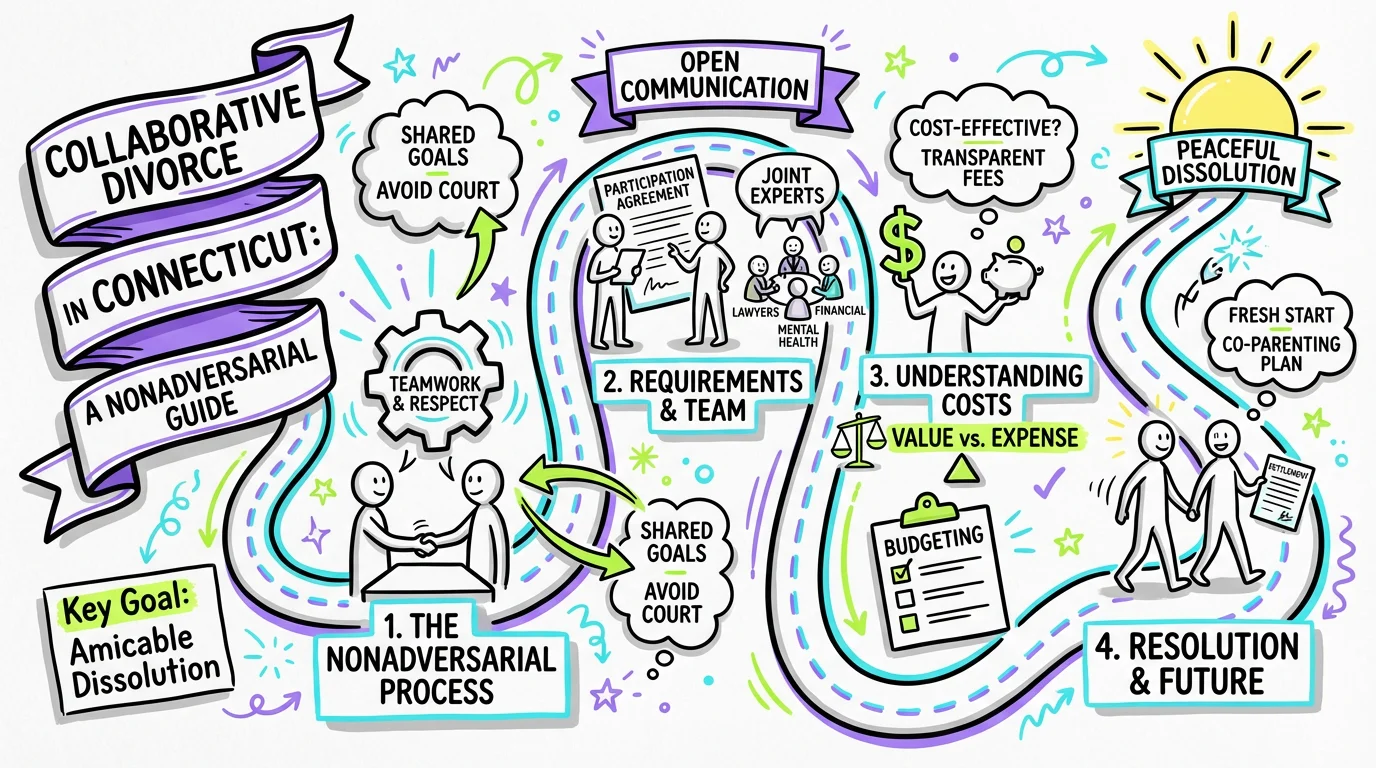
Collaborative divorce is a voluntary process where both spouses work together with their respective attorneys and other professionals to negotiate a divorce settlement outside of court. In Connecticut, this approach aligns closely with the state's "nonadversarial dissolution" process, which allows couples who agree on all terms to file a joint petition and potentially complete their divorce with minimal court involvement. This method prioritizes cooperation over conflict, helping couples preserve relationships, protect children from parental disputes, and often save significant time and money compared to traditional litigation.
Understanding Collaborative Divorce vs. Traditional Litigation
The fundamental difference between collaborative divorce and traditional litigation lies in the approach to conflict resolution. In a collaborative process, both parties commit in writing to resolve all issues through negotiation rather than court battles. Each spouse retains their own collaboratively-trained attorney, and the entire team works toward mutually beneficial solutions. If the collaborative process fails and either party decides to litigate, both attorneys must withdraw, which creates a powerful incentive for everyone to work toward agreement.
Traditional divorce litigation, by contrast, positions spouses as adversaries. Attorneys advocate aggressively for their individual clients, and a judge ultimately decides contested issues if the parties cannot agree. This adversarial approach often escalates conflict, damages co-parenting relationships, and can cost tens of thousands of dollars in legal fees. For couples who still communicate reasonably well and share a commitment to fairness, collaborative divorce offers a more dignified path forward.
Connecticut's legal framework strongly supports cooperative approaches to divorce. The state's nonadversarial dissolution statute, codified at C.G.S. § 46b-44a, creates a streamlined process specifically for couples who have already reached agreement on all issues. This legal pathway reflects Connecticut's recognition that not every divorce needs to be a courtroom battle.
Connecticut's Nonadversarial Dissolution Process
Connecticut law provides a specific legal framework for couples who want to divorce without conflict. Under C.G.S. § 46b-44a, couples can file a joint petition for nonadversarial dissolution in the judicial district where either spouse resides. This joint petition must be notarized and include an attestation under oath from each party confirming they meet certain eligibility requirements.
To qualify for nonadversarial dissolution, couples must demonstrate that their marriage has broken down irretrievably and that they have reached complete agreement on all issues—including property division, alimony, child custody, visitation, and support. Both parties must be willing to waive the standard 90-day waiting period that applies to contested divorces. This streamlined process recognizes that couples who agree shouldn't be forced through the same time-consuming procedures as those in conflict.
The filing requirements include a comprehensive settlement agreement that addresses every aspect of the divorce. Tools like Untangle's automatic document generation can help you create comprehensive settlement agreements and other necessary forms. Additionally, Untangle's settlement analysis features can further assist you in evaluating whether proposed agreements align with Connecticut norms and ensure you're not overlooking important financial considerations. Having a clear understanding of what a fair settlement looks like helps both parties approach negotiations with realistic expectations.
The Collaborative Team Approach
What distinguishes true collaborative divorce from simply settling a case is the team-based approach to problem-solving. A typical collaborative team includes each spouse's attorney, a neutral financial professional, and often a divorce coach or child specialist. This interdisciplinary team brings diverse expertise to help couples address both the legal and emotional aspects of ending their marriage.
The collaborative attorneys guide the legal process and help their clients understand their rights and options under Connecticut law. However, unlike litigation attorneys, collaborative lawyers focus on interest-based negotiation rather than positional bargaining. They help clients articulate their needs and concerns while seeking creative solutions that work for everyone. Both attorneys share a commitment to the collaborative process and work cooperatively rather than adversarially.
Financial neutrals—typically CPAs or certified divorce financial analysts—help couples understand their complete financial picture and evaluate different settlement scenarios. They can analyze tax implications of various property division options, project retirement account values, and help couples make informed decisions about complex financial issues. For couples trying to divide retirement accounts, real estate, and other assets fairly, this expertise proves invaluable. Untangle's asset inventory can provide similar insights, helping you understand how different division scenarios might affect your financial future.
Key Benefits of Collaborative Divorce
Preserving Relationships and Protecting Children
Collaborative divorce dramatically reduces conflict compared to litigation, which benefits everyone involved—especially children. Research consistently shows that parental conflict during and after divorce is the strongest predictor of negative outcomes for children. By resolving disputes cooperatively, parents demonstrate healthy problem-solving and maintain a foundation for effective co-parenting.
The collaborative process also helps couples develop communication skills they'll need throughout their post-divorce relationship. Parents will continue making joint decisions about their children for years after the divorce is finalized. Couples who learn to negotiate effectively during the collaborative process are better equipped to handle future disagreements about education, healthcare, extracurricular activities, and other parenting issues without returning to court.
Cost and Time Efficiency
While collaborative divorce involves professional fees, it typically costs significantly less than contested litigation. Court battles drain resources through discovery disputes, motion practice, and trial preparation. When couples resolve issues cooperatively, they avoid these expenses and can allocate more of their resources to building their post-divorce lives.
Connecticut's nonadversarial dissolution process can move remarkably quickly when couples are prepared. Under C.G.S. § 46b-44c, the court must assign a disposition date at least 30 days after filing the joint petition. If neither party files a revocation notice and the court finds the settlement agreement fair and equitable, the divorce can be finalized at that hearing—potentially completing the entire process in just over a month.
| Factor | Collaborative Divorce | Traditional Litigation |
|---|---|---|
| Typical Timeline | 2-6 months | 6-18+ months |
| Average Cost | $15,000-$40,000 total | $30,000-$100,000+ per spouse |
| Court Appearances | Minimal (often just final hearing) | Multiple hearings, possible trial |
| Control Over Outcome | Parties decide all terms | Judge decides contested issues |
| Confidentiality | High (negotiations are private) | Low (court records are public) |
| Relationship Impact | Promotes cooperation | Often increases conflict |
Privacy and Control
Collaborative divorce keeps your personal and financial matters out of the public record. Court proceedings create public documents that anyone can access, potentially exposing sensitive information about your finances, parenting, and the reasons for your divorce. Collaborative negotiations occur in private meetings, and only the final agreement becomes part of the court record.
Perhaps most importantly, collaborative divorce keeps decision-making power with the people who know your family best—you and your spouse. In litigation, a judge who meets your family briefly makes binding decisions about your children, your property, and your financial future. Collaborative divorce ensures that the people most affected by these decisions are the ones making them.
How Connecticut Courts Review Settlement Agreements
Even in nonadversarial cases, Connecticut courts retain responsibility for ensuring agreements are fair. Under C.G.S. § 46b-66, the court must inquire into the financial resources and actual needs of both parties before approving any settlement agreement. This review protects both spouses from agreements that may seem fair initially but prove problematic over time.
The court's review focuses particularly on child-related provisions. Judges carefully examine custody arrangements, parenting schedules, and child support calculations to ensure they serve the children's best interests. If the court has concerns about any aspect of the agreement, it may ask questions or request modifications before approving the dissolution.
Under C.G.S. § 46b-44d, if the court cannot determine whether a settlement agreement is fair and equitable based on the written documents, it will schedule a hearing within 30 days and require both parties to appear. This hearing gives the court an opportunity to ask questions and ensure both spouses understand and freely agree to all terms. Preparing thorough financial disclosures—perhaps with the help of Untangle's financial affidavit generation tool—and clearly articulated agreements helps avoid delays at this stage.
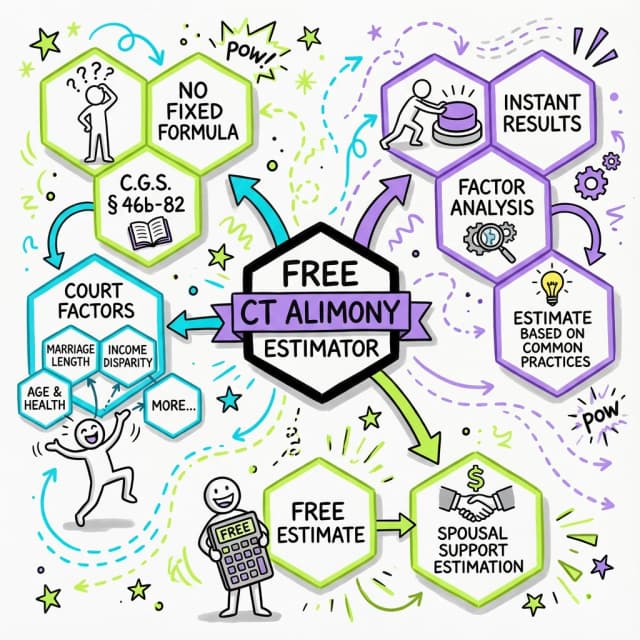
Try our free CT alimony calculator
Get an instant estimate based on Connecticut's statutory factors. No signup required.
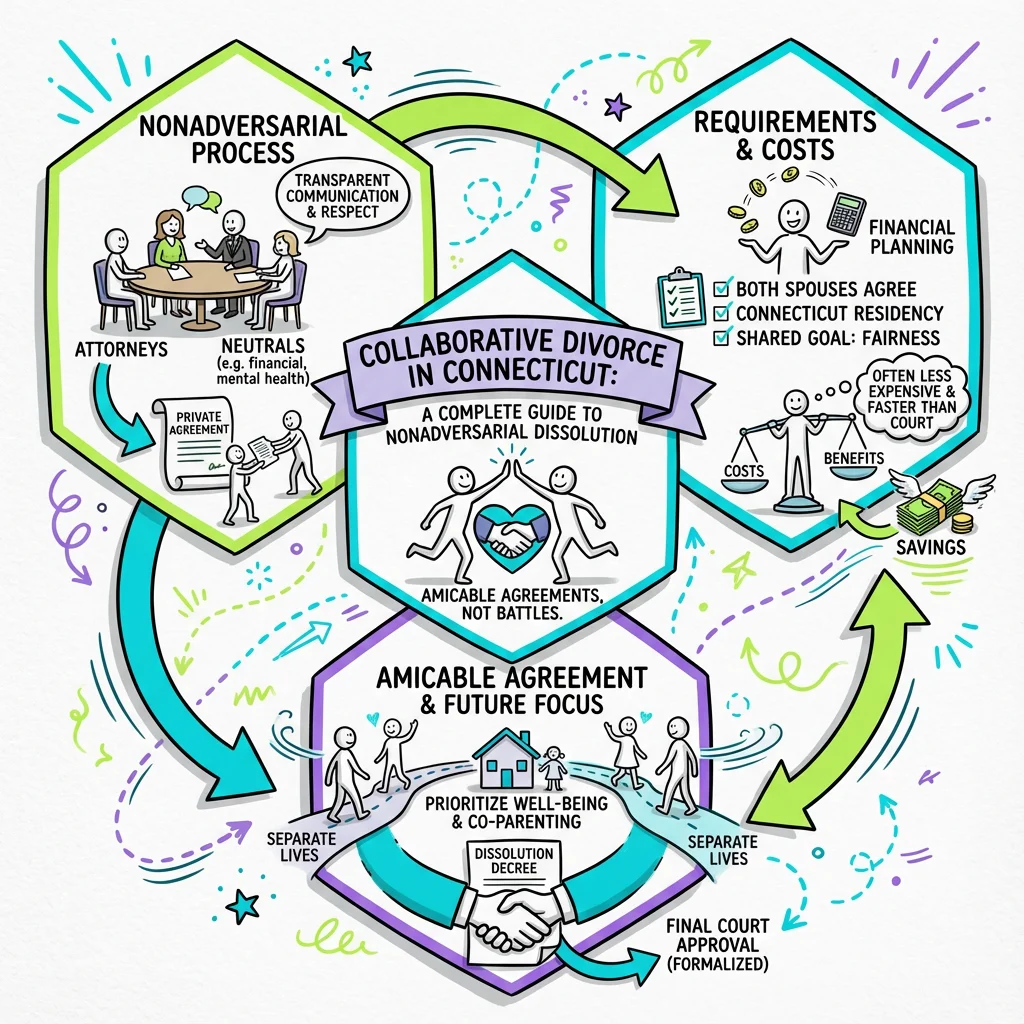
Steps to Pursue Collaborative Divorce in Connecticut
-
Assess your situation honestly. Collaborative divorce works best when both parties can communicate reasonably, neither has hidden assets or income, and both are committed to good-faith negotiation. If there's a significant power imbalance, history of domestic violence, or one spouse is determined to "win" at any cost, collaborative divorce may not be appropriate.
-
Find a collaboratively-trained attorney. Not all family lawyers practice collaborative law. Look for attorneys who have completed collaborative training and are members of collaborative practice groups. Connecticut has active collaborative practice communities in many regions.
-
Sign a participation agreement. Both spouses and their attorneys sign a formal agreement committing to the collaborative process. This document typically includes the "disqualification clause" requiring attorneys to withdraw if the case goes to litigation.
-
Gather complete financial information. Full financial transparency is essential for successful collaboration. Both parties must disclose all income, assets, debts, and expenses. Compiling these financial records, including tax returns, bank statements, retirement account statements, and property valuations, is a crucial step.
-
Participate in collaborative meetings. The team holds a series of meetings (sometimes called "four-way" meetings when just the spouses and attorneys are present) to work through all issues. These sessions follow structured agendas and focus on problem-solving rather than blame.
-
Draft and finalize your agreement. Once you've resolved all issues, your attorneys prepare a comprehensive settlement agreement. This document becomes the foundation for your divorce judgment.
-
File your joint petition. With your settlement agreement complete, you file a joint petition for nonadversarial dissolution under C.G.S. § 46b-44a. Untangle's electronic court filing feature can help streamline this final step, submitting your documents directly to the court. The court reviews your agreement and, if approved, enters your divorce judgment.
What Issues Can Collaborative Divorce Address?
Collaborative divorce can resolve every issue that might arise in any divorce—it's not limited to "simple" cases. Complex financial situations, business valuations, executive compensation packages, and intricate property divisions can all be handled collaboratively. In fact, the collaborative model often works better for complex cases because it brings specialized experts to the table early, rather than waiting for expensive litigation discovery.
Parenting arrangements often benefit most from the collaborative approach. Instead of fighting over custody labels and calculating parenting time percentages, collaborative teams help parents develop detailed parenting plans that address their children's specific needs. Child specialists can help parents understand their children's developmental stages and create age-appropriate schedules.
Spousal support (alimony) negotiations in collaborative divorce typically focus on both parties' genuine needs and abilities rather than positional demands. Financial professionals can help couples understand realistic post-divorce budgets and project future financial needs, leading to support arrangements that actually work for both families.
When Collaborative Divorce May Not Be Right for You
Despite its many advantages, collaborative divorce isn't appropriate for every situation. If you suspect your spouse is hiding assets or income, the collaborative model's reliance on voluntary disclosure may not protect your interests. While you can hire experts to value assets and analyze finances in collaborative cases, you don't have access to court-ordered discovery tools like subpoenas and depositions.
Cases involving domestic violence, coercive control, or significant power imbalances require careful consideration before pursuing collaborative divorce. The face-to-face meeting format can be problematic if one spouse fears the other or cannot negotiate freely. Some collaborative teams can accommodate these situations with additional safeguards, but traditional litigation or mediation with strong attorney advocacy may be more appropriate.
If one or both parties simply cannot commit to good-faith negotiation, collaborative divorce will fail. The process requires both spouses to approach negotiations with a genuine desire to reach fair agreements. If either party views collaboration as a delay tactic or an opportunity to manipulate the other spouse, the case will eventually need to move to litigation—after the additional expense of the failed collaborative process.
The Role of Mediation in Connecticut Divorce
Connecticut courts actively support mediation as an alternative to litigation. Under C.G.S. § 46b-53a, the judicial system may establish mediation programs for divorcing couples in designated judicial districts. These mediation services can address property division, financial issues, child custody, and visitation.
Court-connected mediation differs from private collaborative divorce in important ways. Mediators are neutral third parties who facilitate negotiations but don't provide legal advice to either spouse. In collaborative divorce, each party has their own attorney advocating for their interests while still working cooperatively. Many couples use both approaches—participating in mediation sessions while also receiving guidance from their collaborative attorneys.
Communications in mediation are privileged under Connecticut law. C.G.S. § 46b-53a specifically protects oral and written communications made during mediation from disclosure in subsequent legal proceedings. This confidentiality encourages open, honest discussion without fear that statements will later be used against either party.
Getting Started with Your Collaborative Divorce
Taking the first step toward collaborative divorce begins with an honest conversation with your spouse about your shared goals. If you both want to minimize conflict, protect your children, and move forward respectfully, collaborative divorce may be your ideal path. Even if you're not sure your spouse will agree, approaching the conversation from a place of mutual benefit often produces better results than assuming conflict is inevitable.
Gathering your financial information early helps the process move smoothly once you begin. Understanding your complete financial picture—income, expenses, assets, and debts—prepares you for productive negotiations and helps identify questions to discuss with your collaborative team.
Remember that choosing collaborative divorce doesn't mean giving up your rights or accepting an unfair outcome. It means committing to reach a fair outcome through negotiation rather than litigation. Your collaborative attorney will still advocate for your interests and ensure you understand all your options under Connecticut law. The difference is that advocacy happens at the negotiating table rather than in the courtroom, preserving resources and relationships that matter to your family's future.
Frequently Asked Questions
What is the difference between collaborative divorce and mediation in Connecticut?
In collaborative divorce, each spouse has their own attorney throughout negotiations, while mediation uses a single neutral mediator who cannot provide legal advice to either party.
How much does a collaborative divorce cost in CT?
Collaborative divorce in Connecticut typically costs less than traditional litigation, though exact fees vary based on case complexity and the professionals involved, often ranging from $15,000 to $50,000 total for both parties.
Is a collaborative divorce agreement legally binding in Connecticut?
Yes, once the collaborative divorce settlement is finalized and approved by the Connecticut court, it becomes a legally binding court order enforceable like any other divorce decree.
What happens if collaborative divorce fails in Connecticut?
If the collaborative process fails, both attorneys must withdraw from the case, and each spouse must hire new attorneys to proceed with traditional litigation.
How long does a collaborative divorce take in Connecticut?
A collaborative divorce in Connecticut typically takes 3 to 6 months depending on the complexity of issues and how quickly both spouses can reach agreements on all terms.
Legal Citations
- • C.G.S. § 46b-44a View Source
- • C.G.S. § 46b-44c View Source
- • C.G.S. § 46b-66 View Source
- • C.G.S. § 46b-44d View Source
- • C.G.S. § 46b-53a View Source