What Is a Contested Divorce in Connecticut? Understanding the Process When Your Spouse Won't Cooperate
Learn what a contested divorce means in Connecticut, how the court process works when spouses disagree, and what to expect when your spouse won't cooperate.
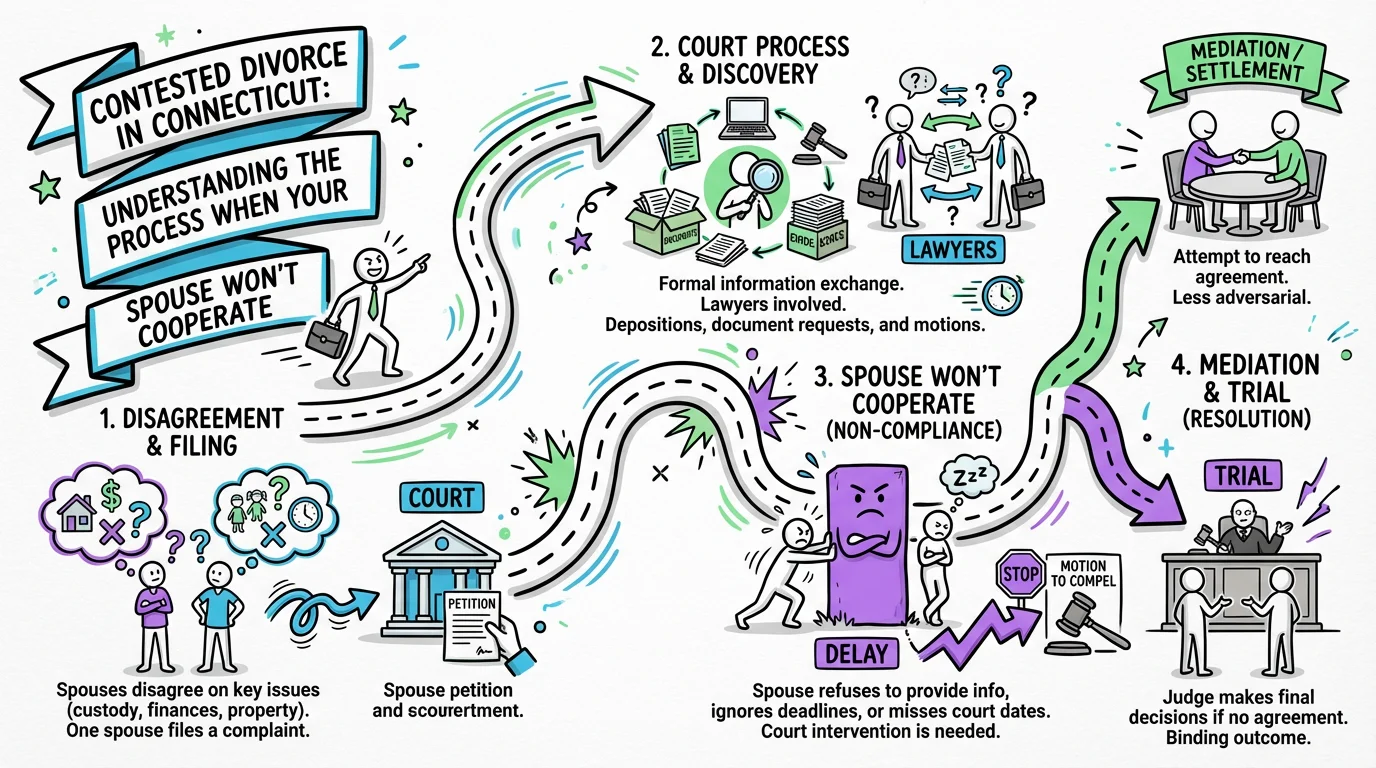
A contested divorce in Connecticut is a divorce proceeding where spouses cannot agree on one or more key issues—such as property division, alimony, child custody, or child support—requiring the court to make final decisions on their behalf. Under Connecticut Practice Book § 25-49, a case is classified as "uncontested" only when both parties appear and no aspect is disputed. If your spouse won't cooperate, refuses to negotiate, or disagrees with your proposed terms, your divorce automatically becomes contested, which means a longer, more complex process ahead.
How Connecticut Defines Contested vs. Uncontested Divorce
Connecticut courts draw a clear distinction between cases where couples can work together and those where they cannot. The classification matters because it determines your case's pathway through the court system, the time it will take, and ultimately how much the process will cost you.
Under the court's Pathways case management system outlined in Practice Book § 25-50A, contested cases are assigned to either Track B (moderate complexity) or Track C (complex), depending on the nature and severity of your disputes. Within 30 to 60 days of filing, you'll meet with a family-relations counselor who assesses your likelihood of settlement and recommends the appropriate track. Cases with significant financial disputes or parenting disagreements often land in Track C, which involves more court appearances, formal discovery, and potentially trial.
The fundamental issue in any Connecticut divorce is proving that the marriage has "broken down irretrievably." Under C.G.S. § 46b-51, the court can find this breakdown when both parties sign a written stipulation or appear in court to jointly acknowledge it. In a contested divorce, where your spouse may refuse to cooperate with even basic procedural requirements, the court has alternative methods to establish breakdown—but this adds complexity and time to your case.
What Makes a Divorce Contested in Connecticut
Connecticut Practice Book § 25-49 identifies two primary categories of disputes that make a divorce contested: financial disputes and parenting disputes. Many contested divorces involve both, creating multiple battlegrounds that must be resolved before your case can conclude.
Financial disputes encompass disagreements over how to divide marital property, whether one spouse should pay alimony to the other, and the amount and duration of any support payments. Connecticut follows equitable distribution principles under C.G.S. § 46b-81, meaning the court divides property fairly—but not necessarily equally. When spouses disagree about what's "fair," or when one spouse believes the other is hiding assets or undervaluing property, financial disputes can become particularly contentious and expensive to resolve. To navigate complex financial disputes, especially when transparency is an issue, Untangle's complete asset inventory features can help you meticulously document all marital property.
Parenting disputes include disagreements about custody arrangements, parenting schedules, decision-making authority, and even the basic question of parentage in some cases. These disputes often carry the highest emotional stakes because they directly affect your relationship with your children. Courts prioritize the best interests of children in these matters, which sometimes means neither parent gets exactly what they wanted.
The Contested Divorce Timeline in Connecticut
Understanding the timeline helps you prepare mentally and financially for what lies ahead. Connecticut law under C.G.S. § 46b-67 establishes that the court generally cannot finalize a divorce until at least 90 days after the return date—the date your spouse was officially served. However, contested divorces routinely take much longer.
| Stage | Uncontested Timeline | Contested Timeline |
|---|---|---|
| Filing and Service | 2-4 weeks | 2-4 weeks |
| Return Date | 90 days minimum | 90 days minimum |
| Discovery | Limited or none | 3-6 months |
| Mediation/Settlement | Often resolved early | May take months |
| Trial (if needed) | Not applicable | 6-18 months from filing |
| Total Duration | 3-4 months | 12-24+ months |
The discovery phase in contested cases often consumes the most time. This is when both sides gather evidence—requesting financial documents, taking depositions, and potentially hiring experts to value businesses or assess custody issues. If your spouse is uncooperative, you may need to file motions to compel them to provide required information, which adds delays and legal fees.
Tools like Untangle's case management tools can help you stay on top of the extensive paperwork contested divorces generate, ensuring you can quickly locate important documents when your attorney needs them.
What Happens When Your Spouse Won't Cooperate
A spouse who refuses to participate in the divorce process creates challenges, but it doesn't mean you're stuck in your marriage forever. Connecticut courts have mechanisms to move cases forward even when one party stonewalls.
If your spouse fails to respond to the divorce complaint, you may eventually seek a default judgment. However, this process isn't as simple as it sounds in family court. The court will still require evidence about children, finances, and the appropriateness of your proposed orders before entering judgment. You'll need to provide financial affidavits—either using financial affidavit generation tools for simpler cases or preparing the long form for more complex financial situations—and potentially the Affidavit Concerning Children if you have minor children.
When a spouse actively obstructs proceedings—hiding assets, refusing to provide discovery, or violating court orders—you can file a Motion for Contempt under Practice Book § 25-27. This motion must specify the exact court order violated, the precise acts constituting contempt, any amounts in arrears, and the relief you're seeking. Contempt findings can result in fines, attorney fee awards against the uncooperative spouse, and in extreme cases, jail time.
Your Rights to Seek Relief During a Contested Divorce
One of the most important things to understand about contested divorce is that you don't have to wait until the final judgment to get court orders protecting you and your children. Connecticut Practice Book § 25-24 allows parties to file motions pendente lite—meaning "while the litigation is pending"—for various forms of relief.
Pendente lite motions can address:
- Temporary alimony or spousal support
- Temporary child support
- Temporary custody and visitation schedules
- Payment of attorney fees by the other spouse
- Maintenance of the family home and expenses
- Other equitable relief needed during the case
These temporary orders can be crucial when you're dealing with an uncooperative spouse. If your spouse controls the finances and cuts you off, a pendente lite motion for support can provide the resources you need to survive and pay for legal representation. If your spouse is making unilateral decisions about the children, a temporary custody order establishes boundaries and expectations.
Filing these motions requires understanding court procedures and timing. Untangle's AI legal guidance can help you understand what motions might be appropriate for your situation and what information you'll need to gather before filing.
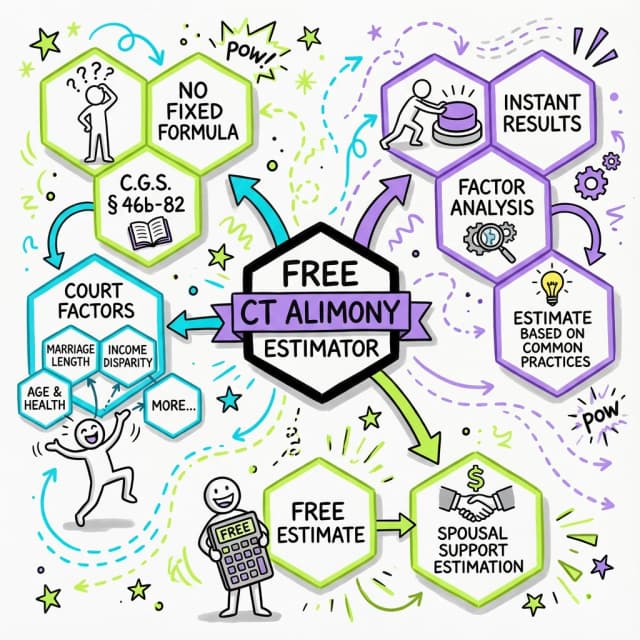
Try our free CT alimony calculator
Get an instant estimate based on Connecticut's statutory factors. No signup required.
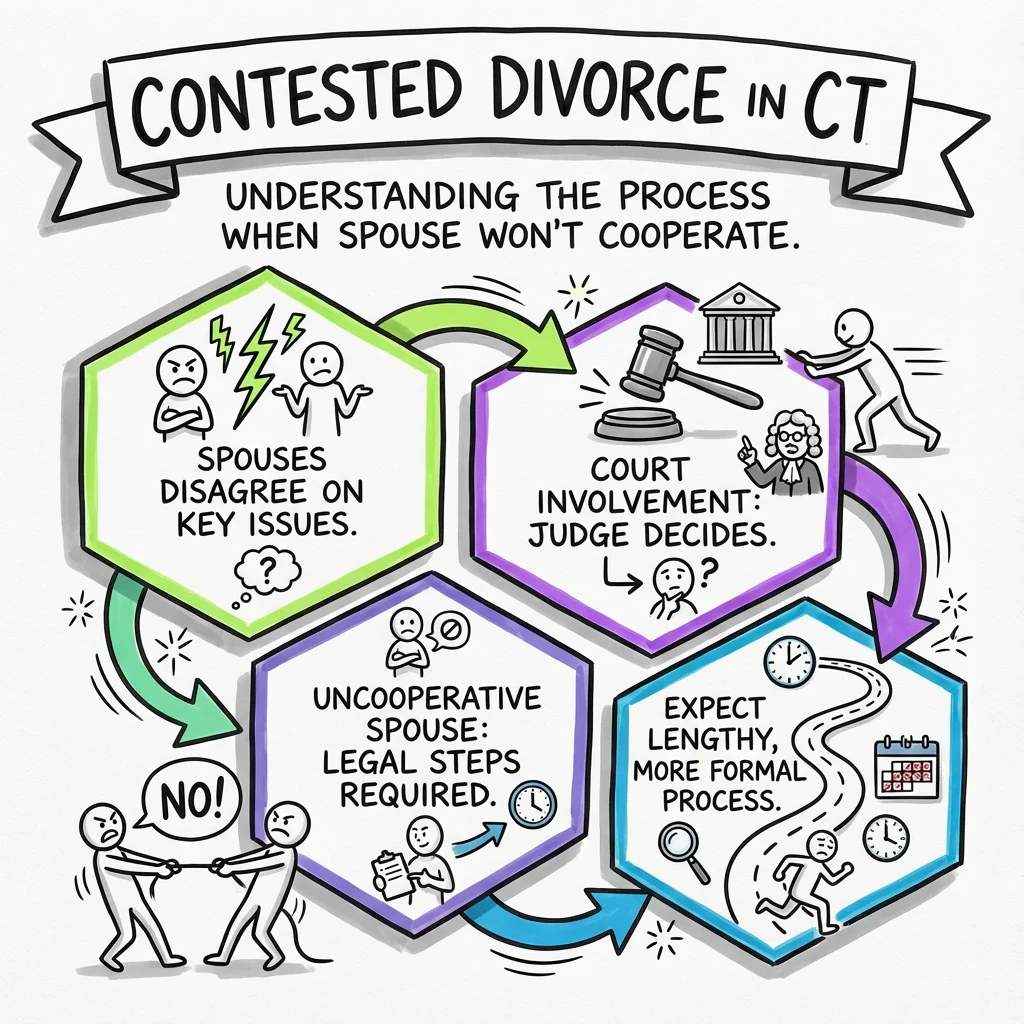
Property Division in Contested Connecticut Divorces
Property division often becomes the central battleground in contested divorces. Under C.G.S. § 46b-81, Connecticut courts can "assign to either spouse all or any part of the estate of the other spouse." This broad authority means the court has significant discretion in dividing everything you own—and everything your spouse owns.
Connecticut is an "equitable distribution" state, not a community property state. This means the court aims for a fair division based on multiple factors, including:
- The length of the marriage
- The causes of the marriage breakdown
- Each spouse's age, health, and earning capacity
- Each spouse's contributions to the marriage (including homemaking)
- The present and future needs of each party
When spouses disagree about property division, the court must hear evidence and make its own determination. This often involves expert testimony about business valuations, real estate appraisals, and pension valuations. The discovery process becomes critical—you need complete financial disclosure from your spouse to ensure you receive your fair share.
The Jackson v. Jackson case illustrates how important proper disclosure is: the court addressed a motion to reopen a divorce judgment based on claims that the original stipulation resulted from fraud, accident, or mistake. If you later discover your spouse hid assets or misrepresented values during your divorce, you may have grounds to seek modification—but it's far better to uncover these issues during the divorce process itself.
How to Respond If You're the Defendant in a Contested Divorce
If your spouse filed for divorce and you disagree with their proposed terms, you have important rights under Connecticut Practice Book § 25-9. You can file either a simple Answer—admitting, denying, or claiming insufficient knowledge about your spouse's allegations—or an Answer and Cross Complaint that sets out your own grounds for divorce and specifies the relief you want.
Filing a Cross Complaint is often strategic in contested cases. It ensures your voice is heard about why the marriage broke down and what you believe constitutes fair division of property, custody arrangements, and support. Even if you didn't initiate the divorce, you have equal standing to ask the court for orders protecting your interests.
Your response must include your own claims for relief—what you want the court to order regarding custody, property, alimony, and other issues. Being specific and thorough in your initial response sets the stage for the entire case.
Steps to Prepare for a Contested Divorce
Preparing properly for a contested divorce can significantly impact both the process and the outcome. Here's what you should do:
-
Gather comprehensive financial documentation - Collect at least three years of tax returns, bank statements, investment account statements, retirement account balances, property deeds, vehicle titles, and business records if applicable.
-
Create a complete asset inventory - Document everything of value acquired during the marriage, including items in your spouse's possession or control.
-
Secure your own copies of important documents - Don't assume you'll have access later; make copies now of everything you might need.
-
Establish your own credit - If you don't have credit cards or accounts in your own name, take steps to establish independent credit.
-
Document your parenting involvement - If custody is likely to be disputed, keep records of your involvement in your children's lives, school activities, medical appointments, and daily care.
-
Consult with a family law attorney - Contested divorces involve complex legal procedures where professional guidance is essential.
-
Understand the court's required forms - You'll need to file financial affidavits, the Summons Family Actions form, and ultimately a Certificate of Compliance confirming you've met all procedural requirements.
The Cost Reality of Contested Divorce in Connecticut
Contested divorces are significantly more expensive than uncontested ones. While an uncontested divorce might cost a few thousand dollars, contested cases often run into tens of thousands—sometimes exceeding $50,000 or more for highly complex cases with significant assets or custody battles.
The cost drivers include:
| Cost Factor | Why It Increases in Contested Cases |
|---|---|
| Attorney hours | More court appearances, motions, discovery, and trial preparation |
| Expert witnesses | Business valuators, custody evaluators, forensic accountants |
| Court costs | Filing fees for multiple motions and trial |
| Discovery | Document production, depositions, interrogatories |
| Duration | Longer cases mean more billable hours |
Understanding these costs upfront helps you make informed decisions about which battles are worth fighting. Sometimes, the cost of litigating a particular asset exceeds the asset's value. A skilled attorney can help you identify where to focus your resources for maximum impact.
When Professional Help Is Essential
While some aspects of divorce can be handled independently, contested divorces generally require professional legal representation. The stakes are too high, the procedures too complex, and the consequences too lasting to navigate alone—especially when your spouse has retained their own attorney.
Consider professional help mandatory when:
- Significant assets or debts are involved
- Child custody is disputed
- Your spouse has already retained an attorney
- There's any history of domestic violence or financial control
- Business interests or complex investments need to be valued
- You're unfamiliar with court procedures and deadlines
Even if you're committed to handling as much as possible yourself, a consultation with a family law attorney can help you understand your rights, avoid costly mistakes, and develop realistic expectations for your case. Connecticut's family courts are designed to be accessible to self-represented parties, but contested matters involve legal complexities that can significantly impact your future.
Frequently Asked Questions
What is the difference between a contested and uncontested divorce in Connecticut?
An uncontested divorce means both spouses agree on all issues like property division, custody, and support, while a contested divorce requires court intervention because spouses cannot agree on one or more key issues.
What are the most common reasons a divorce becomes contested in CT?
Divorces typically become contested when spouses disagree on property division, alimony, child custody, child support, or when one spouse refuses to cooperate or negotiate.
How long does a contested divorce take in Connecticut?
Contested divorces in Connecticut take significantly longer than uncontested cases—often 12 to 18 months or more—because they require court appearances, formal discovery, and potentially a trial.
Can a contested divorce become uncontested in Connecticut?
Yes, a contested divorce can become uncontested at any point if both spouses reach an agreement on all disputed issues through negotiation, mediation, or other settlement methods before trial.
How is a contested divorce resolved in CT if spouses can't agree?
If spouses cannot reach an agreement through negotiation or mediation, the case proceeds to trial where a Connecticut judge makes final decisions on all disputed issues.
Legal Citations
- • C.G.S. § 46b-51 View Source
- • C.G.S. § 46b-81 View Source
- • C.G.S. § 46b-67 View Source
- • Connecticut Practice Book § 25-49 View Source