Untangle vs Lawyer for Spousal Support in Connecticut: Which Is Right for You?
Compare using Untangle vs hiring a lawyer for Connecticut spousal support. Learn when each option works best for stay-at-home spouses seeking alimony.
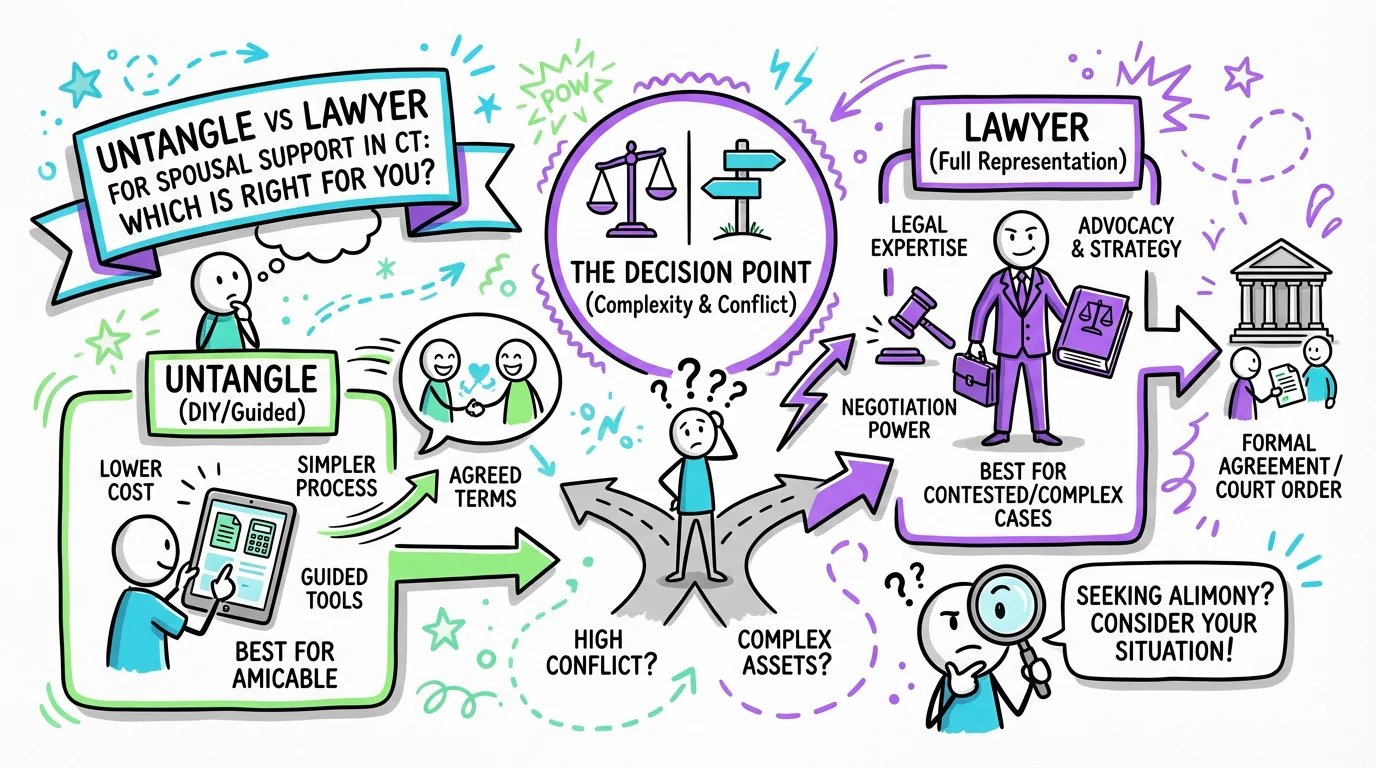
For financially dependent spouses in Connecticut, the choice between using Untangle and hiring a lawyer for spousal support isn't always either/or—many people benefit from using both strategically. Untangle can help you understand alimony calculations, organize your financial documentation, and prepare for negotiations, while a lawyer becomes essential when your spouse is uncooperative, assets are complex, or you need someone to advocate for you in court. Understanding when each option provides the most value can save you thousands of dollars while still protecting your financial future.
Understanding Connecticut Spousal Support Basics
Connecticut courts have broad discretion when awarding alimony, which is why preparation and understanding the factors involved is so critical. Under C.G.S. § 46b-82, judges consider multiple factors including the length of your marriage, the causes of divorce (where applicable), each spouse's age and health, occupation, employability, income, vocational skills, and the opportunity for future acquisition of capital assets and income. For stay-at-home spouses who have been out of the workforce, courts also specifically consider the time and expense necessary for education or training to become self-supporting.
What makes Connecticut unique is that judges aren't bound by strict formulas the way they are with child support. This flexibility can work in your favor if you present your case well, but it also creates uncertainty. The court will look at your lifestyle during the marriage as a benchmark, your contribution as a homemaker (which Connecticut explicitly values), and whether you gave up career opportunities to support your spouse's advancement or raise children.
This discretionary system means that how you present your financial situation matters enormously. Courts rely heavily on Financial Affidavits—detailed sworn statements of income, expenses, assets, and liabilities that both parties must file. Getting these documents right, with accurate and comprehensive information, directly impacts the support you may receive. Tools like Untangle's Financial affidavit generation can help you compile this information systematically before you ever step into a lawyer's office or courtroom.
When Untangle Is the Right Choice
Untangle works best when you and your spouse can communicate reasonably well and both want to reach a fair resolution without prolonged court battles. If your marriage was moderate in length, your finances are relatively straightforward, and you're both motivated to settle, using Untangle to educate yourself and organize your case can be highly effective.
For stay-at-home spouses, one of the biggest advantages of starting with Untangle is understanding what you're entitled to before negotiations begin. Many financially dependent spouses undervalue their position because they've been out of the workforce and feel vulnerable. But Connecticut law specifically recognizes homemaker contributions, and you may be entitled to more support than you realize. Tools like Untangle's Alimony calculator can help you understand the factors courts consider and estimate reasonable ranges based on your specific circumstances—knowledge that gives you confidence whether you negotiate directly or eventually hire an attorney.
The financial organization aspect is equally valuable. Connecticut Practice Book Rule § 25-30 requires sworn financial statements before any alimony hearing, and Rule § 25-32 mandates automatic disclosure of three years of tax returns, pay stubs, bank statements, and retirement account information. Gathering and organizing these documents is time-consuming work that you'd pay a lawyer hundreds of dollars per hour to handle. Tools like Untangle's Income source tracking and Expense tracking with AI can help you organize this information efficiently, saving you time and money. Using Untangle to organize this information yourself means you arrive at any legal consultation prepared, which saves money and helps your attorney (if you hire one) focus on strategy rather than paperwork.
When You Need a Lawyer
A lawyer becomes essential when your spouse is hiding assets, refuses to cooperate, or has significantly more financial sophistication than you. If there's a substantial income disparity—common when one spouse stayed home—and your spouse is being uncooperative about disclosure, an attorney can use discovery tools and court motions to compel transparency.
Complex financial situations also warrant legal representation. If your spouse owns a business, has stock options or restricted stock units, holds significant retirement assets, or if there are questions about separate versus marital property, these issues require legal expertise to navigate. The stakes are simply too high for these matters, as mistakes in valuing a business interest or dividing a pension can cost you tens of thousands of dollars over your lifetime.
Here's an important provision many stay-at-home spouses don't know about: Under C.G.S. § 46b-62, Connecticut courts can order your spouse to pay your attorney's fees based on each party's respective financial abilities. This means that if you're the financially dependent spouse, you may be able to get legal representation even if you don't currently have access to funds. A lawyer can file a motion for attorney's fees early in the case, giving you access to the legal help you need without draining your limited resources.
You should also strongly consider legal representation if your spouse has already hired an attorney. Negotiating against a lawyer when you're unrepresented puts you at a significant disadvantage, particularly in alimony cases where outcomes depend heavily on how information is presented and argued.
Comparing Your Options: Cost, Control, and Outcomes
| Factor | Untangle | Attorney | Both Together |
|---|---|---|---|
| Typical Cost | Low monthly subscription | $5,000–$25,000+ | Moderate (reduced attorney time) |
| Best For | Amicable divorces, preparation, organization | Contested cases, complex finances, court representation | Most financially dependent spouses |
| Time Investment | Higher (you do more work) | Lower (attorney handles details) | Balanced |
| Control | Complete control over process | Attorney guides decisions | Informed collaboration |
| Court Representation | Not available | Full advocacy | Full advocacy |
| Financial Organization | Comprehensive tools | Varies by firm | Best of both |
| Alimony Negotiation | Self-directed with guidance | Professional advocacy | Strategic advantage |
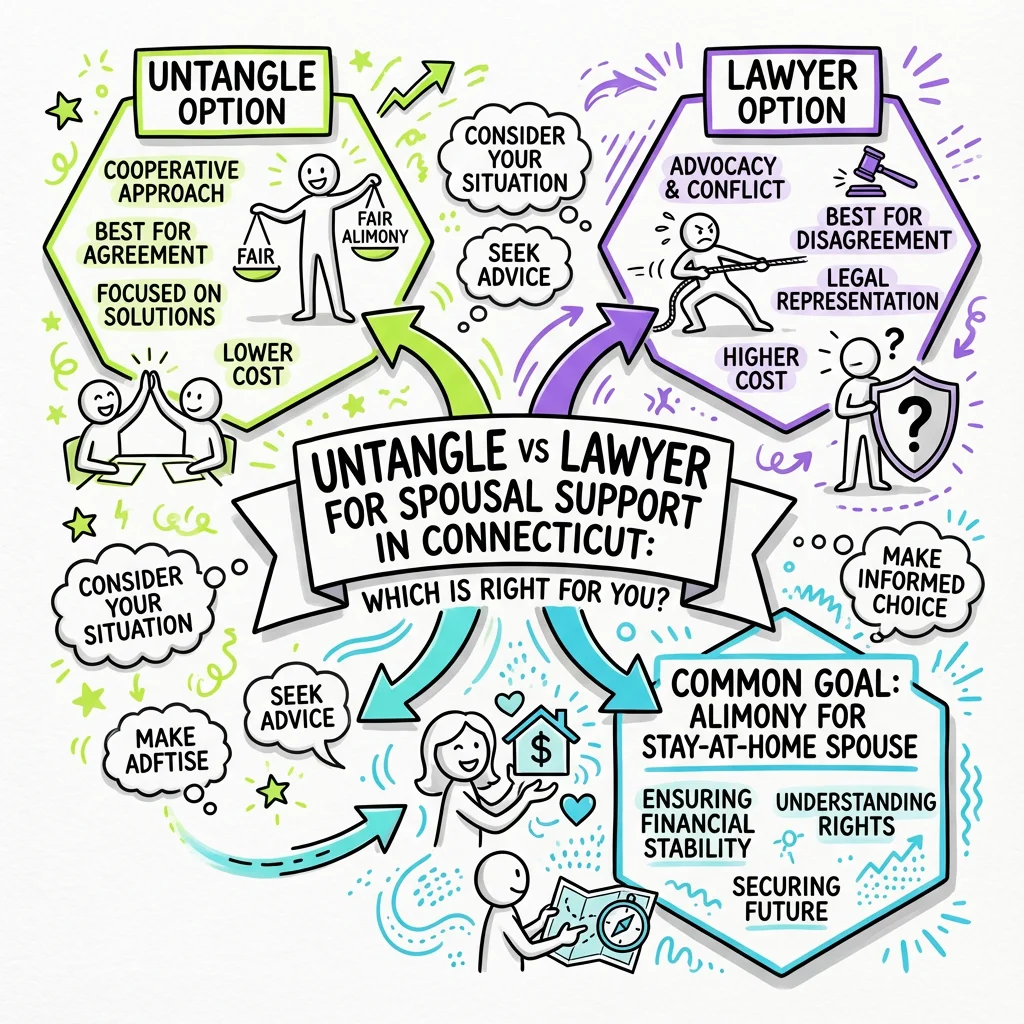
The "both together" approach often provides the best value for stay-at-home spouses. You use Untangle to understand your rights, organize your finances, and handle the administrative preparation that would otherwise cost hundreds of dollars per hour in attorney time. Then you engage a lawyer for strategic advice, negotiation support, or court appearances as needed. This hybrid approach can reduce your total legal costs by 30-50% while still giving you professional representation for the issues that matter most.

Try our free CT alimony calculator
Get an instant estimate based on Connecticut's statutory factors. No signup required.
Practical Steps for Stay-at-Home Spouses
-
Start by understanding your financial picture. Before making any decisions about representation, you need to know what you're working with. Use Untangle's Complete asset inventory to catalog all marital assets, debts, income sources, and monthly expenses. This baseline information is essential regardless of which path you choose.
-
Gather required documents early. Connecticut's mandatory disclosure rules require extensive documentation. Start collecting three years of tax returns, bank statements, retirement account statements, and pay stubs now. Having this organized saves time and money later.
-
Complete a Financial Affidavit draft. The Financial Affidavit (Form JD-FM-006-Long) is one of the most important documents in your case. Working through this form helps you understand your true monthly needs and presents your financial situation accurately to the court.
-
Research alimony factors specific to your situation. How long was your marriage? What did you sacrifice for your spouse's career? What education or training would you need to become self-supporting? These questions directly relate to the statutory factors under C.G.S. § 46b-82.
-
Consider temporary support needs. Under C.G.S. § 46b-83, you can request alimony pendente lite (temporary support during the divorce). If you need immediate financial help, this may require court intervention and potentially legal assistance.
-
Evaluate whether to hire a lawyer. After completing steps 1-5, you'll have a much clearer picture of your case's complexity and your spouse's cooperativeness. If you decide to hire an attorney, you'll arrive at that consultation prepared, which means a more productive meeting and lower costs.
Understanding Alimony Modifications and Long-Term Planning
One aspect many stay-at-home spouses overlook is what happens after the divorce. Under C.G.S. § 46b-86, alimony orders can generally be modified if there's a substantial change in circumstances—unless your agreement specifically precludes modification. The case of Laffin v. Laffin illustrates how Connecticut courts evaluate modification requests: simply losing a job may not automatically qualify as a substantial change if the person was underemployed or the job loss was voluntary.
This has important implications for your settlement negotiations. Should your alimony be modifiable or non-modifiable? Should it be time-limited or indefinite? These decisions depend on factors like your age, health, ability to re-enter the workforce, and the length of your marriage. For long-term marriages where one spouse significantly sacrificed career development, permanent alimony may be appropriate. For shorter marriages, rehabilitative alimony—support while you gain skills to become self-supporting—might be the norm.
Understanding these nuances helps you negotiate more effectively and avoid agreements you might later regret. Untangle's AI legal guidance can help you understand the long-term implications of different alimony structures so you can have informed conversations with your spouse or attorney.
When to Get Professional Help
Even if you start with Untangle, certain red flags mean you should consult with an attorney sooner rather than later. If your spouse suddenly becomes secretive about finances, starts transferring assets, or hires an aggressive lawyer, you need professional guidance. Connecticut's automatic court orders under Practice Book Rule § 25-5 prohibit either party from dissipating assets during the divorce, but enforcing these protections typically requires legal action.
Similarly, if negotiations stall or your spouse makes a settlement offer that seems unfair, having an attorney review the proposal before you sign anything is well worth the cost. Once a separation agreement is incorporated into your divorce judgment, it becomes very difficult to change. The relatively small investment in a legal consultation—typically $200-$500—can prevent costly mistakes that affect your financial security for years to come.
Remember that as a financially dependent spouse, you have more leverage than you might feel you do. Connecticut values homemaker contributions, courts can order your spouse to pay your legal fees, and judges understand that stay-at-home spouses often need time and support to transition to financial independence. Whether you use Untangle, hire a lawyer, or combine both approaches, the key is making informed decisions that protect your future.
Frequently Asked Questions
Can a divorce app like Untangle replace a lawyer for spousal support in Connecticut?
Divorce apps like Untangle can help you understand alimony calculations and organize finances, but they cannot replace a lawyer when you need legal advocacy, court representation, or help with complex assets and uncooperative spouses.
How much does a divorce lawyer cost compared to Untangle in CT?
A Connecticut divorce lawyer typically costs $300-$500+ per hour (often totaling $15,000-$50,000+ for contested divorces), while divorce planning apps like Untangle cost a fraction of that for preparation and financial organization tools.
When should I hire a Connecticut divorce attorney instead of using DIY divorce tools?
You should hire a CT divorce attorney when your spouse is uncooperative, you have complex assets like businesses or retirement accounts, there's a history of financial abuse, or you need someone to advocate for you in court.
How accurate are divorce apps for calculating alimony in Connecticut?
Divorce apps can provide helpful estimates, but Connecticut judges have broad discretion under C.G.S. § 46b-82 and aren't bound by strict alimony formulas, so actual awards may vary significantly based on how your case is presented.
What are the limitations of using Untangle for spousal support planning in CT?
Untangle cannot provide legal advice, represent you in court, negotiate directly with your spouse's attorney, or handle the unpredictable discretionary decisions Connecticut judges make when awarding alimony.
Legal Citations
- • Connecticut Practice Book Rule § 25-30 View Source
- • Connecticut Practice Book Rule § 25-32 View Source
- • Practice Book Rule § 25-5 View Source
- • Laffin v. Laffin View Source
- • Financial Affidavit (Form JD-FM-006-Long) View Source