Military Divorce Apps Comparison for Connecticut | Tools for Service Members & Spouses
Compare military divorce apps for Connecticut cases. Learn which tools handle USFSPA, deployment custody, BAH calculations, and military-specific requirements.
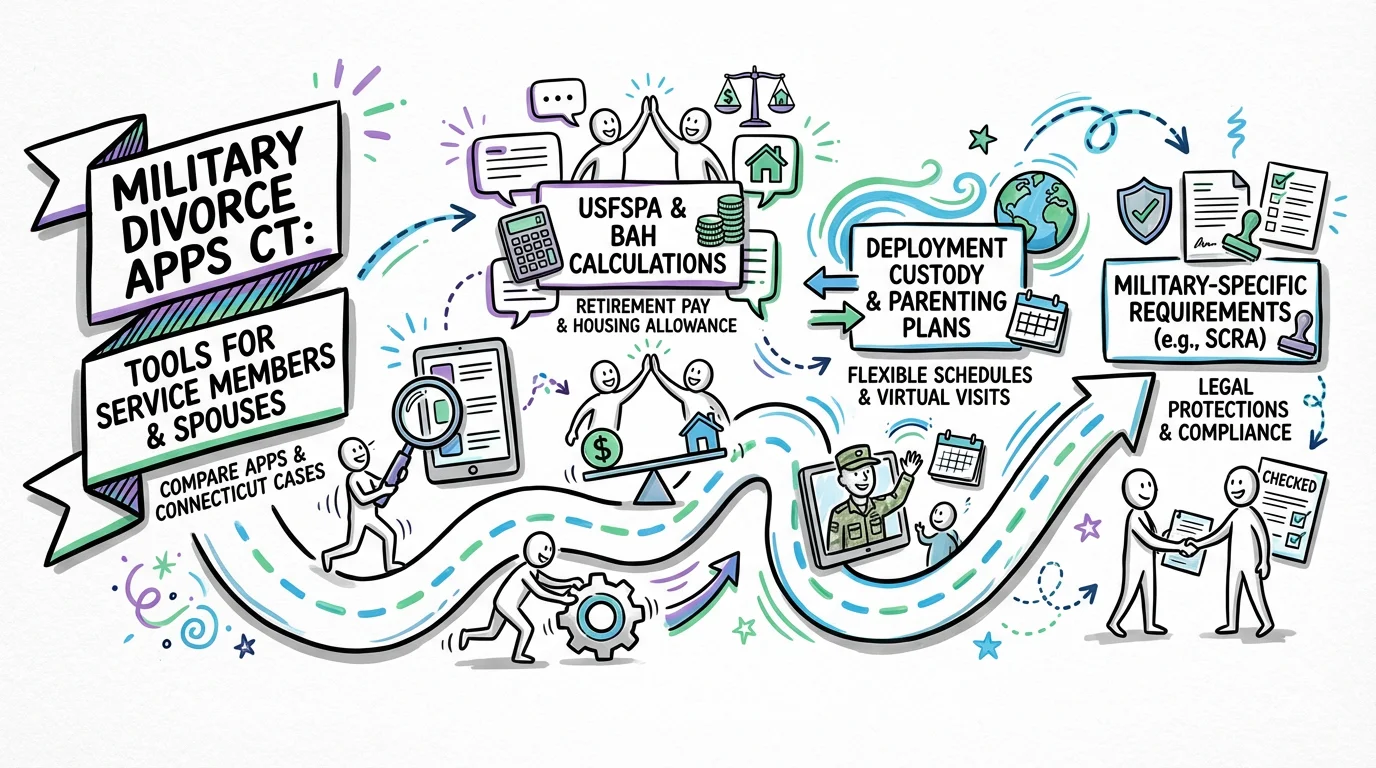
The best military divorce apps for Connecticut must handle both state-specific statutes and federal regulations like the Uniformed Services Former Spouses' Protection Act (USFSPA). Unlike generic tools, specialized apps must accurately calculate BAH and military pension division under Connecticut's equitable distribution laws while accounting for unique deployment custody protections. Untangle is specifically built for Connecticut divorces and includes the military-specific calculators and legal guidance required to navigate these complex dual jurisdictions.
Why Military Divorces Require Specialized Tools
Military divorces involve layers of complexity that generic divorce apps simply cannot handle. You're navigating two overlapping legal systems: Connecticut family law and federal military regulations. Connecticut recognizes military retirement pay as marital property subject to equitable distribution, and the state's Child Support Guidelines specifically include "military personnel fringe benefit payments" when calculating gross income. This means any app you use must accurately account for BAH, BAS, COLA, and other military allowances—not just base pay.
Service members also face unique jurisdictional questions. Under C.G.S. § 46b-44, Connecticut requires residency to file for divorce, but military families often move frequently between duty stations. The Servicemembers Civil Relief Act (SCRA) provides additional protections that can delay proceedings, and a deployed spouse has specific rights regarding custody and visitation under Connecticut law. Apps that don't understand these nuances can lead to costly mistakes. To ensure you're fully informed and avoid costly errors, tools like Untangle's AI legal guidance can provide instant, Connecticut-specific answers to your complex questions.
The division of military pensions adds another layer of complexity. The Defense Finance and Accounting Service (DFAS) requires specific language in court orders to process pension division, and the 10/10 rule affects whether DFAS will make direct payments to a former spouse. An effective military divorce app should help you understand these requirements and prepare for negotiations accordingly.
Key Features to Compare in Military Divorce Apps
Military Income and Benefits Calculations
The most critical feature for any military divorce app is accurate income calculation. Connecticut courts include all military allowances when determining child support and alimony. According to case law like Wald v. Cortland-Wald, courts have approved agreements involving military benefits including G.I. Bill transfers as part of divorce settlements. Your app should be able to:
- Calculate total military compensation including BAH, BAS, and special pays
- Project future income based on rank advancement
- Account for deployment bonuses and combat pay
- Handle irregular income from reserve or National Guard service
Untangle's child support calculator allows you to input all sources of military income and generates accurate child support estimates using Connecticut's guidelines. This is essential because generic apps often miss military-specific allowances, leading to inaccurate support calculations.
Deployment Custody Provisions
Connecticut has specific protections for deploying parents under C.G.S. § 46b-56e. This statute defines "deploy" as military service in compliance with orders for combat operations and allows parents to seek temporary custody modifications during deployment. Any military divorce app should help you:
- Understand your rights regarding temporary custody delegation
- Create deployment parenting plans that comply with Connecticut law
- Document custody arrangements for military records
- Plan for communication schedules across time zones
The law recognizes that deployment doesn't mean a parent is abandoning their custody rights. Courts must consider the temporary nature of military service when making custody determinations. Tools that help you create comprehensive deployment communication plans are invaluable.
Document Management and Military Records
Military divorces require extensive documentation beyond what civilian divorces need. You'll need Leave and Earnings Statements (LES), retirement point statements, benefit elections, and potentially security clearance considerations. Practice Book Rule § 25-32 requires exchange of financial documents including pay stubs and tax returns within 30 days of request. Military families need organized document systems that can handle:
- LES statements (which differ significantly from civilian pay stubs)
- Survivor Benefit Plan (SBP) elections
- TRICARE enrollment documentation
- Veterans Affairs disability ratings and benefits
- Thrift Savings Plan (TSP) statements
Failure to produce these documents in a timely manner can significantly stall divorce proceedings. In military cases, where one spouse might be deployed or stationed elsewhere, the logistical challenge of retrieving physical records is magnified. Digital management systems that allow you to upload, categorize, and share these specific military documents ensure that you comply with Practice Book disclosure requirements without the stress of mailing physical copies or tracking down lost paperwork.
Military Divorce Apps Comparison Table
| Feature | Untangle | Generic Divorce Apps | DIY Approach |
|---|---|---|---|
| Connecticut-Specific | ✅ Built for CT law | ❌ Generic templates | ⚠️ Requires research |
| Military Income Calculator | ✅ Includes BAH, BAS, special pays | ❌ Base pay only | ❌ Manual calculation |
| Deployment Custody Planning | ✅ C.G.S. § 46b-56e compliant | ❌ Not addressed | ⚠️ Attorney needed |
| Military Pension Division | ✅ USFSPA guidance included | ❌ Generic division | ❌ Expert required |
| TRICARE/Benefits Tracking | ✅ Eligibility timeline tools | ❌ Not included | ⚠️ Complex rules |
| Automatic Orders Compliance | ✅ CT Practice Book § 25-5 | ❌ State-specific rules | ⚠️ Risk of violation |
| Document Organization | ✅ Military-specific categories | ⚠️ Generic filing | ❌ Paper chaos |
| Cost Estimate | $$ | $-$$$ | $ (plus error costs) |
Understanding Connecticut's Military Divorce Requirements
Residency and Jurisdiction
Connecticut's residency requirements under C.G.S. § 46b-44 allow either party to file for divorce once they've established residence in the state. For military families, this can be complicated by permanent change of station (PCS) orders and legal residence designations. A service member stationed in Connecticut may not be a legal resident, while their spouse living in Connecticut likely is.
The 90-day waiting period applies to all Connecticut divorces, but the SCRA may allow service members to request stays of proceedings. Courts can issue temporary orders under C.G.S. § 46b-56 and § 46b-83 once residency is established, which is crucial for military families needing immediate resolution of custody or support issues during the divorce process.
Understanding which state has jurisdiction is essential before choosing any divorce app. If both spouses live in different states, you'll need to determine where to file and ensure your app provides guidance for the correct jurisdiction.
Child Support Calculations for Military Families
Connecticut's Child Support Guidelines treat military income comprehensively. The guidelines worksheet (Form CCSG-001) must include all military compensation. Under C.G.S. § 46b-84, both parents must maintain minor children according to their respective abilities. For military families, this means:
- Base pay forms the foundation of income calculation
- BAH is included even though it's technically non-taxable
- BAS (Basic Allowance for Subsistence) counts as income
- Special pays such as flight pay, hazardous duty pay, and sea pay are included
- Bonuses including reenlistment bonuses may be considered
It is important to note that while some military allowances are tax-exempt for federal income tax purposes, they are fully includable as income for Connecticut child support calculations. This distinction often confuses service members who are used to looking at their "taxable income" on tax returns. A proper calculation must reconstruct the "gross income" by adding back the non-taxable housing and subsistence allowances to ensure the support order reflects the true financial reality of the family. Untangle's child support calculator is calibrated specifically for Connecticut guidelines and allows you to input all these military-specific income sources accurately.
Alimony and Support Modifications
Connecticut allows modification of alimony and support orders under C.G.S. § 46b-86 when there's a substantial change in circumstances. For military families, this could include PCS moves, deployment, promotion, or separation from service. Practice Book Rule § 25-26 outlines the modification process, and any military divorce app should help you understand when modification might be appropriate.
The case Dinunzio v. Dinunzio illustrates how Connecticut courts handle support modifications, emphasizing that courts maintain jurisdiction to adjust orders when circumstances genuinely change. Military families should document all income changes carefully, as transitions between active duty and civilian employment often trigger modification requests.
Try our free CT child support calculator
Calculate your estimated child support using Connecticut's official guidelines formula.
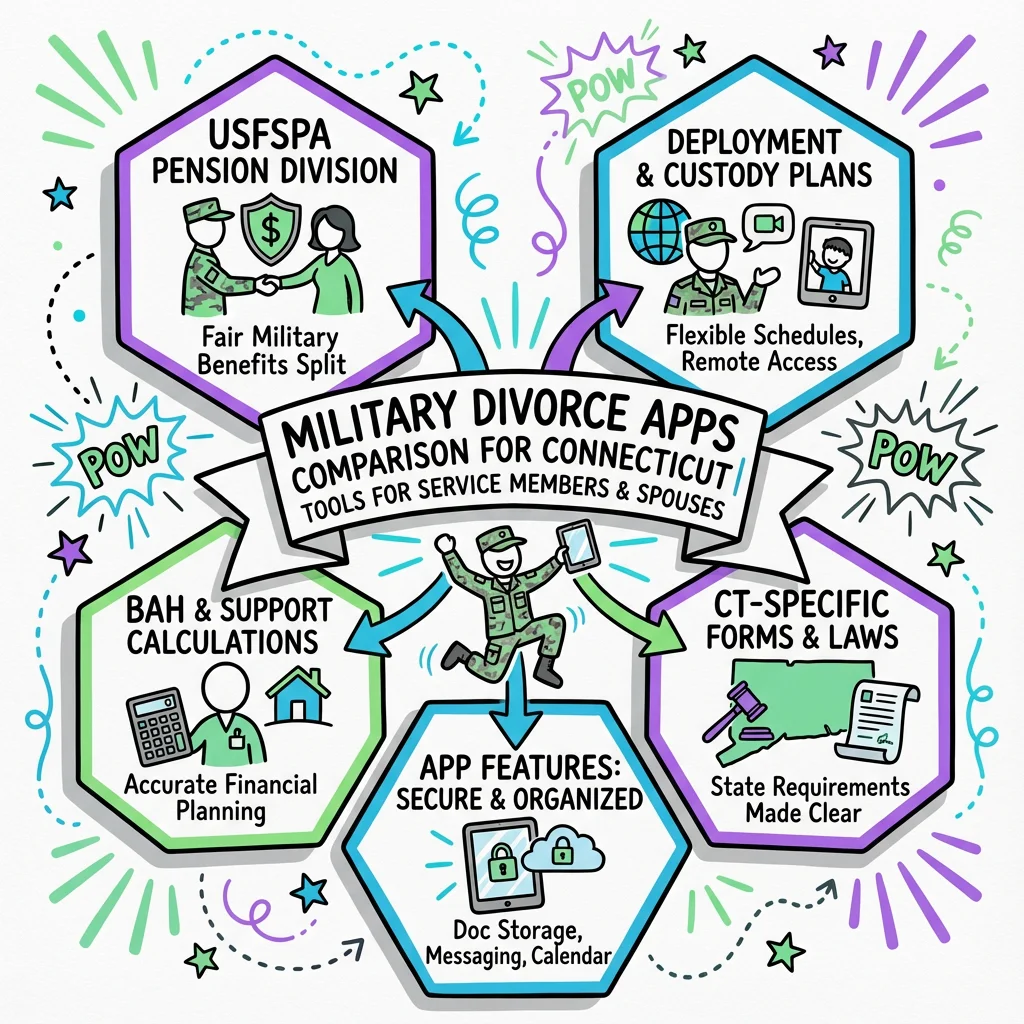
Step-by-Step: Using Apps for Your Military Divorce in Connecticut
-
Verify jurisdictional requirements - Confirm Connecticut residency under C.G.S. § 46b-44 and determine whether you or your spouse qualifies to file in the state.
-
Gather military-specific documents - Collect LES statements, retirement point statements, TSP balances, and all benefit enrollment documentation. Use your app's document organization features to categorize these properly.
-
Calculate complete military income - Enter all compensation including allowances into your app's income calculator. Ensure BAH, BAS, and any special pays are included per Connecticut's guidelines.
-
Understand automatic orders - Connecticut's automatic orders under Practice Book Rule § 25-5 take effect immediately upon filing. Military families should note restrictions on removing children from the state, which can conflict with PCS orders.
-
Create deployment-aware custody plans - If deployment is possible, build contingency plans that comply with C.G.S. § 46b-56e. Include provisions for virtual visitation and temporary custody delegation.
-
Address military pension division - Use your app to understand the 10/10 rule and USFSPA requirements. Draft proposed division terms that DFAS will accept.
-
Complete financial affidavits - The Financial Affidavit (Form JD-FM-006) must accurately reflect all military income and benefits. Apps with military-specific fields prevent common omissions. Tools like Untangle's Financial affidavit generation can help you accurately complete and generate your Connecticut financial affidavit, ensuring all military-specific income and benefits are correctly included.
-
File required forms - Use the Divorce Complaint (Form JD-FM-159) and Notice of Automatic Court Orders (Form JD-FM-158) to initiate your case properly.
Cost and Timeline Considerations
Military divorces in Connecticut generally follow the same 90-day minimum timeline as civilian divorces, but several factors can extend this:
| Factor | Impact on Timeline | Cost Impact |
|---|---|---|
| SCRA stay requests | +30-90 days | Minimal |
| Contested pension division | +3-6 months | $$$ (expert valuations) |
| Deployment during proceedings | +30 days to indefinite | $$ (continued filings) |
| Interstate custody disputes | +2-6 months | $$$ (jurisdictional hearings) |
| Security clearance concerns | Varies | $ (document sealing) |
If you have sensitive information related to security clearances, Practice Book Rule § 25-59A allows for sealing files or limiting disclosure in family matters. Courts can restrict public access when necessary to protect overriding interests, though parties' agreement alone isn't sufficient—the court must make specific findings.
When to Get Professional Help
While apps like Untangle can guide you through much of the military divorce process, certain situations warrant professional legal assistance:
-
Complex pension division: If military retirement is a significant asset and the marriage overlaps substantially with military service, a Qualified Domestic Relations Order (QDRO) expert or military divorce attorney can ensure proper valuation and division language that DFAS will accept.
-
Contested custody with deployment concerns: When parents disagree about custody arrangements during deployment or PCS moves, understanding C.G.S. § 46b-56e protections requires nuanced legal guidance. Courts have discretion in these matters, and experienced representation can make a significant difference.
-
Interstate jurisdiction disputes: When spouses live in different states, determining proper jurisdiction involves complex federal and state law analysis. The SCRA adds another layer of protection that must be navigated carefully.
-
Domestic violence situations: If there are safety concerns, prioritize connecting with legal advocates who understand both civilian protective orders and military protective orders (MPOs). Connecticut's automatic orders provide some protection, but domestic violence cases require specialized support beyond what any app can provide.
Military divorces require tools that understand both worlds you're navigating. By choosing an app designed for Connecticut law with military-specific features, you'll be better prepared to protect your rights and reach a fair resolution.
Frequently Asked Questions
What features should I look for in a divorce app if I'm a military spouse in Connecticut?
Look for apps that handle USFSPA military pension division, BAH and BAS income calculations, TRICARE eligibility tracking, deployment custody provisions, and Connecticut-specific equitable distribution requirements.
Are there co-parenting apps designed specifically for military divorced parents?
Yes, several co-parenting apps like OurFamilyWizard and Talking Parents offer features for military families, including deployment scheduling, multiple time zone support, and communication logs that can be used in Connecticut custody proceedings.
How do military divorce apps calculate pension division differently than regular divorce apps?
Military divorce apps use DFAS-compliant formulas that account for the marital share of military retirement pay under USFSPA, including proper coverture fractions and Survivor Benefit Plan elections required for Connecticut equitable distribution.
What documents should a military divorce app help me organize in CT?
A good military divorce document organizer should help you collect Leave and Earnings Statements (LES), deployment orders, military pension statements, TRICARE enrollment records, and Connecticut court-required financial affidavits.
Does Connecticut include BAH and other military allowances when calculating child support?
Yes, under C.G.S. § 46b-215a-1(11)(A)(vii), Connecticut specifically includes military fringe benefit payments like BAH, BAS, and COLA when calculating gross income for child support purposes.
Legal Citations
- • C.G.S. § 46b-44 - Residency requirement View Source
- • C.G.S. § 46b-56e - Orders of custody and visitation re deploying parent View Source
- • C.G.S. § 46b-84 - Parents' obligation for maintenance of minor child View Source
- • C.G.S. § 46b-86 - Modification of alimony or support orders View Source
- • Practice Book Rule § 25-5 - Automatic Orders upon Service of Complaint or Application View Source
- • Practice Book Rule § 25-26 - Modification of Custody, Alimony or Support View Source
- • Practice Book Rule § 25-32 - Mandatory Disclosure and Production View Source
- • Practice Book Rule § 25-59A - Sealing Files or Limiting Disclosure of Documents in Family Matters View Source
- • Wald v. Cortland-Wald, 226 Conn. App. 752 View Source
- • Dinunzio v. Dinunzio, 182 A.3d 706 View Source
- • Form JD-FM-006 - Financial Affidavit Long Form View Source
- • Form JD-FM-158 - Notice of Automatic Court Orders View Source
- • Form JD-FM-159 - Divorce Complaint (Dissolution of Marriage) View Source
- • Form CCSG-001 - Worksheet for Child Support and Arrearage Guidelines View Source