LegalZoom vs Untangle for Contested Divorce in Connecticut: Which Platform Handles Conflict Better
Compare LegalZoom and Untangle for contested Connecticut divorces. Learn which platform better handles disputes, court requirements, and high-conflict situations.
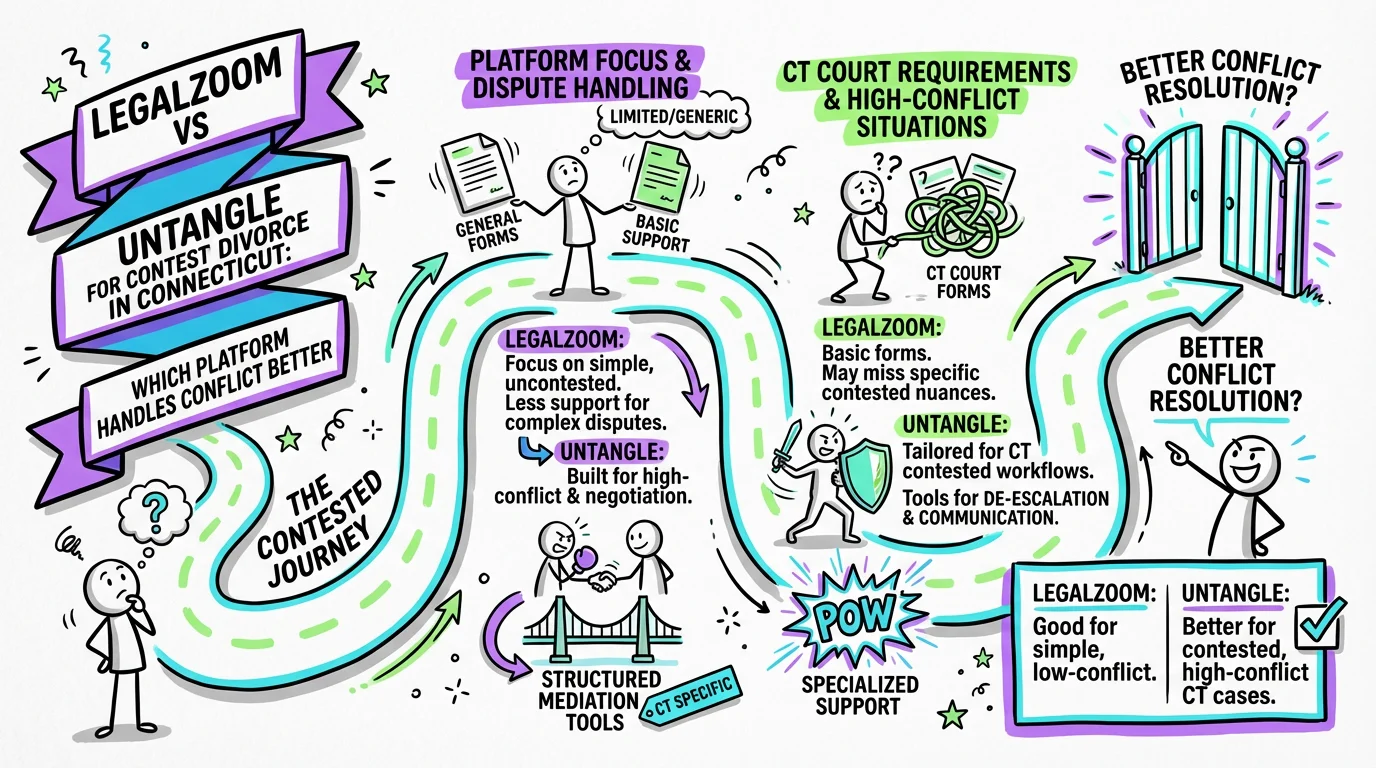
Neither LegalZoom nor Untangle is designed to fully handle a contested divorce in Connecticut—but they serve very different purposes when conflict exists. LegalZoom primarily offers document preparation for uncontested divorces where both parties agree, making it largely unsuitable when your spouse won't cooperate. Untangle, by contrast, is specifically built to help you organize finances, understand your options, and prepare for negotiations or court proceedings—even when you're facing resistance. For a true contested divorce in Connecticut, you'll ultimately need an attorney, but the right preparation tool can save you thousands in legal fees and help you enter that process from a position of strength.
Understanding Contested Divorce in Connecticut
A contested divorce occurs when spouses cannot agree on one or more key issues—property division, alimony, child custody, or child support. Under Connecticut law, the Superior Court has broad authority to make these determinations when parties can't reach agreement. According to C.G.S. § 46b-81, the court may "assign to either spouse all or any part of the estate of the other spouse," considering factors like length of marriage, causes for dissolution, and each party's earning capacity. This means a judge—not you or your spouse—will ultimately decide these matters if you can't negotiate a settlement.
The distinction between contested and uncontested divorce isn't always clear at the outset. Many divorces start contested but settle before trial once both parties understand the financial realities and legal standards. This is where preparation becomes critical. The spouse who enters negotiations with organized financial documentation, a clear understanding of Connecticut's statutory factors, and realistic expectations typically achieves better outcomes—whether through settlement or litigation.
Connecticut's mandatory disclosure requirements under Practice Book § 25-32 require extensive financial transparency regardless of whether your divorce is contested. Both parties must exchange tax returns, pay stubs, bank statements, retirement account information, and documentation of all debts within 60 days of a request. Failing to organize this information early puts you at a significant disadvantage, especially when your spouse may be hiding assets or misrepresenting income.
What LegalZoom Actually Offers for Connecticut Divorce
LegalZoom's divorce service is fundamentally designed for couples who have already reached complete agreement on all issues. Their platform generates the paperwork needed to file an uncontested divorce, including the complaint, settlement agreement, and related court forms. For approximately $500-$600, you receive document preparation assistance and filing guidance—but no help with negotiation, conflict resolution, or understanding your legal rights in a dispute.
The critical limitation becomes apparent when your spouse won't cooperate. LegalZoom's service requires both parties to agree on every term before documents can be finalized. If your spouse refuses to sign, contests the terms, or simply won't engage in the process, you've paid for a service that cannot help you move forward. Their customer service representatives cannot provide legal advice about your specific situation, explain how Connecticut courts typically rule on disputed issues, or help you develop a strategy for dealing with an uncooperative spouse.
LegalZoom also doesn't account for Connecticut-specific procedural requirements that become crucial in contested cases. Practice Book § 25-5 establishes automatic court orders that take effect immediately upon service, restricting both parties from hiding assets, canceling insurance, or removing children from the state. Understanding these protections—and how to enforce them when violated—requires legal knowledge that a document preparation service simply doesn't provide.
How Untangle Approaches High-Conflict Situations
Untangle takes a fundamentally different approach by focusing on what you can control: your own preparation and understanding. Rather than assuming agreement exists, Untangle helps you build the foundation for either negotiation or litigation. The platform guides you through organizing every financial document Connecticut courts require, from the sworn financial affidavits mandated by Practice Book § 25-30 to the comprehensive disclosure demanded under § 25-32.
When your spouse won't cooperate, having your own financial house in order becomes your most powerful asset. Untangle's bank statement analysis and asset tools help you compile the 24 months of bank statements, three years of tax returns, retirement account valuations, and debt documentation that Connecticut courts require. More importantly, the platform helps you identify potential issues—hidden income, suspicious transfers, undervalued assets—that your attorney will need to investigate.
The platform also provides Connecticut-specific guidance on how courts typically handle disputed issues. For example, Untangle's AI legal guidance can help you ask questions and get instant answers based on CT law, helping you understand that C.G.S. § 46b-82 requires courts to consider factors like "the length of the marriage, the causes for the annulment, dissolution of the marriage or legal separation, the age, health, station, occupation, amount and sources of income" to develop realistic expectations. This knowledge prevents you from wasting time and money fighting for outcomes a Connecticut judge would never award.
Side-by-Side Comparison: Key Features for Contested Cases
| Feature | LegalZoom | Untangle |
|---|---|---|
| Designed for contested divorce | No | Partial—preparation focus |
| Works without spouse cooperation | No | Yes |
| Connecticut-specific guidance | Limited | Yes |
| Financial document organization | No | Yes |
| Asset/debt analysis tools | No | Yes |
| Court form generation | Yes (uncontested only) | Yes |
| Helps identify hidden assets | No | Yes |
| Preparation for attorney meetings | No | Yes |
| Understanding of CT statutory factors | No | Yes |
| Approximate cost | $500-$600 | Varies by plan |
Why Preparation Matters More Than Platform Choice
In contested Connecticut divorces, the real question isn't which online service to use—it's how prepared you are when you walk into your attorney's office or the courtroom. Attorneys typically charge $300-$500 per hour in Connecticut. Every hour they spend organizing your financial documents, explaining basic legal concepts, or gathering information you could have compiled yourself costs you money that could be spent on actual legal strategy.
Connecticut case law emphasizes the importance of thorough financial disclosure. In Walker v. Walker, the court addressed property distribution, noting that the trial court must consider each factor in C.G.S. § 46b-81(c) when dividing marital assets. Your ability to present a complete, accurate financial picture directly impacts how favorably these factors are applied to your situation. Incomplete or disorganized financial information can lead to unfavorable assumptions by the court.
The financial affidavit required by Connecticut courts (Form JD-FM-006) demands detailed information about income, expenses, assets, and liabilities. Many people underestimate how time-consuming and complex this form is to complete accurately. Tools like Untangle's financial affidavit generation can guide you through compiling this information in advance, ensuring you're not scrambling at the last minute—and helping you spot discrepancies in your spouse's filings.
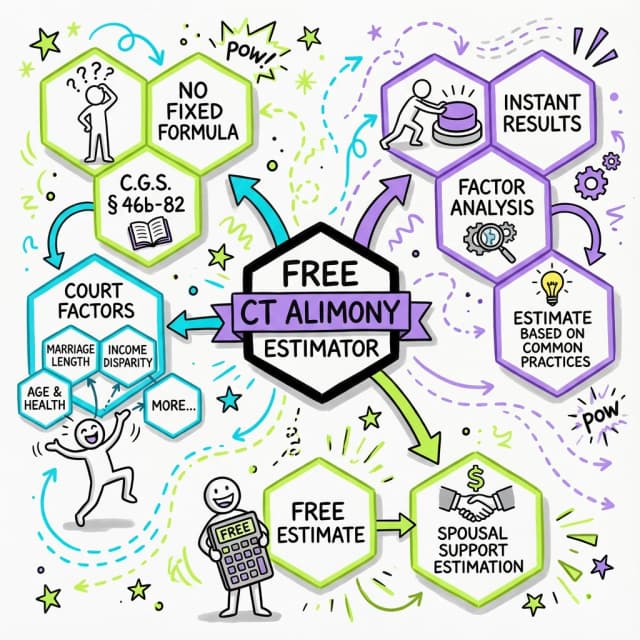
Try our free CT alimony calculator
Get an instant estimate based on Connecticut's statutory factors. No signup required.
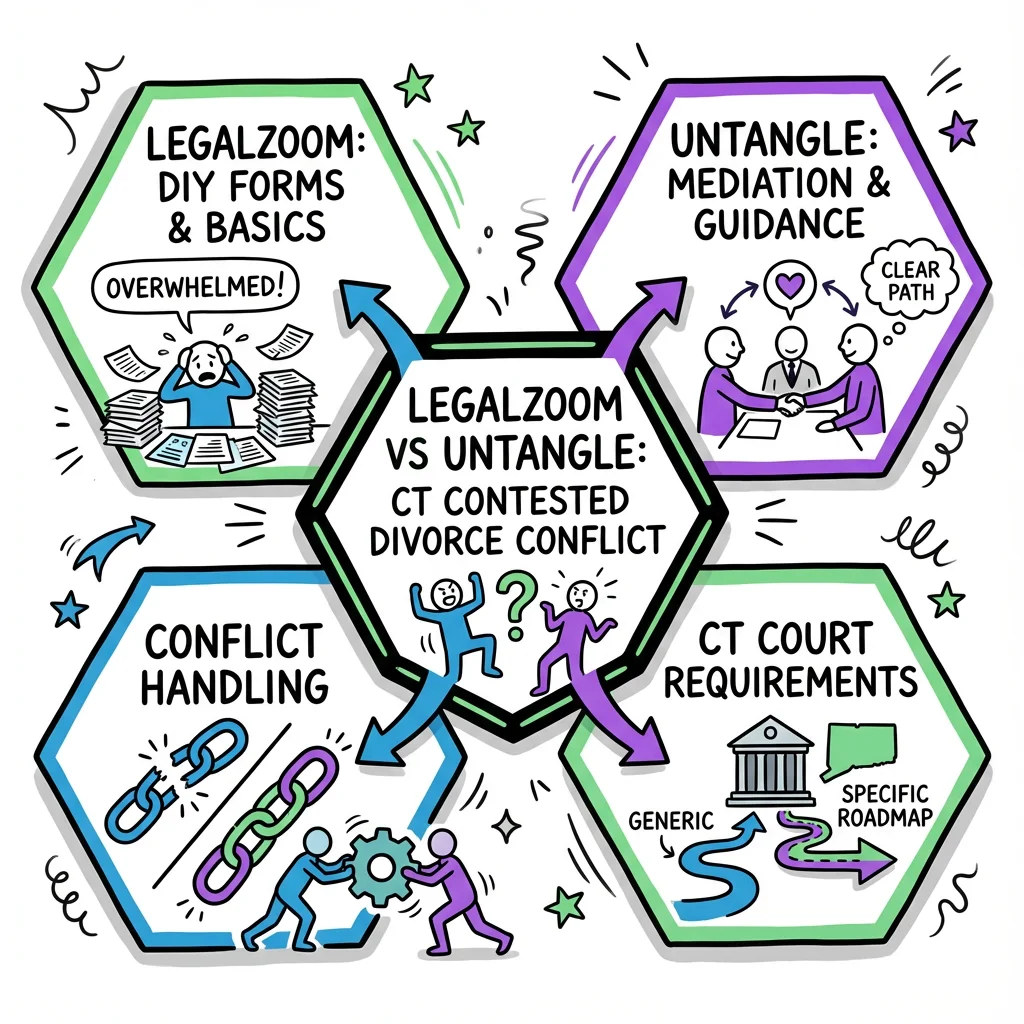
Steps to Prepare for a Contested Connecticut Divorce
-
Secure copies of all financial documents immediately. Before tensions escalate further, gather bank statements, tax returns, pay stubs, mortgage documents, retirement account statements, and credit card bills. Connecticut's automatic orders under Practice Book § 25-5 prevent asset hiding once the case is filed, but having your own copies protects against "accidental" loss or destruction.
-
Create a comprehensive inventory of all assets and debts. List everything—real estate, vehicles, retirement accounts, investment accounts, business interests, and personal property of significant value. Include debts like mortgages, car loans, credit cards, and student loans. Untangle's complete asset inventory helps you organize this information in a format that translates directly to court requirements.
-
Document your spouse's income and earning capacity. If you suspect your spouse is hiding income or underemploying themselves, gather evidence now. Tools like Untangle's income source tracking can help you compile pay stubs, employment contracts, business records, and evidence of lifestyle inconsistent with reported income. Connecticut courts can impute income based on earning capacity under C.G.S. § 46b-82.
-
Understand Connecticut's legal standards for disputed issues. Courts don't divide property 50/50 automatically—they consider factors like each spouse's contribution, earning capacity, age, and health. Alimony depends on need, ability to pay, and the lifestyle established during marriage. Going in with realistic expectations based on how Connecticut courts actually rule saves time, money, and emotional energy.
-
Prepare a realistic budget for post-divorce life. The financial affidavit requires you to project future expenses. Understanding what you'll actually need—and what's reasonable under Connecticut standards—strengthens your negotiating position and helps you prioritize what matters most.
-
Consult with a Connecticut family law attorney. Online tools help you prepare, but contested divorces ultimately require legal representation. Come to that initial consultation organized and informed. Attorneys respect prepared clients and can focus immediately on strategy rather than basic education.
Cost Comparison: True Expenses in Contested Divorce
| Expense Category | Without Preparation | With Proper Preparation |
|---|---|---|
| Attorney retainer | $5,000-$15,000 | $5,000-$15,000 |
| Document gathering (attorney time) | $1,500-$3,000 | $0-$500 |
| Financial analysis (attorney time) | $2,000-$5,000 | $500-$1,500 |
| Discovery disputes | $3,000-$10,000+ | Often avoided |
| Trial preparation | $5,000-$15,000+ | $3,000-$8,000 |
| Preparation tool cost | $0 | $100-$500 |
| Estimated total range | $16,500-$48,000+ | $8,600-$25,500 |
These figures assume moderate complexity. High-asset divorces, custody battles, or cases involving business valuations can cost significantly more. The common thread: preparation reduces costs across every category.
When Online Tools Aren't Enough
While Untangle can dramatically improve your preparation and reduce attorney costs, certain contested divorce situations require immediate legal intervention. If your spouse has already hired an aggressive attorney, you need representation now—not after you've finished organizing documents. If domestic violence is present, your safety and legal protection take priority over financial preparation.
Cases involving complex assets—business ownership, stock options, pensions, trusts, or significant real estate holdings—require professional valuation and legal strategy that no online tool can provide. Connecticut courts have broad discretion under C.G.S. § 46b-81 to divide property, and proper legal representation ensures your interests are protected when significant assets are at stake.
Similarly, custody disputes involving allegations of abuse, substance abuse, or parental alienation need skilled legal advocacy. Under C.G.S. § 46b-56, courts must determine custody based on the "best interests of the child," considering numerous factors that require evidence, expert testimony, and strategic presentation. Online tools can help you organize relevant documentation, but they cannot replace an attorney's advocacy in court.
Making the Right Choice for Your Situation
If your spouse truly won't cooperate and you're facing a contested divorce, LegalZoom isn't the right tool—their service simply wasn't designed for conflict. Your choice is really between going directly to an attorney unprepared or using Untangle to organize your finances and understand your options before that first consultation. The latter approach typically saves money, reduces attorney time spent on administrative tasks, and helps you make informed decisions about settlement offers versus litigation.
The most successful contested divorce outcomes come from a combination of thorough preparation, realistic expectations based on Connecticut law, and skilled legal representation when needed. Start by getting your financial house in order, understand the statutory factors courts will apply, and then engage an attorney from a position of knowledge rather than confusion. That preparation—regardless of which tool helps you achieve it—is what separates favorable outcomes from regrettable ones.
Frequently Asked Questions
Can LegalZoom handle a contested divorce in Connecticut?
No, LegalZoom is primarily designed for uncontested divorces where both spouses agree on all terms, making it largely unsuitable for contested cases in Connecticut.
How much does Untangle cost compared to LegalZoom for divorce preparation?
Untangle and LegalZoom have different pricing models, but using either platform for preparation can save thousands in attorney fees by helping you organize finances and documentation before legal proceedings.
Do I still need a lawyer if I use Untangle for my CT contested divorce?
Yes, for a true contested divorce in Connecticut you will ultimately need an attorney, but Untangle can help you prepare financially and enter the process from a stronger negotiating position.
What happens if my spouse won't cooperate with our Connecticut divorce?
If your spouse won't cooperate, a Connecticut Superior Court judge will decide contested issues like property division, alimony, and child custody based on statutory factors under C.G.S. § 46b-81.
What are affordable alternatives to LegalZoom for a contested divorce in CT?
Untangle is an alternative that specifically helps you organize finances, understand your options, and prepare for negotiations or court proceedings even when facing resistance from your spouse.
Legal Citations
- • C.G.S. § 46b-81 View Source
- • Practice Book § 25-32 View Source
- • Practice Book § 25-5 View Source
- • Practice Book § 25-30 View Source
- • C.G.S. § 46b-82 View Source
- • C.G.S. § 46b-56 View Source