Is It Normal to Feel Lost During Divorce? Understanding Your Emotions in Connecticut
Feeling lost during divorce is completely normal. Learn why these emotions happen, how Connecticut divorce works, and find guidance to navigate this challenging transition.
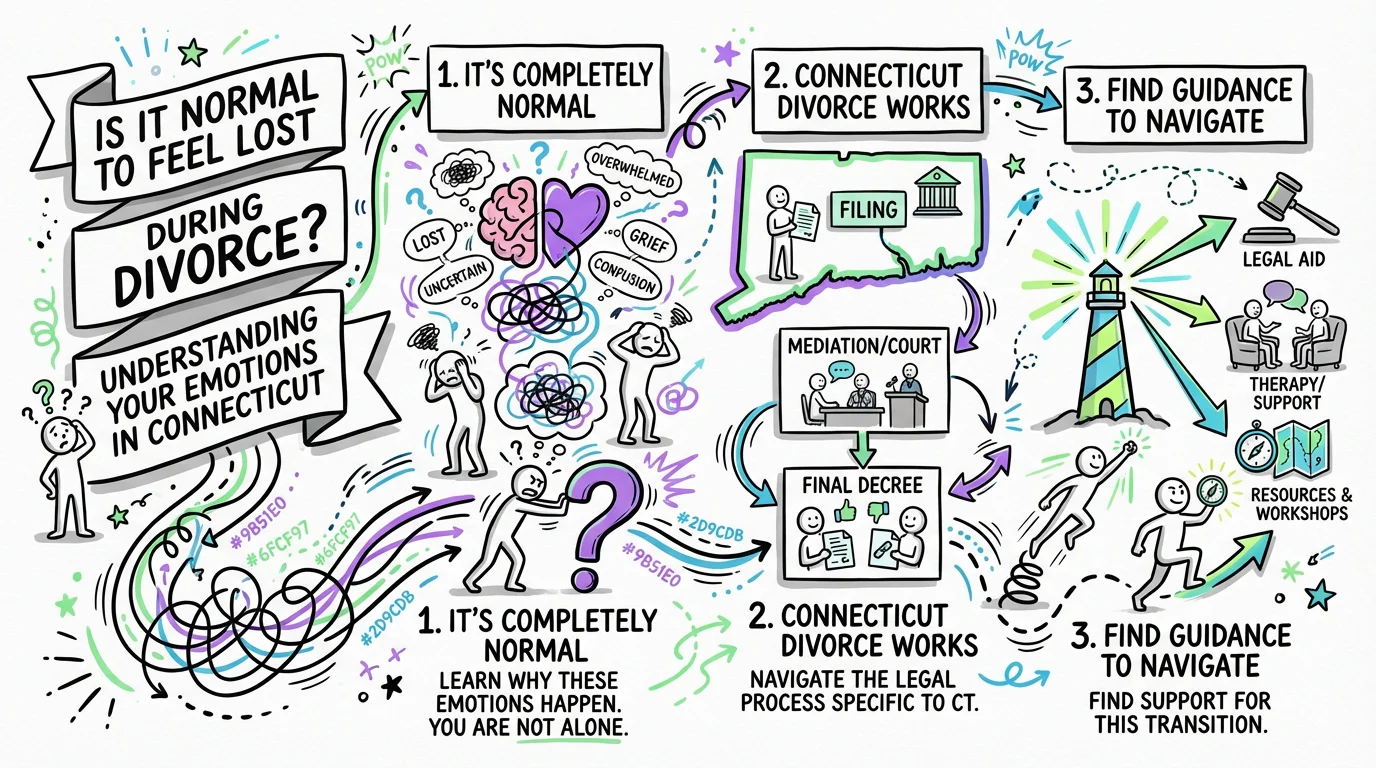
Yes, feeling lost during divorce is completely normal—and you are far from alone. The overwhelming majority of people going through divorce in Connecticut experience confusion, uncertainty, and emotional disorientation at some point in the process. Divorce represents one of life's most significant transitions, touching every aspect of your existence from your living situation and finances to your identity and daily routines. These feelings of being lost are not a sign of weakness; they are a natural human response to profound change.
Why Divorce Creates Such Intense Emotional Confusion
Divorce fundamentally disrupts what psychologists call your "assumptive world"—the mental framework you've built around your marriage, your future plans, and your sense of self. When that framework collapses, it's natural to feel unmoored. You may find yourself questioning decisions you once felt certain about, grieving a future that will never happen, and struggling to envision what comes next.
The legal process itself adds another layer of complexity. Connecticut's divorce process involves numerous decisions about property division, potential alimony, and if you have children, custody arrangements and parenting plans. For someone already emotionally overwhelmed, facing these decisions can feel paralyzing. You're asked to make life-altering choices during one of the most emotionally turbulent periods of your life. If the thought of navigating this legal maze feels overwhelming, a free AI consultation with Untangle can help you understand your basic options and what to expect, providing clarity when you feel most lost.
What makes these feelings particularly challenging is that they often come in waves. You might feel confident and clear-headed one day, only to wake up the next morning feeling completely lost again. This emotional rollercoaster is not a sign that something is wrong with you—it's a normal part of processing grief and major life change. Understanding this pattern can help you extend compassion to yourself on the difficult days.
The Emotional Stages of Divorce: What to Expect
While everyone's divorce journey is unique, most people experience a recognizable pattern of emotions. Understanding these stages can help normalize what you're feeling and provide hope that the intense confusion you're experiencing now won't last forever.
Initial Shock and Denial
Whether you initiated the divorce or it came as a surprise, the early stages often involve a sense of unreality. You may find yourself going through the motions while feeling emotionally numb, or you might swing between believing the marriage can still be saved and acknowledging it's truly over. This protective mechanism gives your mind time to gradually absorb the magnitude of the change.
During this phase, the Connecticut divorce process requires you to make initial decisions—like whether to file or respond to a divorce complaint. It is helpful to remember that Connecticut law imposes a minimum 90-day waiting period (C.G.S. § 46b-67) before a divorce can be finalized, which provides a necessary window for emotions to settle before final judgments are entered.
Anger, Bargaining, and Grief
As the reality of divorce sets in, more intense emotions often emerge. You may feel angry at your spouse, at yourself, or at the situation. You might find yourself mentally bargaining—"If only I had done things differently"—or cycling through deep sadness and grief. These emotions are all part of processing the loss of your marriage.
Many Connecticut residents find this phase particularly difficult because it coincides with having to make important legal and financial decisions. You're asked to negotiate or decide on matters like property division under C.G.S. § 46b-81 while potentially feeling your most emotionally vulnerable. Recognizing that your emotional state may affect your decision-making is the first step toward protecting yourself.
Acceptance and Rebuilding
Eventually, most people reach a stage where the intense emotional turbulence begins to calm. This doesn't mean you'll never feel sad or lost again, but the feelings become less overwhelming and more manageable. You begin to envision and build a new life, develop new routines, and rediscover your identity as an individual.
The timeline for reaching this stage varies dramatically from person to person. Some people begin feeling more settled within months; for others, it takes a year or more. There is no "right" timeline, and comparing yourself to others—especially those who seem to be "moving on" quickly—rarely helps.
Common Experiences That Make You Feel Lost
Understanding the specific triggers that create feelings of confusion during divorce can help you address them more effectively. Here are some of the most common experiences Connecticut residents describe:
| Experience | Why It Creates Confusion | How to Address It |
|---|---|---|
| Identity questions | "Who am I without this marriage?" | Reconnect with pre-marriage interests and explore new ones |
| Financial uncertainty | Unclear about income, expenses, or how to manage money alone | Create a detailed financial inventory and budget |
| Housing decisions | Don't know where you'll live or how to afford it | Research options early and understand your legal rights |
| Social changes | Friends may "choose sides" or relationships feel awkward | Seek new connections through support groups or activities |
| Parenting alone | Overwhelming to manage children without a partner present | Develop new routines and build a support network |
| Legal confusion | Don't understand the divorce process or what's required | Use reliable resources and guidance tools |
Many of these challenges are interconnected. Financial uncertainty affects housing decisions, which affects your sense of stability, which affects your emotional wellbeing. Untangle's comprehensive asset inventory tools can help you create clarity around the financial aspects of divorce, which often provides a sense of control that helps ease emotional overwhelm.
Practical Steps When You Feel Overwhelmed
When you're feeling lost, taking concrete action—even small steps—can help restore a sense of agency and direction. Here's a practical approach:
-
Acknowledge your feelings without judgment. Write them down if it helps. Recognize that feeling lost is a normal response to an abnormal situation.
-
Focus on today, not forever. The question "How will I handle the rest of my life?" is unanswerable and overwhelming. Instead, ask "What do I need to do today?" or "What's the next single step?"
-
Gather information gradually. Understanding the Connecticut divorce process can reduce anxiety. Learn about residency requirements (one spouse must have lived in CT for at least 12 months per C.G.S. § 46b-44), grounds for divorce (C.G.S. § 46b-40), and the general timeline. For specific questions about Connecticut law or court procedures, Untangle's AI legal guidance can provide instant, reliable answers to help demystify the process.
-
Create a financial snapshot. Knowing where you stand financially provides a foundation for decision-making. Identify all accounts, debts, income sources, and expenses.
-
Build your support team. This might include a therapist, a divorce support group, trusted friends and family, and eventually legal and financial professionals.
-
Establish self-care routines. Sleep, nutrition, and exercise profoundly affect your emotional resilience. Even small improvements in these areas can help you feel more stable.
-
Use tools designed to guide you. Untangle's personalized task dashboard breaks down the divorce process into manageable pieces, helping you understand what comes next when everything feels uncertain.
The key is progress, not perfection. Some days you'll accomplish several things on your list; other days, getting through work and feeding yourself will be enough. Both kinds of days are valid.
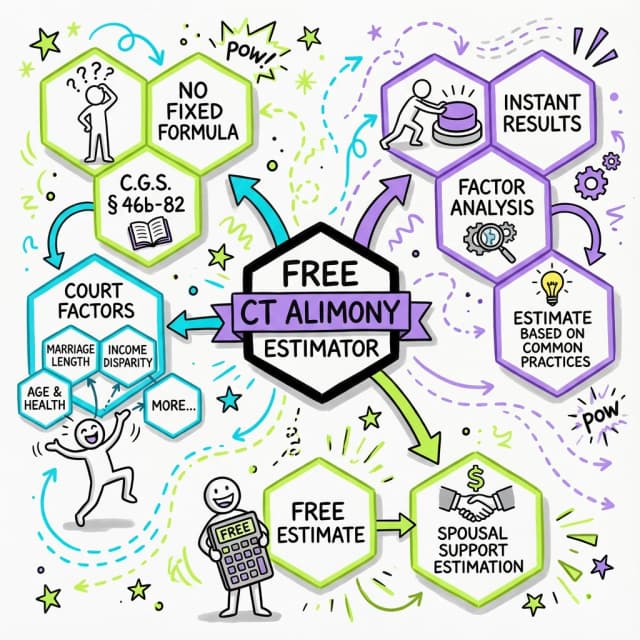
Try our free CT alimony calculator
Get an instant estimate based on Connecticut's statutory factors. No signup required.
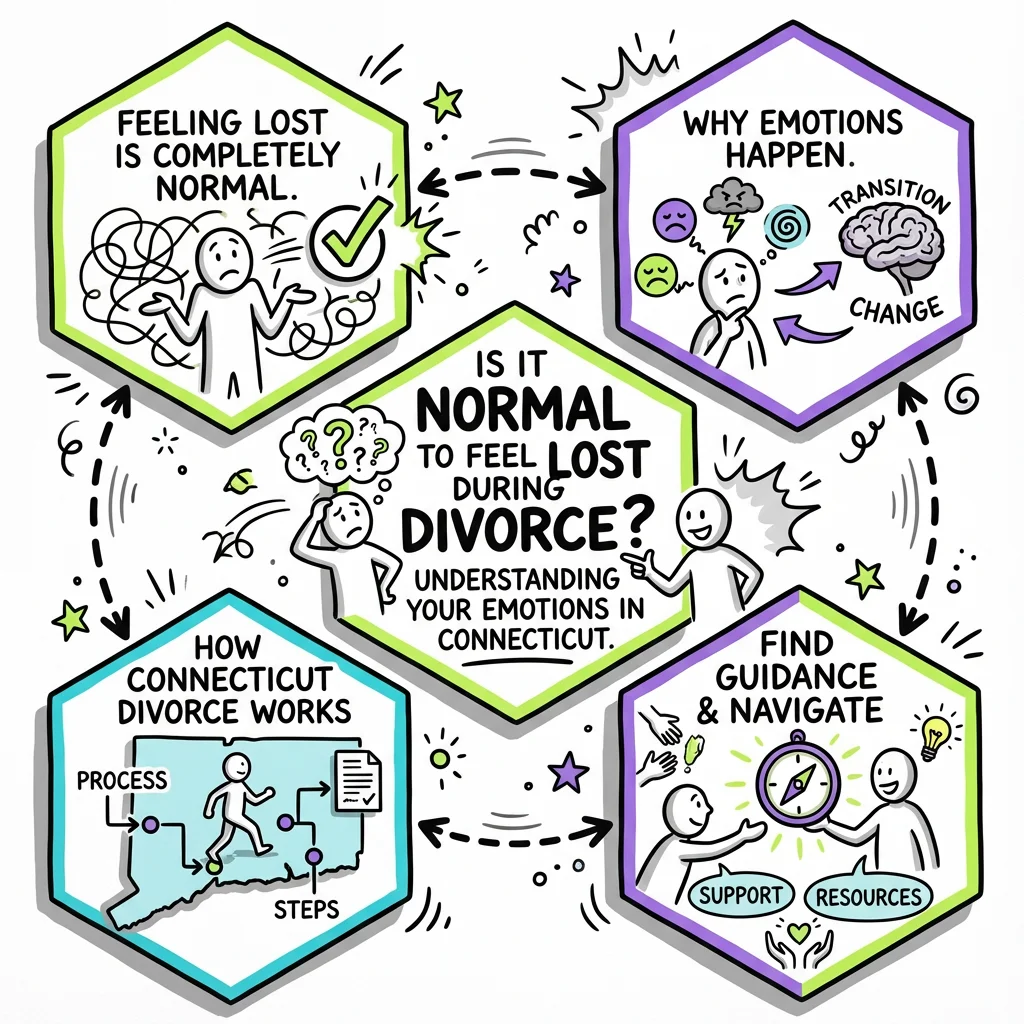
Finding Your Community: You Don't Have to Do This Alone
One of the most powerful antidotes to feeling lost is connection with others who understand what you're going through. Divorce can be isolating—friends who haven't experienced it may not know what to say, and you may feel embarrassed or reluctant to burden others with your struggles.
Connecticut offers various resources for people going through divorce. Many communities have divorce support groups through churches, community centers, or mental health organizations. Online communities can also provide valuable connection, especially during late nights when the loneliness feels most acute.
Professional support is equally important. A therapist who specializes in divorce or life transitions can help you process your emotions, develop coping strategies, and begin building your new life. This isn't a sign of weakness—it's a smart investment in your wellbeing during one of life's most challenging transitions. Sometimes knowing that others have felt exactly what you're feeling—and have come through to the other side—is the most powerful reassurance.
When Feeling Lost Becomes Something More Serious
While feeling lost during divorce is normal, it's important to recognize when your emotional state may require additional support. Divorce significantly increases the risk of depression and anxiety, and sometimes what begins as normal grief crosses into territory that needs professional attention.
Consider reaching out to a mental health professional if you experience:
- Persistent feelings of hopelessness that don't lift
- Difficulty functioning at work or caring for your basic needs
- Thoughts of self-harm or suicide
- Inability to get out of bed or complete daily tasks for extended periods
- Using alcohol or substances to cope with your emotions
- Extreme anxiety that interferes with decision-making or sleep
These experiences don't mean you're failing at divorce—they mean you need and deserve additional support. Connecticut has mental health resources available, and your primary care doctor can also be a starting point for getting help.
Moving Forward: This Feeling Is Temporary
The lost, confused, overwhelmed feelings you're experiencing right now are real and valid—but they are not permanent. Thousands of Connecticut residents have walked this path before you and found their way to stability, peace, and even happiness on the other side.
Divorce is not just an ending; it's also a beginning. While it may be impossible to see that now, many people eventually look back on this period as a turning point that led to profound personal growth, healthier relationships, and a more authentic life.
Your path through divorce will be unique to you, but you don't have to figure it all out alone. Take it one day at a time, build your support network, and trust that clarity will come. The fact that you're seeking information and guidance shows strength and wisdom—you're already taking steps toward finding your way.
When Professional Guidance Becomes Essential
While many aspects of divorce can be managed independently, certain situations benefit significantly from professional support. If your divorce involves complex financial assets, business ownership, significant conflict over custody, or a history of domestic abuse, working with experienced professionals becomes essential rather than optional.
Even in more straightforward situations, having guidance can reduce the feeling of being lost. This might mean consulting with a divorce attorney to understand your rights under Connecticut law, working with a financial advisor to understand the long-term implications of settlement options, or using comprehensive tools like Untangle to organize your information and understand each phase of the process.
The goal isn't to eliminate difficult emotions—those are part of healing. The goal is to ensure that feeling lost doesn't prevent you from protecting your interests and moving forward with your life. With the right support and resources, you can navigate this transition and emerge ready to build the next chapter of your story.
Frequently Asked Questions
How long do feelings of depression typically last during a Connecticut divorce?
Divorce-related depression typically lasts between one to two years, though the intensity usually decreases significantly after the first few months as you adjust to your new circumstances.
What are the signs I need professional therapy during my divorce?
Signs you should seek therapy include persistent inability to function at work or home, prolonged hopelessness, difficulty sleeping for weeks, isolation from friends and family, or thoughts of self-harm.
What emotional stages will I go through during the divorce process?
Most people experience stages similar to grief—including denial, anger, bargaining, depression, and acceptance—though these stages don't always occur in order and may repeat throughout the divorce process.
How do I rebuild my identity after divorce in Connecticut?
Rebuilding your identity after divorce involves rediscovering personal interests, establishing new routines, setting individual goals, and gradually creating a life that reflects who you are outside of your marriage.
Is it normal to feel confident one day and completely lost the next during divorce?
Yes, emotional ups and downs are completely normal during divorce because you're processing grief while simultaneously navigating major life decisions, so expect your feelings to come in unpredictable waves.
Legal Citations
- • C.G.S. § 46b-67 View Source
- • C.G.S. § 46b-81 View Source
- • C.G.S. § 46b-44 View Source
- • C.G.S. § 46b-40 View Source