How to Cope with Divorce Emotionally: A Guide to Healing and Moving Forward
Learn healthy ways to cope with divorce emotionally. Practical strategies for managing grief, building support systems, and finding your path to healing in Connecticut.
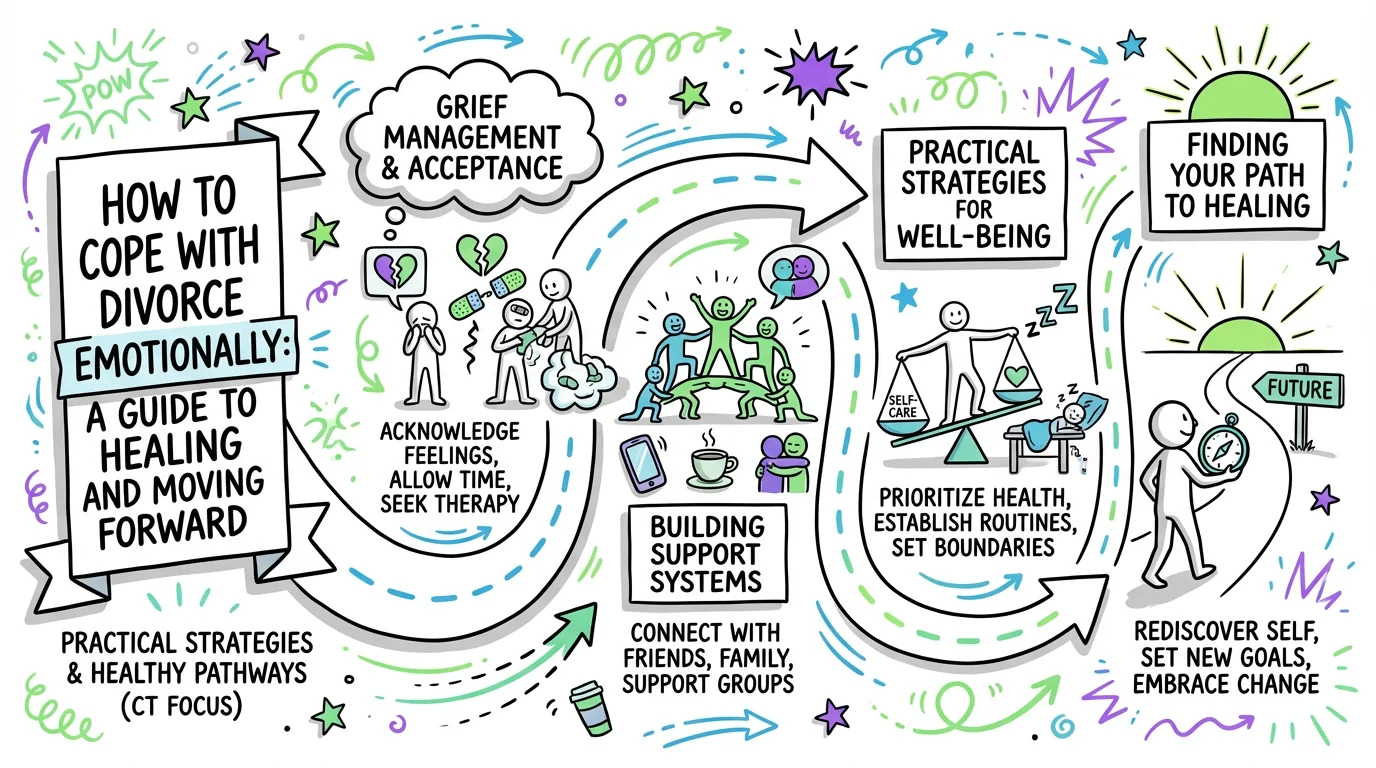
Coping with divorce emotionally requires acknowledging that grief is a natural response to the end of a marriage, allowing yourself to feel the full range of emotions without judgment, and actively building a support system of friends, family, and professionals who can help you navigate this transition. The emotional journey through divorce is rarely linear—you may experience denial, anger, bargaining, depression, and acceptance in waves rather than stages—and that's completely normal. The key is to be patient with yourself while taking intentional steps toward healing.
Understanding the Emotional Impact of Divorce
Divorce represents one of life's most significant losses, ranking alongside the death of a loved one in terms of emotional impact. Even when divorce is the right decision, it involves grieving the loss of your partnership, shared dreams, daily routines, and the future you once envisioned together. Many people are surprised by the intensity of their emotions, especially if they were the one who initiated the divorce.
The emotional toll extends beyond sadness. You might experience anxiety about the future, guilt about how the divorce affects your children, shame about what others might think, or profound loneliness even when surrounded by people. Physical symptoms are also common and often include:
- Difficulty sleeping or insomnia
- Significant changes in appetite
- Chronic fatigue
- Trouble concentrating or "brain fog"
What makes divorce particularly challenging is that you're often required to make important legal and financial decisions while in the midst of emotional turmoil. In Connecticut, specific legal mechanisms exist to help stabilize this volatile period. For instance, the "Automatic Orders" prevent either spouse from draining assets or changing insurance coverage once the divorce begins (Practice Book § 25-5). Knowing that these legal protections are in place can lower your anxiety about financial survival, allowing you to focus more on emotional processing. To navigate these protections and make informed choices even when emotions run high, consider seeking AI legal guidance from Untangle, which can provide instant answers based on Connecticut law.
The Stages of Grief in Divorce
While everyone's experience is unique, most people moving through divorce encounter familiar emotional territories. Connecticut law inadvertently recognizes the need for emotional processing time by imposing a minimum 90-day waiting period before a divorce can be finalized (C.G.S. § 46b-67). Understanding these patterns can help you recognize where you are in the process and reassure you that what you're feeling is a normal part of healing.
Denial and Shock
In the early days of separation, you may feel numb or find yourself thinking that this isn't really happening. You might wake up momentarily forgetting that your marriage is ending, or find yourself making plans as if nothing has changed. This protective mechanism gives your mind time to adjust to a new reality gradually rather than all at once. It acts as an emotional anesthesia, preventing the full weight of the loss from crushing you before you have built the resilience to carry it.
During this phase, it's important to handle only essential decisions and lean on trusted friends or family for support with day-to-day tasks. Avoid making major, irreversible life changes—like selling your home or quitting a job—while in this state of shock. Focus on basic functioning: eating, sleeping, and maintaining a routine. By slowing down and prioritizing stability, you give your brain the space it needs to begin processing the new reality.
Anger and Bargaining
As reality sets in, anger often emerges—sometimes directed at your spouse, sometimes at yourself, and sometimes at the situation in general. You might replay conversations, wondering what you could have done differently. "If only I had been more attentive" or "If only they had been willing to change" are common thought patterns during this stage. This bargaining is often a desperate attempt to regain control over a chaotic situation, searching for a different outcome even when the rational mind knows the marriage is over.
While these feelings are valid, it's crucial to find healthy outlets for anger rather than letting it drive your decisions, especially regarding your divorce settlement. Using legal proceedings to punish your spouse often backfires, draining your finances and prolonging your emotional pain. If high conflict is exacerbating your anger, consider using Connecticut's mediation programs (C.G.S. § 46b-53a), which focus on conflict resolution rather than adversarial litigation.
Depression and Acceptance
A period of deep sadness often follows as you fully absorb the loss. This isn't clinical depression for most people, but rather a "situational depression"—a natural response to significant change and loss. You may feel lethargic, withdrawn, or overwhelmed by the task of rebuilding your life. This stage often represents the "bottoming out" of the grief curve, where the reality of the loss is fully felt without buffers.
Eventually, this gives way to acceptance—not necessarily approval of what happened, but an acknowledgment that this is your new reality and a willingness to move forward. Acceptance marks the shift from fighting the past to working with the present. It doesn't mean you won't have difficult days, but it does mean you're ready to start building your new life. You begin to have more good days than bad and start making plans for a future that doesn't include your ex-spouse.
Practical Strategies for Emotional Healing
Moving through divorce requires more than just waiting for time to pass. Active engagement with your emotional health accelerates healing and helps you emerge stronger on the other side.
Build Your Support Network
Isolation is one of the biggest obstacles to healing. Reach out to trusted friends and family members who can offer both practical help and emotional support. Be specific about what you need—sometimes you might want someone to listen without offering advice, while other times you might need help with childcare or household tasks. Many people find that divorce reveals who their true friends are, and while this can be painful, it also opens space for deeper, more authentic relationships.
Consider joining a divorce support group, either in person or online. Connecting with others who understand exactly what you're going through provides validation and practical wisdom that even the most well-meaning friends might not be able to offer. In Connecticut, many community centers, religious organizations, and mental health practices offer support groups specifically for people going through divorce. If you are unsure where to start, a free AI consultation with Untangle can help guide you toward resources.
Prioritize Professional Support
Working with a therapist or counselor who specializes in divorce can make a significant difference in your healing journey. A professional provides a safe, confidential space to process difficult emotions and offers evidence-based strategies for coping. They can help you identify unhealthy thought patterns, develop better communication skills for co-parenting, and work through any underlying issues that may have contributed to the marriage's end.
If cost is a concern, many therapists offer sliding scale fees, and some Connecticut-based community mental health centers provide low-cost counseling services. Online therapy platforms have also made mental health support more accessible and affordable. The investment in your emotional health now will pay dividends in your ability to move forward effectively.
Establish Self-Care Routines
When you're emotionally overwhelmed, basic self-care often falls by the wayside. Yet maintaining physical health directly supports emotional resilience. Commit to regular sleep schedules, nutritious meals, and some form of physical movement, even if it's just a daily walk. Exercise releases endorphins that naturally improve mood and reduce stress hormones.
Beyond the basics, identify activities that bring you genuine comfort or joy, and make time for them regularly. This might be reading, gardening, spending time in nature, creating art, or reconnecting with hobbies you may have set aside during your marriage. These activities aren't indulgences—they're essential components of rebuilding your identity and finding pleasure in your life again.
Managing Stress During the Divorce Process
| Stressor | Healthy Coping Strategy | What to Avoid |
|---|---|---|
| Legal uncertainty | Stay organized, ask questions, use reliable tools | Obsessive research or avoiding paperwork entirely |
| Financial worry | Create a clear budget, seek professional advice | Impulsive financial decisions |
| Conflict with spouse | Set boundaries, communicate in writing when possible | Engaging in arguments, especially in front of children |
| Loneliness | Schedule regular social activities, join support groups | Isolation or rushing into new relationships |
| Overwhelm | Break tasks into small steps, ask for help | Trying to handle everything alone |
| Sleep problems | Maintain consistent routine, limit screen time before bed | Relying on alcohol or sleep medication long-term |
The divorce process itself can feel like a constant source of stress, with legal requirements, deadlines, and difficult conversations adding to your emotional burden. Finding ways to manage the practical aspects of divorce can significantly reduce your overall stress level and free up emotional energy for healing.
Tools like Untangle's document generation can help reduce the overwhelm by automating paperwork and tracking deadlines. When the practical elements feel more manageable, you have more capacity to focus on your emotional wellbeing rather than drowning in administrative anxiety.
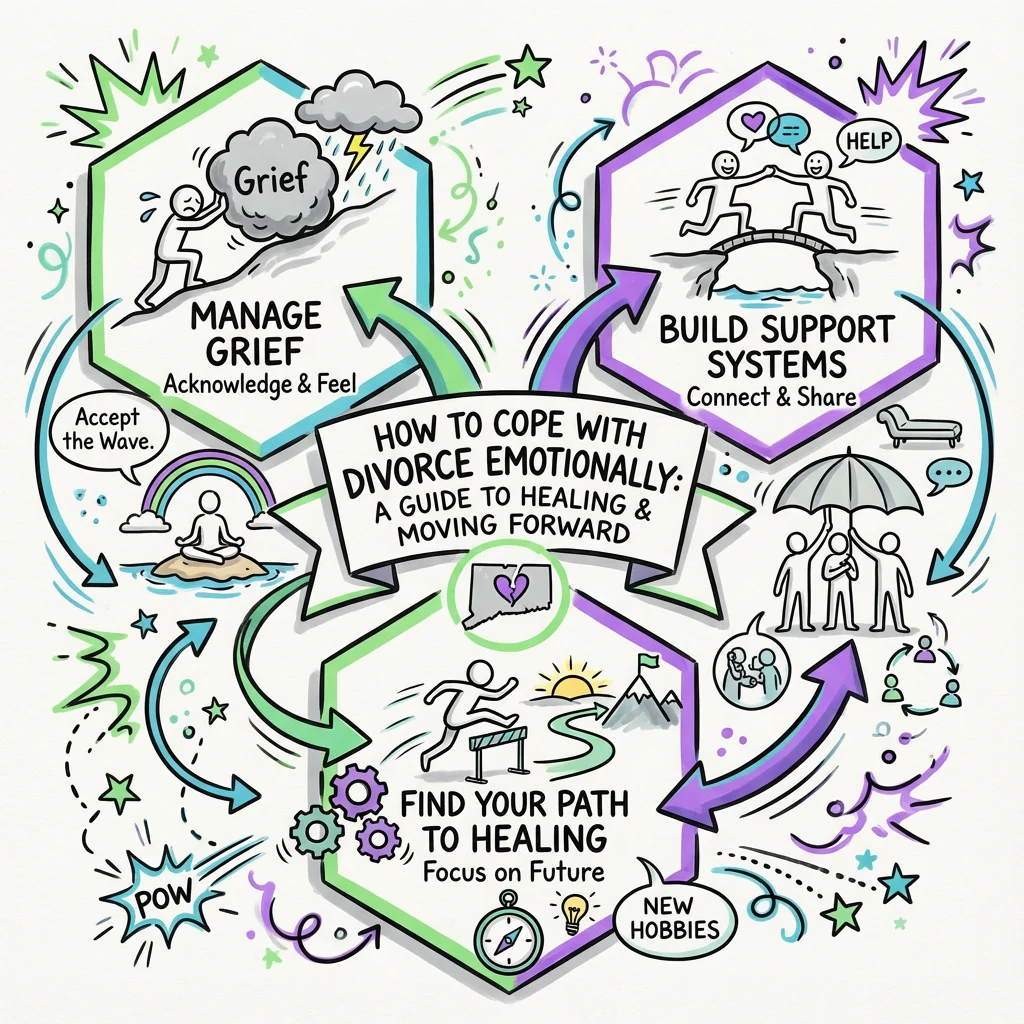
Protecting Your Children's Emotional Health (And Your Own)
If you have children, their emotional needs become a significant focus during and after divorce. Connecticut law mandates a Parenting Education Program for all divorcing parents of minor children (C.G.S. § 46b-69b). This requirement isn't just a hurdle; it's a recognition by the state that parents need specific tools to help their children navigate this transition.
Be a Steady Presence
Children need reassurance that both parents still love them and that the divorce isn't their fault. Keep communication age-appropriate, avoid speaking negatively about your co-parent in front of the children, and maintain routines as much as possible. Consistency provides security during a time when so much feels uncertain.
Your children may exhibit behavioral changes, regression, or emotional outbursts as they process the divorce. Responding with patience and understanding, while maintaining appropriate boundaries, helps them feel safe to express their emotions. Consider whether your children might benefit from working with a child therapist who specializes in family transitions.
Take Care of Yourself to Take Care of Them
Perhaps most importantly, recognize that taking care of your own emotional health isn't selfish—it's essential for being the parent your children need. Children pick up on their parents' emotional states, and your journey toward healing models healthy coping for them. When you prioritize your mental health, you're better equipped to be present, patient, and supportive for your children.
Untangle's parenting plan builder can help minimize conflict with your ex-spouse around scheduling and logistics, reducing stress for everyone in the family. When practical matters run more smoothly, there's more space for positive interactions and emotional connection with your children.
Rebuilding Your Identity and Finding Purpose
One of the less-discussed challenges of divorce is the identity shift that accompanies it. You may have thought of yourself primarily as a spouse, as part of a couple, or in relation to your family unit. Now you have the opportunity—and challenge—of rediscovering who you are as an individual.
Reconnect with Yourself
Take time to explore what matters to you independent of your marriage. What are your values? What brings you fulfillment? What dreams did you set aside that might deserve attention now? This exploration doesn't have to be dramatic—it might start with simply noticing what activities make you feel more like yourself and doing more of them.
Consider this transition an opportunity for growth rather than just a loss to survive. Many people discover new strengths, interests, and capabilities through the divorce process that they might never have found otherwise. This doesn't minimize the pain, but it does acknowledge that transformation often emerges from difficult experiences.
Set Small, Achievable Goals
When the future feels uncertain, focusing on small, achievable goals provides a sense of forward momentum and accomplishment. These might be as simple as reorganizing a closet, trying a new recipe, or reaching out to an old friend. Each small success builds confidence and reminds you that you're capable of creating a life you want to live.
As you move through the divorce process in Connecticut, Untangle's personalized task dashboard can help you stay organized and see your progress, providing tangible evidence that you're moving forward even on days when it doesn't feel that way.
When to Seek Additional Help
While grief and difficulty coping are normal responses to divorce, sometimes the emotional impact becomes more than you can manage on your own. Knowing when to seek additional help is an important part of taking care of yourself.
Consider reaching out to a mental health professional if you experience persistent feelings of hopelessness or worthlessness, thoughts of self-harm, inability to function in daily activities, substance use to cope with emotions, or intense anxiety that interferes with sleep or decision-making. These symptoms don't mean you're failing at coping—they mean you're dealing with a significant challenge that requires professional support.
Connecticut offers numerous mental health resources, from private therapists to community mental health centers to crisis hotlines. If you're in crisis, the 988 Suicide and Crisis Lifeline provides free, confidential support 24 hours a day. Reaching out for help is a sign of strength and self-awareness, not weakness.
Moving Forward with Hope
Emotional healing from divorce isn't about forgetting your marriage or pretending the pain didn't exist. It's about integrating this experience into your life story in a way that allows you to move forward with wisdom, resilience, and hope for the future. The person you become through this process can be stronger, more self-aware, and more intentional about creating the life and relationships you want.
Be patient with yourself. Healing isn't linear, and there will be setbacks along the way. Celebrate your progress, even when it feels small. Surround yourself with people who support your growth. And remember that countless others have walked this path before you and emerged with renewed purpose and joy. You can too.
Frequently Asked Questions
What are the stages of grief during divorce?
The stages of grief during divorce typically include denial, anger, bargaining, depression, and acceptance, though these often occur in waves rather than a linear progression.
Are there divorce support groups in Connecticut?
Yes, Connecticut offers various divorce support groups through community centers, churches, hospitals, and organizations like DivorceCare that provide emotional support and shared experiences during this difficult transition.
How can I help my children cope with divorce in CT?
Help your children cope by maintaining consistent routines, reassuring them the divorce isn't their fault, encouraging open communication about their feelings, and considering family therapy with a Connecticut-licensed counselor.
Should I see a therapist during my divorce?
Seeing a therapist during divorce is highly recommended, as a mental health professional can provide coping strategies, help process complex emotions, and support you in making clear-headed decisions during this challenging time.
What self-care strategies help during divorce recovery?
Effective self-care strategies during divorce include maintaining regular sleep and exercise routines, setting boundaries with your ex, journaling your feelings, limiting alcohol consumption, and scheduling activities that bring you joy.
Legal Citations
- • Practice Book § 25-5 View Source
- • C.G.S. § 46b-67 View Source
- • C.G.S. § 46b-53a View Source
- • C.G.S. § 46b-69b View Source