How to Correct Mistakes on Connecticut Divorce Paperwork After Filing
Learn how to fix errors on your CT divorce paperwork after filing. Step-by-step guide to amendments, corrections, and when you need court permission.
Need help with your divorce? We can help you untangle everything.
Get Started Today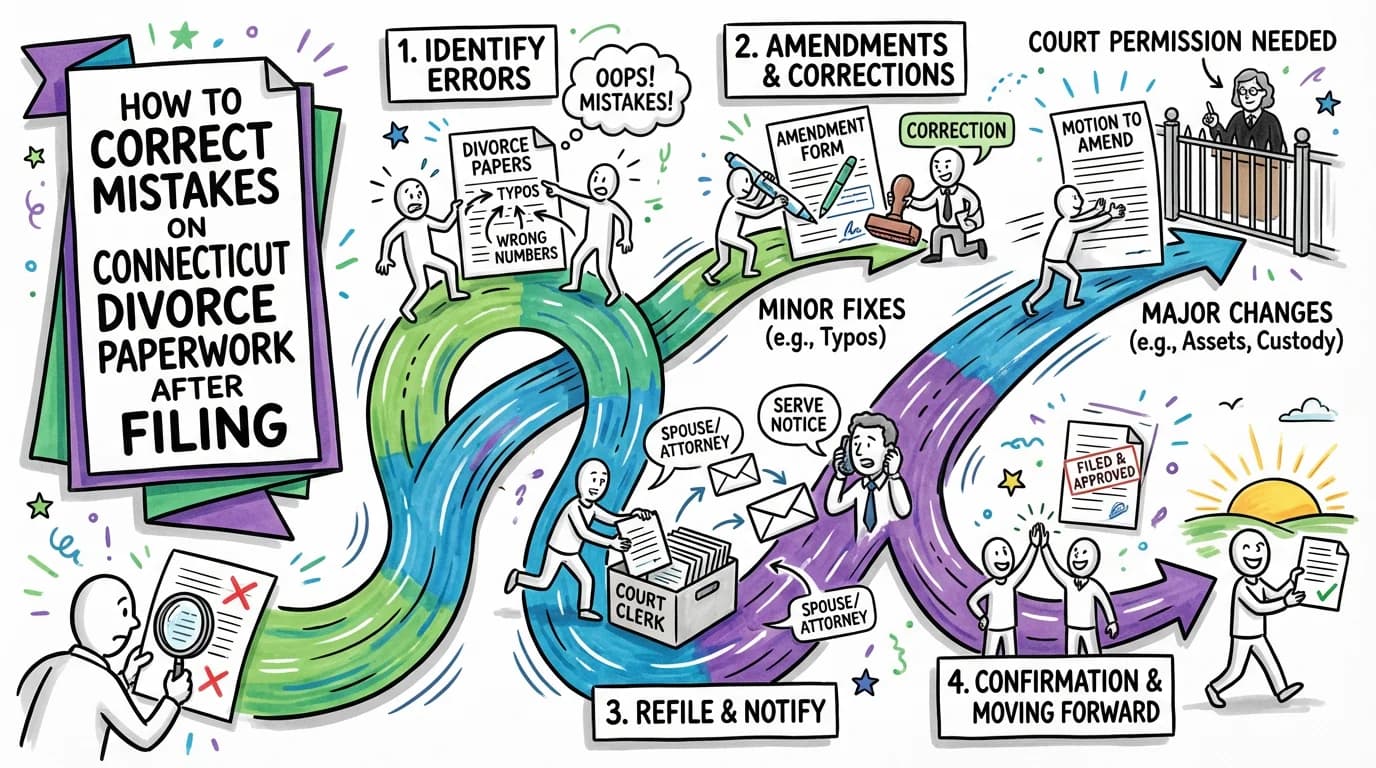
How to Correct Mistakes on Connecticut Divorce Paperwork After Filing
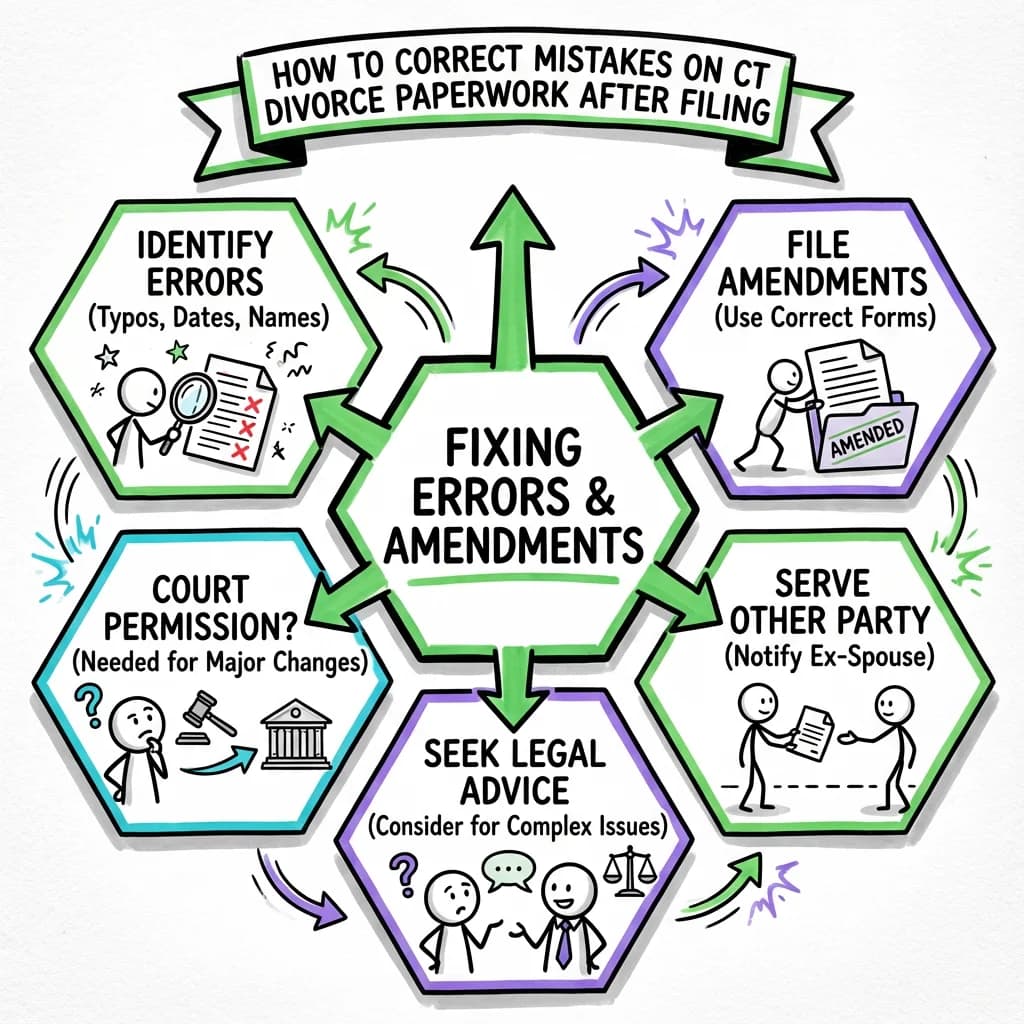
To correct a mistake on your Connecticut divorce paperwork after filing, you'll typically need to file an amended pleading with the court. For minor clerical errors like typos or incorrect dates, you can often file a simple amendment. For more substantial changes—such as adding new grounds for divorce or modifying financial claims—you'll need court permission under Connecticut Practice Book Rule 25-8. The good news: Connecticut courts understand that mistakes happen, and there are clear procedures to fix them without starting your case over from scratch.
Understanding Amendment Rules in Connecticut Divorce Cases
Connecticut's court system provides specific mechanisms for correcting errors in divorce paperwork, governed primarily by the Practice Book Rules for family matters. The type of correction you need determines which process applies and whether you'll need the court's explicit approval.
Practice Book Rule 25-7 establishes the general framework for amendments in family cases. If your original complaint doesn't comply with required formatting or content rules, the court can order you to amend on terms it directs. This is actually helpful for DIY filers—rather than dismissing your case, the court gives you a chance to fix problems. Any amendment involving state support (like cases where the state provides benefits to your children) must be served on the Attorney General before the court takes action.
The automatic orders that went into effect when you filed your divorce remain active regardless of any amendments you make. This means the financial protections preventing either spouse from hiding assets or making major financial changes continue to apply throughout the amendment process.
Types of Corrections and How to Handle Each
Minor Clerical Errors
Clerical errors are the simplest to fix. These include typos in names, incorrect addresses, wrong dates, or mathematical errors in financial statements. For these minor issues, you can typically file a corrected document with a brief cover letter explaining the correction.
Common clerical errors that are easy to fix include:
- Misspelled names or incorrect middle initials
- Wrong Social Security number digits
- Transposed numbers in financial figures
- Incorrect property addresses
- Date errors (wrong day, month, or year)
When fixing these errors, highlight or clearly mark what changed so the clerk and court can easily identify the correction. Untangle's document generation tools can help you organize your paperwork and track which versions you've filed, preventing the confusion that comes from managing multiple document versions.
Substantive Amendments
Substantive amendments involve changes that affect the legal claims or relief you're seeking. These require more formal procedures and often need court permission.
Under Practice Book Rule 25-8, if a new ground for dissolution arises after you've already started your case, you can add it by amendment with the court's permission. For example, if you initially filed based on irretrievable breakdown but later want to add a fault-based ground, you'd need to request permission to amend. The rule specifically references Practice Book Sections 10-59, 10-60, and 10-61, which govern amendments to pleadings in civil cases generally.
Substantive changes that typically require court permission include:
- Adding or changing grounds for divorce
- Significantly modifying property claims
- Changing custody or parenting time requests
- Adding claims for alimony that weren't in the original filing
- Revising the marital property you're claiming
Financial Statement Updates
Financial statements have their own specific update requirements. Under Practice Book Rule 25-30, all parties must file updated sworn financial statements within 30 days before judgment unless the court orders otherwise. This isn't technically "correcting a mistake"—it's a required update to reflect your current financial situation.
However, if you made actual errors on a previously filed financial statement (underreported income, forgot an asset, miscalculated debts), you should file a corrected statement as soon as you discover the error. Financial statements are sworn documents, so accuracy matters both legally and ethically. Using Untangle's financial tools can help you organize income, expenses, and assets to ensure your financial statements are complete and accurate from the start.
Step-by-Step Process for Filing Amendments
-
Identify the type of error - Determine whether your mistake is clerical (simple fix) or substantive (requires court permission). Review the original document and note exactly what needs to change.
-
Prepare the corrected document - Create a new version of the form or pleading with the correct information. Label it clearly as an "Amended" document (e.g., "Amended Complaint for Dissolution of Marriage").
-
Draft a motion if required - For substantive changes, prepare a motion asking the court's permission to amend. Explain briefly what you're changing and why. Keep your explanation simple and factual.
-
File with the court clerk - Submit your amended documents to the same court where your case is pending. For a more streamlined experience, Untangle’s e-file submission tools can help you navigate the filing process efficiently and ensure your documents reach the right office.
-
Serve the other party - Your spouse must receive a copy of any amendments. If they have an attorney, serve the attorney. Keep proof of service for your records.
-
File a Certificate of Compliance - Use form JD-FM-175 to certify you've met all filing requirements. This form confirms you've properly served documents and complied with court rules.
-
Follow up on your filing - Check your case status through the Connecticut Judicial Branch website to confirm your amendment was accepted and processed.
Common Mistakes DIY Filers Make (And How to Avoid Them)
| Mistake Type | What Goes Wrong | How to Prevent It |
|---|---|---|
| Math errors on financial statements | Asset or debt totals don't add up | Double-check all calculations; use a spreadsheet |
| Missing information | Leave required fields blank | Review every page before filing |
| Wrong form version | Use outdated court forms | Always download fresh forms from jud.ct.gov |
| Incomplete service | Forget to serve spouse or Attorney General | Create a checklist of everyone who needs copies |
| Missing signatures | Forget to sign or get notarization | Sign documents last, right before filing |
| Wrong court location | File in incorrect judicial district | Verify venue based on where you or spouse lives |
One of the biggest challenges for budget-conscious filers is keeping track of what's been filed, what's been served, and what still needs to happen. Untangle's task dashboard helps you maintain a clear timeline of your divorce process, so you always know where you stand and what deadlines are approaching.
Timeline Considerations for Amendments
The timing of your amendment matters. Under C.G.S. § 46b-67, the court can proceed on your complaint following the second day after the return date, or after six months if proceedings were stayed. Amendments filed before the court starts actively proceeding on your case are generally handled more smoothly.
If your amendment changes significant aspects of the case, your spouse may need additional time to respond. This could extend your overall timeline. However, it's far better to correct errors early than to end up with a final judgment that contains mistakes—fixing those is much more complicated.
Practice Book Rule 25-21 addresses what happens if a motion to strike is granted against part of your pleading: you have 15 days to file a substitute pleading. If your entire complaint is stricken and you don't file a substitute, judgment could enter against you. This underscores why it's important to respond promptly to any court orders about deficiencies in your paperwork.
Correcting Errors After Final Judgment
What if you discover a mistake after your divorce is finalized? This is more complicated but not impossible. Under C.G.S. § 46b-44c, either party can commence an action to set aside the final judgment for fraud, duress, accident, mistake, or other grounds recognized at law or equity.
"Mistake" in this context generally means a significant error that materially affects the outcome—not a simple typo. Examples might include:
- A major asset was accidentally omitted from the property division
- Custody terms were incorrectly transcribed
- An error in calculating support obligations
Setting aside a judgment is a separate legal action that requires demonstrating the mistake was significant and not just buyer's remorse about the terms. If you're facing this situation, the stakes are higher than typical amendments, and consulting with an attorney may be worthwhile even for budget-conscious DIYers.
Cost Comparison: Fixing It Yourself vs. Hiring Help
| Approach | Typical Cost | Best For |
|---|---|---|
| Self-file clerical correction | $0-50 (filing fees only) | Simple typos, obvious errors |
| Self-file substantive amendment | $50-150 (filing fees + copies) | Clear-cut changes you understand |
| Attorney review before filing | $200-500 (hourly consultation) | Complex amendments, uncertain situations |
| Attorney handles amendment | $500-2,000+ | Contested changes, post-judgment motions |
For most clerical corrections and straightforward amendments, handling it yourself makes financial sense. The key is understanding exactly what needs to change and following court procedures carefully.
When to Consider Professional Help
While many corrections can be handled without an attorney, certain situations warrant professional assistance:
- Your spouse objects to the amendment - If your spouse contests your proposed changes, you may need legal representation to argue your position in court.
- Post-judgment modifications - Setting aside a final judgment involves higher stakes and more complex legal standards.
- Child custody or support changes - Errors affecting children can have long-term consequences worth getting right.
- Significant asset disclosures - If you need to correct a substantial financial omission, the implications may require legal guidance.
Even budget-conscious filers sometimes benefit from limited-scope representation, where an attorney reviews your documents or handles just one aspect of your case. This middle-ground approach keeps costs manageable while ensuring accuracy on critical issues.
Staying Organized Throughout the Process
The best way to minimize the need for corrections is thorough preparation before you file. Untangle's comprehensive divorce planning and organization tools help you gather and organize all necessary information—finances, assets, debts, and custody considerations—before you ever complete a court form. When your source information is organized and accurate, your paperwork is much more likely to be correct the first time.
Keep copies of everything you file and receive. Create a simple filing system (physical or digital) organized by date. When you do need to make corrections, having your complete case history readily available makes the process much smoother.
Connecticut courts are generally understanding about honest mistakes, especially from self-represented parties. The key is addressing errors promptly, following proper procedures, and maintaining clear communication with the court and your spouse throughout the process.
Frequently Asked Questions
What form do I need to amend a divorce complaint in Connecticut?
In Connecticut, you'll typically file an amended pleading with the court, and for substantial changes you'll need to follow Connecticut Practice Book Rule 25-8 to request court permission.
How much does it cost to file an amended divorce document in CT?
Filing fees for amended divorce documents in Connecticut vary by court, so contact your local Superior Court clerk's office for current amendment filing fees.
Can I update my financial affidavit after submitting it to a Connecticut family court?
Yes, you can update your financial affidavit in Connecticut by filing an amended version, especially if your financial circumstances have changed or you discovered errors in the original submission.
Does correcting a mistake on my CT divorce papers restart the 90-day waiting period?
Generally, filing an amendment to correct mistakes on your Connecticut divorce paperwork does not restart the 90-day waiting period, as your original filing date typically remains intact.
How do I fix an error in my Connecticut divorce decree after the judge signs it?
To correct an error in a signed CT divorce decree, you'll need to file a motion to open or modify the judgment, which requires showing the court why the correction is necessary.
Legal Citations
- • Practice Book Rule 25-8 View Source
- • Practice Book Rule 25-7 View Source
- • Practice Book Rule 25-30 View Source
- • C.G.S. § 46b-67 View Source
- • Practice Book Rule 25-21 View Source
- • C.G.S. § 46b-44c View Source
- • Form JD-FM-175 View Source