Is a Forensic Accountant Worth It in Connecticut Divorce? Expert Analysis
Learn when hiring a forensic accountant in Connecticut divorce is worth the investment, especially for high-asset cases involving business valuations and hidden assets.
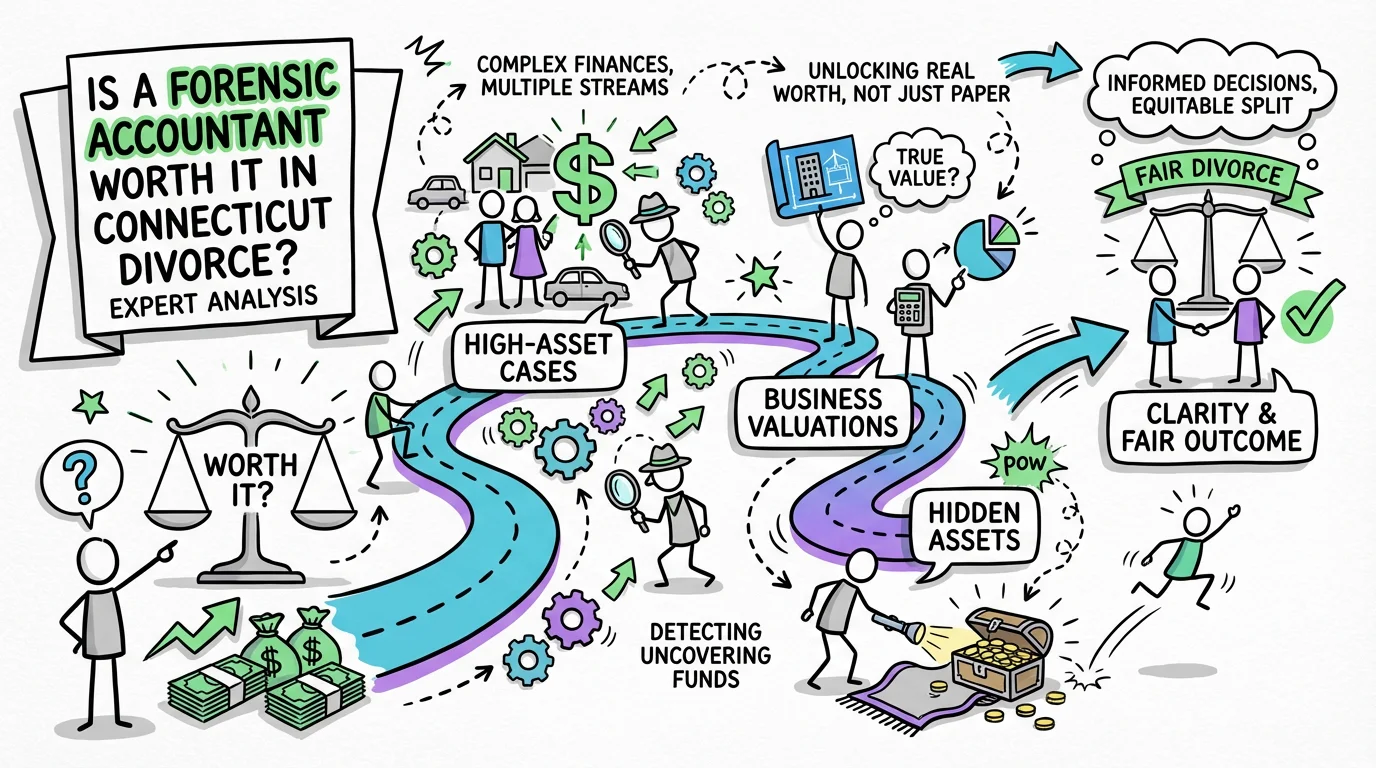
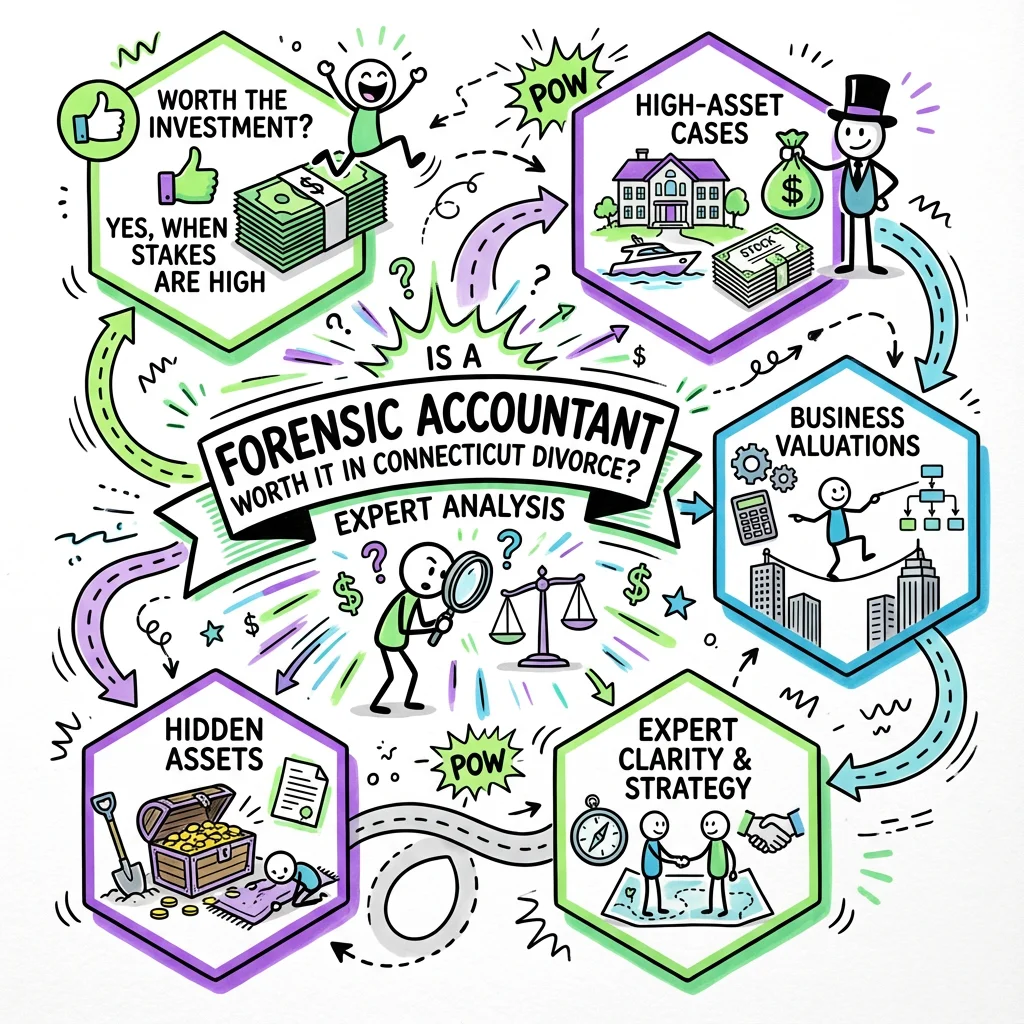
For high-asset divorces in Connecticut, hiring a forensic accountant is almost always worth the investment. When significant wealth, business interests, or complex financial structures are at stake, a forensic accountant can uncover hidden assets, provide accurate business valuations, and help ensure you receive your fair share of marital property. The cost of a forensic accountant—typically $5,000 to $50,000 depending on complexity—often pales in comparison to the potential loss from an inequitable property division where assets worth hundreds of thousands or even millions of dollars hang in the balance.
Understanding Connecticut's Equitable Distribution Standard
Connecticut is an equitable distribution state, meaning courts divide marital property fairly—though not necessarily equally. Under C.G.S. § 46b-81, judges have broad discretion to assign "all or any part of the estate of the other spouse" when dissolving a marriage. This statute grants Connecticut courts remarkable power to divide assets, including property acquired before marriage, inheritances, and business interests. The statute's expansive reach makes accurate asset identification and valuation absolutely critical.
The financial stakes in high-asset divorces cannot be overstated. Courts consider numerous factors when dividing property, including the length of the marriage, the cause of dissolution, each spouse's age, health, occupation, employability, and the opportunity of each party for future acquisition of capital assets and income. A forensic accountant's expert analysis directly supports your attorney's arguments on each of these factors by providing concrete, defensible numbers rather than estimates or assumptions.
What makes Connecticut particularly challenging for high-net-worth individuals is the court's ability to consider separate property in its distribution. Unlike some states that only divide marital assets, Connecticut courts can—and sometimes do—reach into premarital assets, gifts, and inheritances. This makes a comprehensive financial picture essential, and forensic accountants excel at creating that complete picture while distinguishing between separate and marital contributions to asset growth.
When a Forensic Accountant Becomes Essential
Business Ownership and Valuation
If you or your spouse owns a business, a forensic accountant is virtually indispensable. Business valuations require specialized expertise in analyzing revenue streams, assessing goodwill, evaluating market conditions, and applying appropriate valuation methodologies. The difference between a poorly valued and properly valued business interest can easily reach six or seven figures.
Forensic accountants trained in business valuation understand techniques like the income approach, market approach, and asset-based approach. They can identify when a spouse has artificially depressed business income or inflated expenses in anticipation of divorce—common tactics that can significantly impact both property division and alimony calculations. In cases like Britto v. Britto, Connecticut courts have scrutinized income findings and real estate valuations, demonstrating how critical accurate financial analysis is to judicial decisions.
Tools like Untangle's Complete asset inventory can help you compile initial business documents and financial records before engaging a forensic accountant, potentially reducing billable hours spent on basic document review and organization.
Hidden Assets and Income
Spouses with significant wealth often have sophisticated methods of concealing assets. Forensic accountants are trained financial detectives who can trace money through shell companies, offshore accounts, cryptocurrency holdings, and complex investment structures. They look for lifestyle inconsistencies—situations where spending patterns don't match reported income—that may indicate hidden resources.
Connecticut's mandatory disclosure rules under Practice Book § 25-32 require extensive financial document exchange, including three years of tax returns, K-1 schedules for closely held entities, and 24 months of statements for all financial accounts. However, these requirements only work when both parties comply honestly. A forensic accountant can analyze these documents to identify gaps, inconsistencies, and red flags that might escape untrained eyes. Using Untangle's Smart bank statement analysis can also help you automatically flag unusual transfers or suspicious recurring payments before you even meet with your expert.
The forensic accountant's investigation often includes analyzing bank statements for unusual transfers, reviewing business records for personal expenses disguised as business costs, and examining investment accounts for suspicious activity. This level of scrutiny protects you from a settlement based on incomplete or inaccurate financial information.
Complex Compensation Structures
Executives, professionals, and business owners often receive compensation through complex packages that include stock options, restricted stock units, deferred compensation, carried interest, or phantom equity. These forms of compensation require specialized knowledge to value properly, especially when vesting schedules, performance conditions, and tax implications come into play.
A forensic accountant can calculate the present value of future compensation, determine the marital versus separate portions of equity awards, and explain these complex instruments to the court in accessible terms. Their expertise becomes particularly valuable when opposing counsel tries to undervalue or overlook these compensation components entirely.
The Financial Disclosure Foundation
Connecticut's robust financial disclosure requirements provide the raw material forensic accountants need to work effectively. Under Practice Book § 25-30, each party must file sworn financial statements showing current income, expenses, assets, and liabilities at least five business days before any hearing involving financial matters. These statements must be updated within 30 days before final judgment.
The Financial Affidavit Long Form required by Connecticut courts demands detailed disclosure of all income sources, assets, debts, and expenses. A forensic accountant can review both your affidavit for accuracy and your spouse's affidavit for inconsistencies or omissions. Tools like Untangle's Financial affidavit generation can streamline this process, and Untangle's Spouse financial comparison features allow you to easily identify discrepancies.
Using Untangle's financial tracking tools to organize your financial information before completing your affidavit helps ensure nothing falls through the cracks. This preparation also creates a solid foundation for your forensic accountant's analysis, potentially saving significant professional fees.
Cost-Benefit Analysis: When the Numbers Make Sense
| Scenario | Estimated Cost | Potential Benefit | Worth It? |
|---|---|---|---|
| Business valuation dispute ($1M+ business) | $15,000 - $35,000 | Accurate valuation could swing settlement by $100,000+ | Almost always |
| Suspected hidden assets | $10,000 - $25,000 | Discovery of concealed assets | Yes, if reasonable suspicion exists |
| Complex investment portfolio | $5,000 - $15,000 | Proper tax basis and valuation analysis | Usually |
| Stock options/deferred compensation | $8,000 - $20,000 | Accurate present value calculations | Yes for significant holdings |
| Lifestyle analysis (income verification) | $10,000 - $30,000 | Proving true income for support calculations | Yes when income appears understated |
| Straightforward high-asset divorce | $5,000 - $10,000 | Peace of mind and verification | Depends on complexity |
The decision ultimately comes down to risk assessment. Consider what you stand to lose if asset values are miscalculated or hidden assets go undiscovered. In high-asset divorces, even a 5% error in a multi-million dollar estate represents substantial money. When viewed this way, forensic accountant fees often represent excellent insurance against costly mistakes.
How Forensic Accountants Support Your Case
Expert Testimony
One of the most valuable services a forensic accountant provides is expert testimony. Connecticut courts, as noted in Practice Book § 25-33, can appoint their own expert witnesses, but parties frequently retain their own experts to advocate for their position. A qualified forensic accountant can present complex financial findings in a way judges understand, withstand cross-examination, and respond to opposing experts' critiques.
In cases like Laborne v. Laborne, appellate courts have addressed disputes over asset valuation timing and income calculations—exactly the types of issues forensic accountants help resolve at the trial level. Having a credible expert who can testify about financial matters significantly strengthens your position, whether negotiating settlement or proceeding to trial.
Settlement Leverage
Even if your case never goes to trial, a forensic accountant's involvement often improves settlement outcomes. Knowing that a professional has thoroughly analyzed the finances—and will testify if necessary—encourages the other side to negotiate more reasonably. The forensic accountant's report becomes a powerful tool in mediation and settlement conferences.
Many high-asset divorces settle once both sides have access to professional financial analysis. The forensic accountant eliminates the uncertainty that often leads to prolonged disputes, helping parties reach resolution more efficiently.
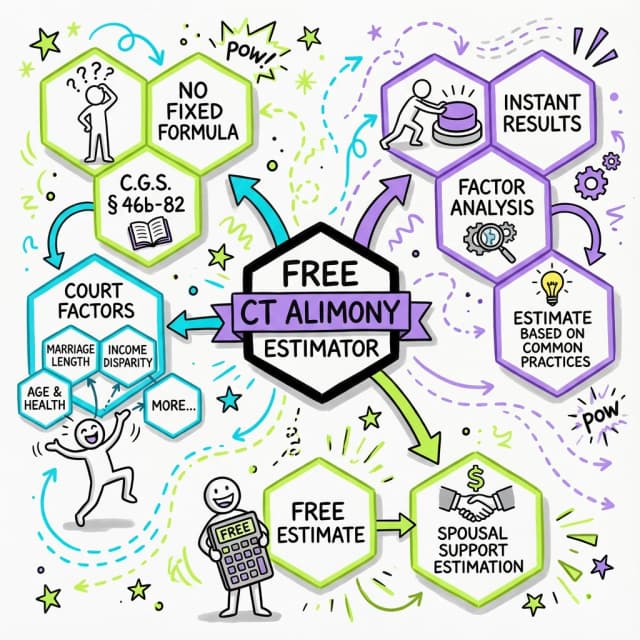
Try our free CT alimony calculator
Get an instant estimate based on Connecticut's statutory factors. No signup required.
Selecting the Right Forensic Accountant
Not all forensic accountants have the same qualifications or experience. Look for professionals with credentials such as:
- Certified Public Accountant (CPA) license
- Certified Fraud Examiner (CFE) designation
- Accredited in Business Valuation (ABV) credential
- Certified Valuation Analyst (CVA) designation
- Specific experience with Connecticut divorce cases
Ask potential forensic accountants about their experience testifying in court, their familiarity with Connecticut family law, and their approach to the specific financial issues in your case. The right expert should be able to explain complex concepts clearly and maintain credibility under adversarial questioning.
Your divorce attorney can often recommend forensic accountants they've worked with successfully. This existing relationship can streamline communication and ensure the accountant understands the legal strategy supporting your case.
Protecting Financial Privacy
High-net-worth individuals often have legitimate concerns about financial privacy during divorce proceedings. Connecticut courts generally presume public access to filed documents, but Practice Book § 25-59A allows sealing or limiting disclosure when necessary to protect overriding interests. Your attorney can work with your forensic accountant to present sensitive financial information in ways that protect proprietary business information while still satisfying legal requirements.
The forensic accountant can help identify which financial details are essential for court proceedings and which might be summarized or protected. This strategic approach to disclosure balances transparency requirements with legitimate privacy interests.
Taking the Next Step
If you're facing a high-asset divorce in Connecticut, the question isn't whether you can afford a forensic accountant—it's whether you can afford not to have one. The complexity of Connecticut's equitable distribution system, combined with the court's broad discretion under C.G.S. § 46b-81, means that accurate financial information directly impacts your outcome.
Start by gathering your financial documents and creating an organized overview of your assets, income, and business interests. Tools like Untangle's Complete asset inventory can help you compile this information efficiently before your first meeting with a forensic accountant. The more organized you are initially, the more cost-effectively your forensic accountant can work.
When to Seek Professional Help
While not every divorce requires a forensic accountant, certain indicators strongly suggest you should retain one: ownership of any business interest, income from multiple sources or complex compensation packages, suspected hidden assets, significant disparity in financial knowledge between spouses, or a marital estate exceeding $1 million. If any of these factors apply to your situation, consulting with a forensic accountant early in the process—ideally before negotiations begin—provides the strongest foundation for protecting your financial interests.
Even if your spouse has historically managed the finances, you have equal rights to understand and share in marital assets. A forensic accountant levels the playing field by ensuring both parties work from accurate financial information. This expertise protects not just your current assets but your financial security for years to come.
Frequently Asked Questions
What does a forensic accountant actually do in a Connecticut divorce case?
A forensic accountant investigates financial records to uncover hidden assets, provide accurate business valuations, trace marital versus separate property, and identify any discrepancies or fraudulent transfers in your spouse's financial disclosures.
How much does a forensic accountant cost in a CT divorce?
Forensic accountants in Connecticut divorce cases typically cost between $5,000 and $50,000, depending on the complexity of the financial situation and whether business valuations or extensive asset tracing is required.
What are the signs my spouse is hiding assets during our divorce?
Common red flags include sudden changes in spending habits, missing financial documents, unexplained cash withdrawals, overpaying the IRS or creditors, transferring assets to family members, and a spouse who becomes unusually secretive about finances.
What's the difference between a forensic accountant and a regular CPA in divorce?
While a regular CPA handles tax preparation and general accounting, a forensic accountant specializes in investigating financial records, detecting fraud, tracing hidden assets, and providing expert testimony in court proceedings.
When should I hire a forensic accountant for my Connecticut divorce?
You should consider hiring a forensic accountant early in your CT divorce if your spouse owns a business, you suspect hidden assets, your marital estate exceeds $500,000, or your spouse controlled all the finances during the marriage.
Legal Citations
- • C.G.S. § 46b-81 - Assignment of Property and Transfer of Title View Source
- • Practice Book § 25-30 - Statements To Be Filed View Source
- • Practice Book § 25-32 - Mandatory Disclosure and Production View Source
- • Practice Book § 25-33 - Judicial Appointment of Expert Witnesses View Source
- • Practice Book § 25-59A - Sealing Files or Limiting Disclosure of Documents in Family Matters View Source
- • Britto v. Britto, 141 A.3d 907 View Source
- • Laborne v. Laborne, 207 A.3d 58 View Source
- • Financial Affidavit Long Form (JD-FM-006) View Source