Does Untangle Work for Contested Divorces in Connecticut? | Complete Guide
Learn how Untangle helps with contested divorces in Connecticut, even when your spouse won't cooperate. Discover tools for documentation, preparation, and legal strategy.

Yes, Untangle absolutely works for contested divorces in Connecticut—and in many ways, it's even more valuable when your spouse won't cooperate. While Untangle was designed to simplify the divorce process, its document organization, financial tracking, and preparation tools become essential weapons in your arsenal when you're facing a contentious split. The platform helps you build your case methodically, organize evidence, and prepare for negotiations or court proceedings with the thoroughness that contested cases demand. For specific guidance on Connecticut law and strategy, Untangle's AI legal guidance can provide instant answers and insights.
Understanding Contested vs. Uncontested Divorce in Connecticut
A contested divorce occurs when spouses cannot agree on one or more key issues—property division, child custody, alimony, or child support. In Connecticut, only cases where both parties fully agree on everything can proceed as a "nonadversarial dissolution" under C.G.S. § 46b-44a, which requires a joint petition with sworn attestation that both parties consent. If your spouse won't cooperate or you disagree on significant matters, you'll need to file a standard dissolution action under C.G.S. § 46b-45, which allows you to proceed even without your spouse's agreement.
The reality is that most divorces in Connecticut start with some level of disagreement. Even couples who eventually settle often begin in contested territory. What matters isn't whether conflict exists today, but how well you prepare for whatever path your divorce takes. Connecticut courts follow a "Pathways" system under Practice Book Rule § 25-50A that assigns cases to different tracks based on complexity—Track A for simple cases, Track B for moderate complexity, and Track C for highly contested matters requiring significant court involvement.
Understanding where your case might land helps you prepare appropriately. If your spouse is combative, refusing to disclose financial information, or making unreasonable demands, you're likely headed for Track B or C. This means more court appearances, potentially longer timelines, and greater need for thorough documentation—exactly where Untangle's organizational tools prove invaluable.
How Untangle Helps When Your Spouse Won't Cooperate
Building Your Financial Case
In contested divorces, financial documentation often becomes the battlefield. Connecticut requires both parties to file sworn Financial Affidavits (Form JD-FM-006), and discrepancies or hidden assets frequently fuel disputes. Untangle's smart bank statement analysis helps you compile years of bank statements, tax returns, pay stubs, and investment records into a coherent picture that's ready for court or attorney review.
When a spouse is uncooperative, they may attempt to hide assets, underreport income, or delay providing required disclosures. Having your own comprehensive financial records prepared and organized means you can identify inconsistencies in their reporting. You'll be able to show the court exactly what marital assets exist, even if your spouse tries to obscure the picture. This preparation also helps your attorney (if you hire one) work more efficiently, potentially reducing legal fees.
The automatic orders that take effect upon filing prevent either spouse from hiding or dissipating marital assets (Practice Book Rule § 25-5B). But knowing these protections exist is different from being able to enforce them. With organized records showing account balances before and after filing, you can document any violations and bring them to the court's attention.
Documenting Everything for Court
Contested divorces live and die by documentation. Judges make decisions based on evidence, not emotions or accusations. Untangle's automatic document generation lets you store, organize, and timestamp every piece of relevant evidence—from text messages showing your spouse's behavior to receipts proving you've been the primary caregiver for your children—to produce the documents needed for court.
Connecticut courts consider numerous factors when making custody and property decisions. For custody under C.G.S. § 46b-56, judges examine each parent's involvement in the child's life, stability of living situations, and the child's own preferences (if old enough). For property division under C.G.S. § 46b-81, courts look at each spouse's contributions, earning capacity, and the length of the marriage. Having organized documentation supporting your position on each factor strengthens your case significantly.
Beyond court preparation, thorough documentation protects you from false allegations. In high-conflict divorces, accusations of hidden income, parental alienation, or worse are unfortunately common. When you've maintained detailed records throughout the process, you can counter false claims with facts.
The Connecticut Contested Divorce Process Explained
Filing and Service Requirements
Even if your spouse refuses to participate, you can still proceed with your divorce. Connecticut allows you to commence proceedings by filing a complaint in the Superior Court for the judicial district where either you or your spouse lives (C.G.S. § 46b-45). Your spouse must be formally served with the complaint and a blank appearance form, giving them the opportunity to respond.
If your spouse ignores the service and doesn't file an appearance, you don't simply win by default. Instead, under Practice Book Rule § 25-51, you may proceed to judgment following the court's scheduling procedures. The court will still review your proposed orders to ensure they're fair, particularly regarding children. However, an uncooperative spouse who fails to appear forfeits their ability to contest your proposed terms.
Most combative spouses do eventually engage, even if reluctantly. Once they file an Answer (or Answer and Cross Complaint under Practice Book Rule § 25-9), the case moves into the discovery and negotiation phases. This is where thorough preparation pays dividends—you'll be ready to respond to their claims and support your own positions with evidence.
Navigating the Pathways System
Connecticut's Pathways case management system (Practice Book Rule § 25-50A) is designed to move cases efficiently through the court system. Within 30-60 days of the return date, you'll meet with a family relations counselor who assesses your case and recommends a track assignment. Coming to this meeting prepared—with organized financial documents, a clear understanding of disputed issues, and realistic goals—helps ensure your case is handled appropriately.
| Track | Complexity Level | Typical Characteristics | Court Involvement |
|---|---|---|---|
| Track A | Minimal | Few disputes, cooperative parties | Limited hearings |
| Track B | Moderate | Some contested issues, settlement possible | Regular case management |
| Track C | Complex | Major disputes, high assets, custody battles | Intensive court supervision |
If your case is assigned to Track C, you'll have more court dates, possibly a guardian ad litem appointed for children, and extended timelines. The scheduling order issued after track assignment sets deadlines for discovery, required steps, and future court dates. Missing these deadlines can result in sanctions, so having your documentation already organized through Untangle's personalized task dashboard helps you stay compliant without scrambling.
What Untangle Cannot Do in Contested Cases
Understanding the Limitations
Untangle is a powerful preparation and organization tool, but it's not a substitute for legal representation in truly contested cases. If your spouse has hired an attorney, is making false allegations, or is fighting over significant assets or custody, you should seriously consider hiring a Connecticut family law attorney. What Untangle can do is make your attorney's job easier and more cost-effective by having everything organized before your first consultation.
The platform cannot file motions, argue in court, or negotiate directly with your spouse's attorney. It cannot provide legal advice specific to your situation—only a licensed Connecticut attorney can do that. However, the preparation work you do in Untangle translates directly to court-ready organization, whether you're representing yourself or working with counsel.
For cases involving domestic violence, complex business valuations, or interstate custody disputes, professional legal help isn't just recommended—it's essential. Untangle serves as your organizational foundation, but these high-stakes situations require expertise that only qualified professionals can provide.
When DIY Still Makes Sense
Even in contested situations, many aspects of divorce preparation are appropriate for self-help. Gathering documents, organizing financial records, creating asset inventories, and documenting your parenting involvement don't require an attorney. Doing this work yourself (with Untangle's guidance) saves money and ensures you understand your own case intimately.
Some couples who start contested eventually find common ground and reach settlement agreements. If that happens, your organized documentation transitions seamlessly from litigation preparation to settlement support. The Financial Affidavits you'll need, the asset lists required for property division, and the parenting schedules for custody agreements all benefit from the thorough preparation Untangle facilitates.
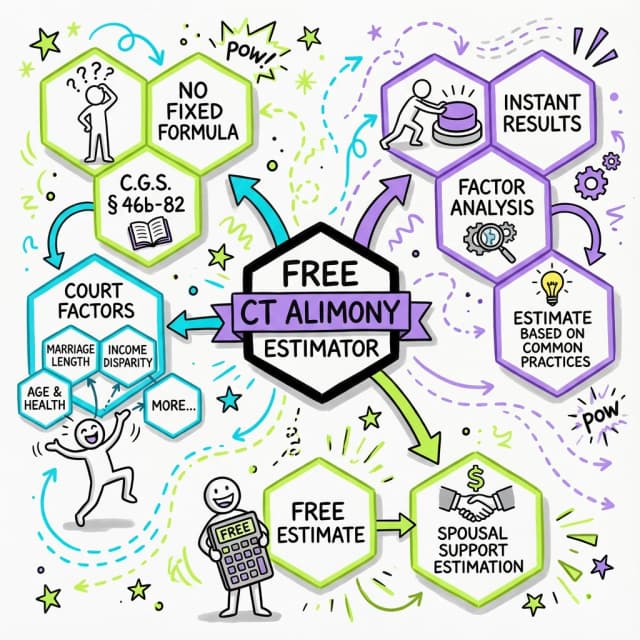
Try our free CT alimony calculator
Get an instant estimate based on Connecticut's statutory factors. No signup required.

Practical Steps for Contested Divorce Preparation
-
Document your current situation immediately - Start recording financial account balances, property values, and your parenting involvement today. The automatic orders freeze the status quo at filing, so having baseline documentation is crucial.
-
Gather at least three years of financial records - Tax returns, bank statements, credit card statements, retirement account statements, and pay stubs. Connecticut courts often look back several years when assessing income and asset patterns.
-
Create a detailed asset inventory - List every significant marital asset and debt, with documentation of its value and how it was acquired. Untangle's complete asset inventory tools help organize this information systematically.
-
Document your parenting involvement - If custody is contested, keep records of school pickups, medical appointments, extracurricular activities, and daily caregiving. Concrete examples matter more than general claims.
-
Secure important documents - Make copies of deeds, titles, insurance policies, estate planning documents, and business records. Store these securely—both digitally in Untangle and in a physical location your spouse cannot access.
-
Prepare your Financial Affidavit draft - Using Form JD-FM-006, begin completing your required financial disclosure. Having this ready before filing puts you ahead of court deadlines. With Untangle's financial affidavit generation, you can streamline this crucial step, ensuring accuracy and compliance.
-
Research local family law attorneys - Even if you plan to use Untangle for preparation, identify attorneys for consultation. Initial consultations are often free or low-cost and can provide case-specific guidance.
Timeline and Cost Considerations for Contested Divorces
Contested divorces in Connecticut take significantly longer than cooperative ones. While an uncontested case might resolve in 90 days, contested matters often take 12-18 months or longer, depending on the issues and court backlog.
| Aspect | Uncontested Divorce | Contested Divorce |
|---|---|---|
| Typical Timeline | 3-6 months | 12-24 months |
| Attorney Fees | $1,500-$5,000 | $15,000-$50,000+ |
| Court Appearances | 1-2 | Multiple |
| Discovery Required | Minimal | Extensive |
| Emotional Toll | Lower | Significant |
The cost differential is stark. Using Untangle for document preparation and organization can substantially reduce attorney fees by minimizing the time lawyers spend on administrative tasks. Every hour your attorney doesn't spend organizing your documents is money saved.
Under C.G.S. § 46b-67, after the return date passes (and assuming no stay under C.G.S. § 46b-53 for counseling), the court may proceed to hear your case and enter orders. However, "may proceed" doesn't mean quick resolution—contested issues require hearings, potentially expert witnesses, and judicial decision-making time.
When to Escalate from Self-Help to Professional Representation
While Untangle provides robust support for divorce preparation, certain situations demand professional legal help:
- Your spouse has hired an aggressive attorney - Unequal legal representation puts you at a serious disadvantage in negotiations and court
- Domestic violence is involved - Safety concerns require immediate professional intervention and possibly protective orders
- Complex assets exist - Business valuations, stock options, pensions, and real estate portfolios need expert analysis
- Custody is genuinely disputed - When both parents want primary custody, the stakes are too high for DIY approaches
- Your spouse is hiding assets - Formal discovery tools and forensic accountants may be necessary
- You're feeling overwhelmed - Divorce is emotionally draining; having a professional advocate protects you when you can't protect yourself
The investment in professional help during contested proceedings often pays for itself through better outcomes. Use Untangle to prepare thoroughly, then leverage that preparation to make your attorney's representation as effective and efficient as possible. Your organized documentation, clear asset inventory, and thorough financial records make you the ideal client—one whose case can be handled strategically rather than chaotically.
Frequently Asked Questions
When should I use Untangle instead of hiring a divorce attorney in Connecticut?
Untangle works best alongside an attorney for contested divorces, helping you organize documents and track finances while your lawyer handles negotiations and court appearances.
What are the limitations of using Untangle for high-conflict divorce cases in CT?
Untangle cannot represent you in court, negotiate directly with your spouse, or provide legal advice, so you'll still need an attorney for complex contested matters.
How does Untangle help me prepare for a contested divorce in Connecticut?
Untangle helps you organize evidence, track financial documents, and build your case methodically so you're thoroughly prepared for negotiations or court proceedings.
Can I use Untangle if my spouse won't cooperate with the Connecticut divorce process?
Yes, Untangle is especially valuable when your spouse is uncooperative because it helps you document everything independently and prepare for a standard dissolution action under C.G.S. § 46b-45.
What is the difference between Track A, B, and C divorces in Connecticut's Pathways system?
Track A handles simple uncontested cases, Track B covers moderately complex divorces, and Track C is reserved for highly contested matters requiring significant court involvement.
Legal Citations
- • C.G.S. § 46b-44a View Source
- • C.G.S. § 46b-45 View Source
- • Practice Book Rule § 25-50A View Source
- • Practice Book Rule § 25-5B View Source
- • C.G.S. § 46b-56 View Source
- • C.G.S. § 46b-81 View Source
- • Practice Book Rule § 25-51 View Source
- • Practice Book Rule § 25-9 View Source
- • C.G.S. § 46b-67 View Source
- • C.G.S. § 46b-53 View Source