Complex Asset Division in Connecticut Divorce: How Untangle Supports High-Net-Worth Cases
Learn how Untangle supports complex asset division in Connecticut divorce, including business valuation, investment portfolios, and high-net-worth property distribution.

Yes, Untangle is specifically designed to support complex asset division in Connecticut divorce cases. The platform provides comprehensive tools for documenting, organizing, and analyzing high-value assets including business interests, investment portfolios, real estate holdings, retirement accounts, and stock options. For high-net-worth individuals navigating Connecticut's equitable distribution system, Untangle offers structured workflows that help ensure no asset goes undisclosed while maintaining the detailed financial documentation that complex cases require.
Understanding Connecticut's Approach to Complex Asset Division
Connecticut operates as an "all-property" equitable distribution state, meaning the court has authority to divide all assets owned by either spouse—regardless of when or how they were acquired. Under C.G.S. § 46b-81, the Superior Court may "assign to either spouse all or any part of the estate of the other spouse," giving judges broad discretion to divide property in a manner they deem fair. This includes assets acquired before the marriage, inherited property, and gifts received by one spouse.
For high-asset individuals, this expansive judicial authority creates both opportunities and risks. Unlike some states that automatically exclude premarital assets from division, Connecticut courts consider all property and then apply statutory factors to determine an equitable (not necessarily equal) distribution. The court evaluates:
- The length of the marriage and causes for dissolution
- Each spouse's age, health, station, and occupation
- Amount and sources of income
- Vocational skills and employability
- Estate and needs of each party
- Contribution to the acquisition, preservation, or appreciation of assets
The complexity intensifies when the marital estate includes business interests, executive compensation packages, or investment properties. Courts must determine not only the value of these assets but also their liquidity, tax implications, and practical divisibility. This is where thorough documentation and strategic organization become essential—and where tools like Untangle's complete asset inventory provide significant value for protecting your interests.
How Untangle Handles Business Valuation Documentation
Business interests represent one of the most contentious aspects of high-asset divorce in Connecticut. The landmark case Oudheusden v. Oudheusden illustrates how closely held businesses receive scrutiny, with the trial court examining gross annual income derived from businesses owned by one spouse and making determinations about both value and income attribution. Proper documentation of business financials, ownership structures, and operational details is critical.
Untangle helps business owners organize the extensive documentation required for accurate valuation, including:
- Profit and loss statements (P&L)
- Current and historical balance sheets
- Corporate tax returns
- Accounts receivable aging reports
- Corporate governance documents and operating agreements
The platform creates a centralized repository where you can upload and categorize these materials according to Connecticut's mandatory disclosure requirements under Practice Book Rule 25-32, which mandates production of K-1 forms for closely held entities and three years of tax returns.
Beyond organizing documents, tools like Untangle's income source tracking can help you track the distinction between business income and personal income—a crucial factor in both property division and alimony calculations. Connecticut courts may impute income based on business ownership, making it essential to maintain clear records that accurately reflect your compensation structure and the business's true financial performance.
Managing Investment Portfolios and Securities
High-net-worth divorces frequently involve substantial investment portfolios, including publicly traded securities, private equity holdings, hedge fund interests, and alternative investments. Each asset class presents unique challenges for identification, valuation, and division. Connecticut's Financial Affidavit Long Form (JD-FM-006-Long) requires detailed disclosure of all financial accounts, but the form alone cannot capture the complexity of sophisticated investment strategies.
Untangle enables you to document each investment holding with relevant details such as acquisition date, cost basis, current market value, vesting schedules, and any restrictions on sale or transfer. This level of detail matters because Connecticut courts must consider the tax consequences of asset division under the statutory factors in C.G.S. § 46b-81. An investment with a low cost basis carries significant embedded capital gains that reduce its after-tax value compared to cash or other assets.
The platform also helps track changes in portfolio value over time, which becomes relevant when disputes arise about dissipation or mismanagement of marital assets. Connecticut's automatic orders under Practice Book Rule 25-5 prohibit either party from selling, transferring, or encumbering assets without court approval, but violations do occur. Having a clear record of asset values at key dates provides essential evidence if you need to demonstrate improper transfers.
Real Estate Holdings and Property Transfer Orders
Real estate often represents the largest single asset in a divorce, and Connecticut law provides specific mechanisms for handling property transfers. Under C.G.S. § 46b-66a, the court may order either spouse to convey title to real property, and if a party violates that order, the court can pass title directly without requiring cooperation from the non-compliant spouse. For individuals with multiple properties, vacation homes, or investment real estate, organizing these holdings becomes a significant undertaking.
Untangle provides structured fields for documenting each property, including address, acquisition date, purchase price, current estimated value, mortgage balances, and any rental income or expenses. This information feeds directly into your overall financial picture and helps identify which properties might be most strategically advantageous to retain or relinquish in negotiations.
The platform also facilitates tracking of improvement costs and maintenance expenses, which can affect both property value and the characterization of contributions by each spouse. Connecticut courts consider "the contribution of each of the parties in the acquisition, preservation or appreciation in value" of marital property, making documentation of your investments in real estate holdings potentially valuable evidence.
Retirement Accounts and Executive Compensation
Retirement assets and executive compensation packages add layers of complexity that require careful attention. Complex holdings often include:
- Stock options and restricted stock units (RSUs)
- Deferred compensation plans
- Traditional and Roth 401(k) accounts
- Defined benefit pension plans
Untangle helps you catalog each retirement and compensation element with its relevant details: grant dates, vesting schedules, exercise prices, plan administrators, and current values. This organization proves invaluable when working with financial experts who may need to determine the "coverture fraction" of retirement benefits or the present value of unvested stock options.
Practice Book Rule 25-33 authorizes courts to appoint expert witnesses in complex cases, and these experts require comprehensive data to prepare accurate valuations. By maintaining organized records using features like Untangle's asset organization tools, you can efficiently provide experts with the information they need, potentially reducing professional fees and ensuring more accurate analysis.
Protecting Assets with Prejudgment Remedies
Connecticut law recognizes that marital assets may be at risk during divorce proceedings, which is why C.G.S. § 46b-80 provides prejudgment remedies to secure financial interests. These remedies include attachments, garnishments, and lis pendens filings that can prevent a spouse from dissipating, hiding, or transferring assets before the divorce is finalized.
| Protective Measure | Purpose | When to Use |
|---|---|---|
| Automatic Orders (Rule 25-5) | Freeze assets, prevent transfers | Effective immediately upon service |
| Lis Pendens | Notice of pending action on real property | When real estate dissipation is a concern |
| Prejudgment Attachment | Secure specific assets pending judgment | When dissipation risk is high |
| Court-Appointed Expert | Independent asset valuation | Complex business or investment holdings |
Untangle helps you monitor asset status and identify potential concerns early. By maintaining current records of account balances and asset locations, you can quickly detect unusual activity that might warrant seeking additional protective orders from the court.
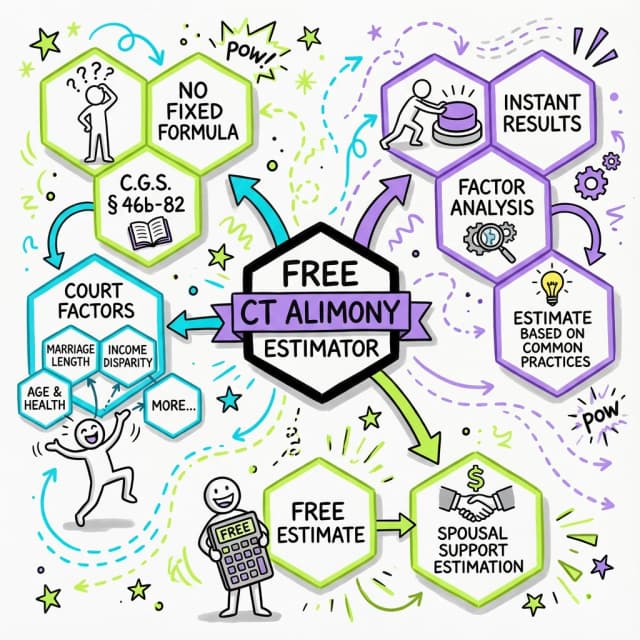
Try our free CT alimony calculator
Get an instant estimate based on Connecticut's statutory factors. No signup required.

The Track System and Complex Case Management
Connecticut's Pathways case management system under Practice Book Rule 25-50A recognizes that complex cases require different handling than straightforward divorces. Family relations counselors evaluate cases early in the process and recommend assignment to Track A (minimal court intervention), Track B (moderate complexity), or Track C (complex cases requiring substantial court time and resources).
High-asset cases typically land in Track C, which provides extended timelines and additional court oversight to address complicated financial issues. The court issues a scheduling order that establishes deadlines for discovery, expert disclosure, and trial preparation. Missing these deadlines can result in sanctions or adverse rulings.
Tools like Untangle's personalized task dashboard help you track these critical deadlines and ensure compliance with court orders. The platform sends reminders for upcoming due dates and helps you organize the documentation needed for each milestone, reducing the risk of procedural missteps that could disadvantage your position.
Prenuptial Agreements and Their Limits
If you entered your marriage with a prenuptial agreement, that document may significantly affect property division—but Connecticut courts retain discretion to scrutinize such agreements. The case Tilsen v. Benson demonstrates that courts evaluate whether prenuptial agreements were entered voluntarily and with adequate disclosure, and even religiously-based agreements like a ketubah may be analyzed for enforceability.
Under C.G.S. § 46b-66, when parties submit a settlement agreement (which may incorporate prenuptial terms), the court must still "inquire into the financial resources and actual needs of the parties" before approving it. Courts can reject agreements they find unconscionable or contrary to public policy, particularly when circumstances have changed dramatically since the agreement was signed.
Untangle helps you organize both the prenuptial agreement and all supporting documentation that demonstrates its validity, including evidence of independent legal counsel, financial disclosures exchanged before signing, and any subsequent amendments. This documentation may prove essential if your spouse challenges the agreement's enforceability.
Mandatory Disclosure Requirements
Connecticut imposes extensive mandatory disclosure obligations in divorce cases. Practice Book Rule 25-32 requires automatic exchange of financial documents within 60 days of request, including three years of federal and state tax returns, W-2 and 1099 forms, 24 months of statements for all financial accounts, and the most recent statements from retirement plans.
| Document Category | Timeframe Required | Purpose |
|---|---|---|
| Tax Returns (Federal & State) | Last 3 years | Income verification, asset identification |
| K-1 Forms | Last 3 years | Business/partnership income |
| Bank & Investment Statements | Past 24 months | Asset tracing, transaction history |
| Pay Stubs | Current year + last from prior year | Current income verification |
| Retirement Statements | Most recent | Retirement asset valuation |
Untangle streamlines compliance with these requirements by providing a structured framework for gathering, organizing, and producing required documents. The platform helps ensure you meet disclosure deadlines while also tracking what your spouse has provided, making it easier to identify gaps or deficiencies in their production.
Sworn Financial Statements and Accuracy
Practice Book Rule 25-30 requires each party to file sworn financial statements showing current income, expenses, assets, and liabilities. These statements must be filed at least five business days before any hearing involving financial issues and updated within 30 days before final judgment. For high-asset individuals, completing the Financial Affidavit Long Form accurately requires meticulous attention to detail.
Tools like Untangle's financial affidavit generation help you maintain current, accurate records that feed into your sworn statements. Because these affidavits are filed under oath, errors or omissions can have serious legal consequences, including adverse inferences or sanctions. The platform helps reduce the risk of inadvertent mistakes by organizing your financial data in a comprehensive, reviewable format.
When Professional Help Is Essential
While Untangle provides powerful tools for organizing and documenting complex assets, high-net-worth divorces benefit substantially from professional guidance. Business valuation experts, forensic accountants, and tax specialists bring expertise that complements your own organizational efforts. An experienced family law attorney can leverage the documentation you've compiled in Untangle to build the strongest possible case.
Consider engaging professionals when your case involves closely held business interests requiring formal valuation, executive compensation packages with unvested components, suspected hidden assets or dissipation, significant tax planning implications, or disputes over the validity of prenuptial agreements. The investment in professional expertise often pays dividends through more favorable settlement terms or trial outcomes.
Untangle works seamlessly with your professional team by providing organized, accessible documentation that experts and attorneys can review efficiently. Rather than spending billable hours sorting through disorganized records, your professionals can focus on strategic analysis and advocacy—potentially saving you money while improving the quality of their work product.
Frequently Asked Questions
What types of assets can I track in Untangle during my Connecticut divorce?
Untangle allows you to track all asset types relevant to Connecticut divorces, including business interests, investment portfolios, real estate holdings, retirement accounts, stock options, and executive compensation packages.
How does Untangle help with retirement account division in a CT divorce?
Untangle provides structured tools to document and organize retirement accounts, helping ensure proper valuation and disclosure as required under Connecticut's equitable distribution laws.
Can Untangle track multiple properties in my Connecticut divorce settlement?
Yes, Untangle supports tracking multiple real estate holdings with detailed documentation features designed to capture property values, equity positions, and other financial information needed for equitable distribution.
Is Untangle better than spreadsheets for complex divorce asset division?
Untangle offers purpose-built workflows and organization tools specifically designed for divorce asset division, providing more structure and compliance safeguards than generic spreadsheet solutions.
How does Connecticut's all-property rule affect what assets I need to document in Untangle?
Because Connecticut courts can divide all assets owned by either spouse—including premarital property, inheritances, and gifts—you should document every asset in Untangle regardless of when or how it was acquired.
Legal Citations
- • Practice Book Rule 25-5 - Automatic Orders upon Service of Complaint View Source
- • Practice Book Rule 25-30 - Statements To Be Filed View Source
- • Practice Book Rule 25-32 - Mandatory Disclosure and Production View Source
- • Practice Book Rule 25-33 - Judicial Appointment of Expert Witnesses View Source
- • Practice Book Rule 25-50A - Case Management under Pathways View Source
- • Oudheusden v. Oudheusden, 338 Conn. 761 View Source
- • Tilsen v. Benson, 347 Conn. 758 View Source
- • Financial Affidavit Long Form (JD-FM-006-Long) View Source