Connecticut Divorce Support Groups: Finding Community and Emotional Healing
Find divorce support groups in Connecticut. Discover local meetups, online communities, and professional resources to help you heal and connect with others going through divorce.
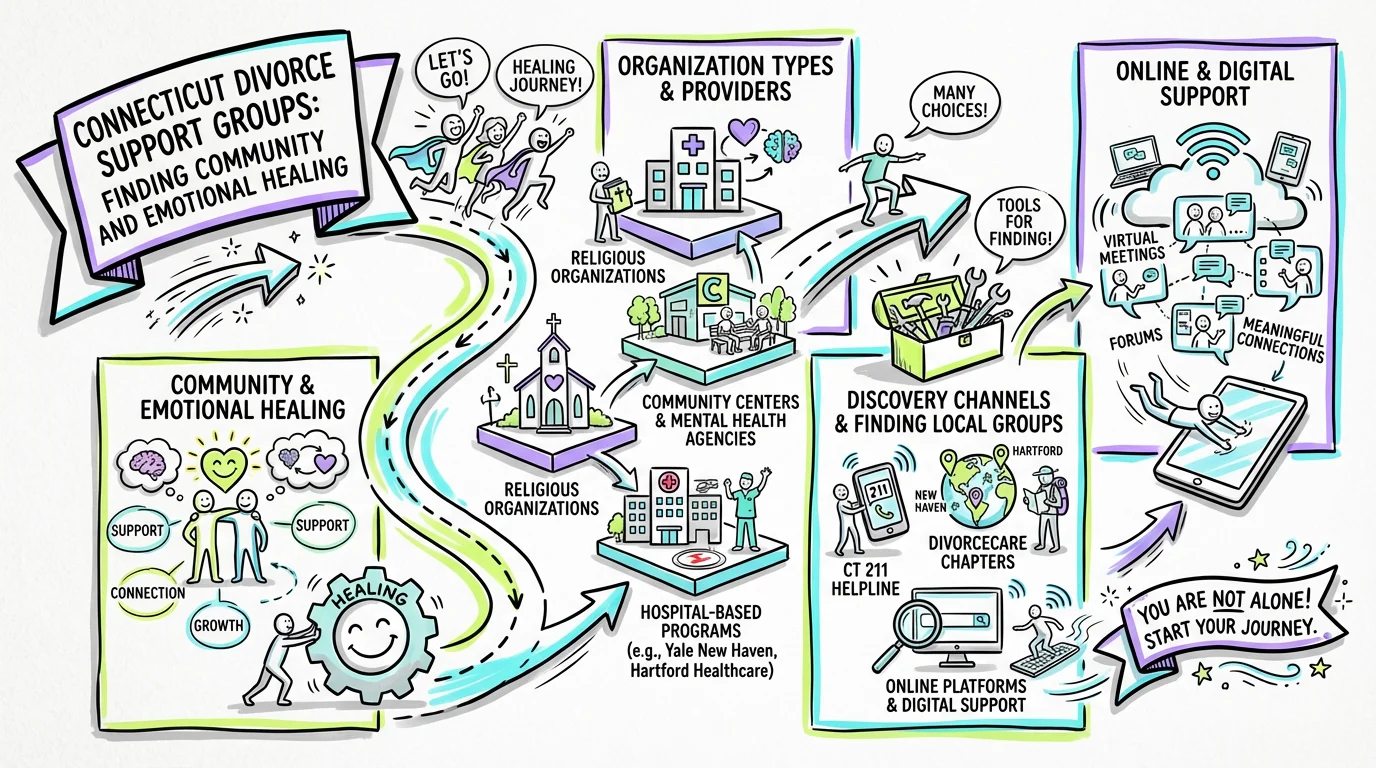
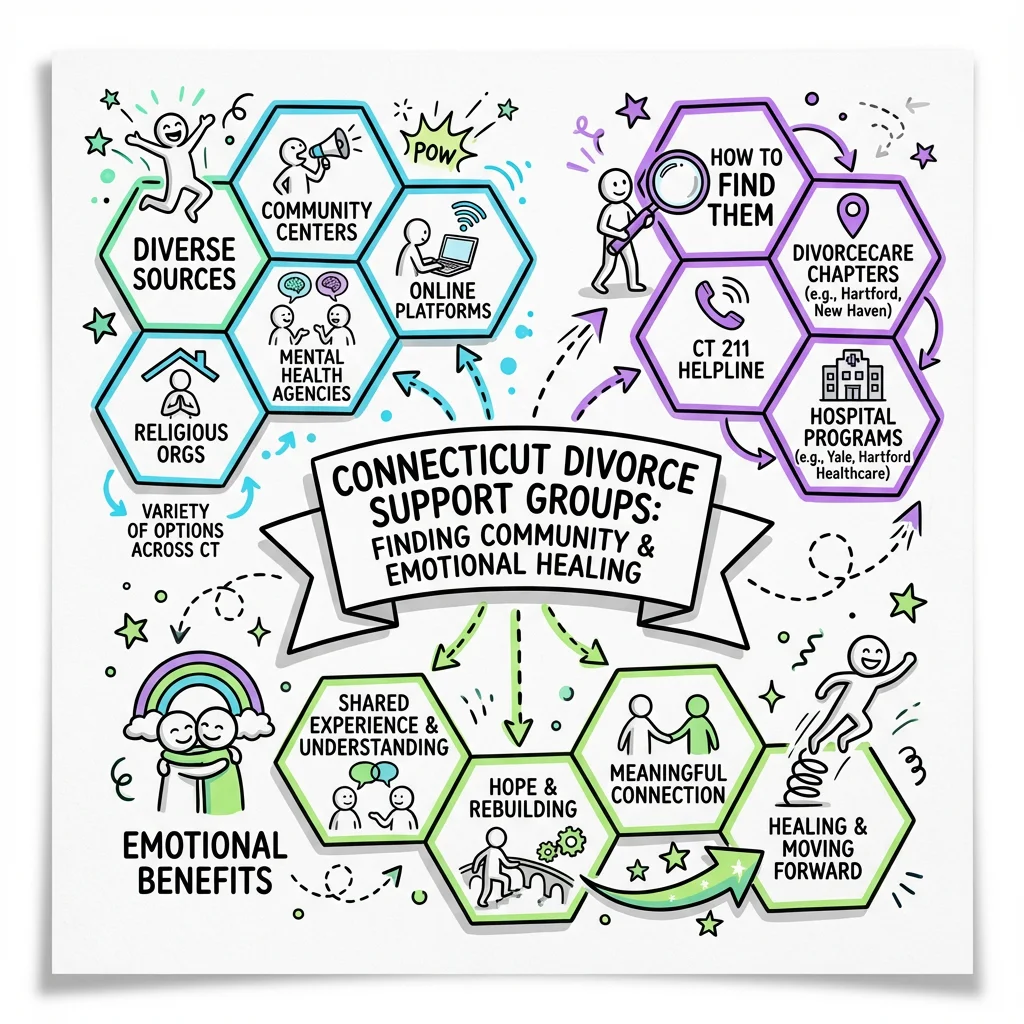
Connecticut offers numerous divorce support groups throughout the state, including programs through community centers, religious organizations, mental health agencies, and online platforms. You can find local groups through Connecticut's 211 helpline, DivorceCare chapters in cities like Hartford, New Haven, and Stamford, as well as hospital-based programs at institutions like Yale New Haven Health and Hartford Healthcare. Many Connecticut residents also find meaningful support through online communities that offer flexibility and anonymity during this challenging transition.
Why Divorce Support Groups Matter
Going through a divorce is one of life's most stressful experiences, often ranking alongside the death of a loved one in terms of emotional impact. Even when divorce is the right decision, the process brings grief, uncertainty, and profound change that can feel overwhelming to navigate alone. Support groups provide something that friends and family often cannot: connection with people who truly understand what you're experiencing right now.
Research consistently shows that social support during divorce significantly improves outcomes. People who participate in support groups report lower levels of depression and anxiety, faster emotional recovery, and better adjustment to their new lives. There's something uniquely healing about sitting in a room (or virtual space) with others who nod in recognition when you describe the sleepless nights, the fear of the unknown, or the complicated mix of relief and sadness that divorce often brings.
Beyond emotional validation, divorce support groups offer practical wisdom from those who have walked this path before you. Members share insights about navigating co-parenting challenges, rebuilding financial stability, managing holidays and family events, and eventually moving forward into new relationships and life chapters. This collective wisdom can help you avoid common pitfalls and feel more confident in your decisions.
Types of Divorce Support Groups Available in Connecticut
Community-Based and Legal Support Resources
Connecticut's community centers, libraries, and social service agencies frequently host divorce support groups that are free or low-cost. These groups typically meet weekly or bi-weekly and are facilitated by trained volunteers or mental health professionals. While these groups are voluntary, the Connecticut court system also recognizes the value of professional intervention. For example, the court may direct parties to conciliation services to explore resolving differences or potential reconciliation (C.G.S. § 46b-53).
To find community-based groups near you, start by calling Connecticut's 211 helpline, which maintains a comprehensive database of support services organized by town and need. Local libraries also frequently post flyers for support groups, and your town's social services department can point you toward resources specific to your area.
Faith-Based Support Programs
DivorceCare is one of the most widely available divorce support programs in Connecticut, operating through churches of various denominations throughout the state. This 13-week program combines video content, group discussion, and personal workbook exercises to help participants process their divorce experience. You don't need to be religious or a member of the hosting church to participate.
Connecticut has DivorceCare groups in major cities including Hartford, New Haven, Bridgeport, Stamford, Waterbury, and many suburban communities. The program addresses topics like anger, loneliness, depression, forgiveness, and reconciliation, making it comprehensive for various stages of the divorce journey. Many participants appreciate the structured format, which provides a clear path through the healing process.
Hospital and Mental Health Agency Programs
Several Connecticut healthcare systems offer divorce adjustment groups as part of their behavioral health services. Yale New Haven Health, Hartford Healthcare, and Nuvance Health systems periodically run support groups facilitated by licensed therapists. These groups may require a referral or intake assessment and sometimes involve a fee, but they offer the benefit of professional guidance.
Community mental health centers throughout Connecticut also provide support groups, often on a sliding-scale fee basis. Organizations like the Women's Center of Greater Danbury, Jewish Family Services of Connecticut, and Catholic Charities offer divorce-related programming regardless of your religious background.
Online Support Options for Connecticut Residents
Virtual Support Communities
Online divorce support has grown significantly, offering Connecticut residents flexibility and accessibility that in-person groups cannot match. Platforms like Supportiv, TalkSpace community features, and Reddit communities (r/divorce is particularly active) provide 24/7 access to peer support from anywhere in the state.
Many people find online support especially helpful during the early stages of divorce when emotions run high at unpredictable times. Being able to connect with others at 2 AM during a sleepless night, or during a lunch break when you need to vent, can be invaluable. Online anonymity also allows some people to open up more freely than they might in person.
Tools like Untangle's AI Legal Chat can complement support group participation by helping you understand and manage the practical legal aspects of divorce while you focus on emotional healing. Having a clear picture of your divorce logistics can reduce anxiety and free up mental space for the personal growth work that support groups facilitate.
Hybrid Approaches
Many Connecticut residents find the best results by combining in-person and online support. You might attend a weekly in-person meeting for structured programming and local connection while also participating in an online forum for daily support between meetings. This layered approach ensures you always have somewhere to turn when difficult emotions arise.
What to Expect in Your First Support Group Meeting
Walking into your first divorce support group can feel vulnerable and intimidating. Knowing what to expect can help ease that anxiety. Most groups begin with introductions where you share only what you're comfortable sharing—typically just your first name and perhaps how long you've been separated or divorced.
Groups generally have established guidelines about confidentiality, respectful listening, and giving everyone a chance to speak. You won't be pressured to share before you're ready; many newcomers spend their first few sessions simply listening and absorbing. The facilitator's job is to create a safe space and guide the conversation, not to provide therapy or advice.
You may feel emotional during meetings, and that's not only okay—it's expected and welcomed. Tears are common and met with compassion, not judgment. Many participants describe feeling lighter after meetings, even when the content was heavy, because carrying grief in community feels different than carrying it alone.
Finding the Right Support Group for You
| Factor | Questions to Consider |
|---|---|
| Format | Do you prefer structured curriculum or open discussion? |
| Size | Are you comfortable in larger groups or do you need intimacy? |
| Demographics | Would you benefit from a group for your gender, age, or situation? |
| Facilitation | Do you want professional leadership or peer-led support? |
| Timing | Does the schedule work with your childcare and work obligations? |
| Cost | What can you afford, and does sliding-scale help? |
| Location | How far are you willing to travel for the right group? |
It's completely normal to try several groups before finding the right fit. The chemistry of a group depends heavily on its current members, facilitation style, and format. Give each group at least two or three sessions before deciding whether it's working for you, as first impressions in vulnerable settings aren't always accurate.
Using Untangle's scheduling tools can help you carve out consistent time for support group attendance amidst the chaos of divorce logistics. Prioritizing your emotional health isn't selfish—it's essential for making good decisions and eventually thriving in your new chapter.
Specialized Support Groups in Connecticut
Support Groups for Parents
If you have children, you may benefit from groups specifically focused on co-parenting and helping children through divorce. It is important to distinguish these voluntary support groups from the mandatory parenting education program required by Connecticut law (C.G.S. § 46b-69b). While the court-mandated program focuses on the impact of restructuring the family on children, voluntary support groups offer ongoing peer support for the daily challenges of co-parenting.
Parents often find that peer support around co-parenting is especially valuable because friends and family may take sides or offer advice that doesn't account for the complexity of your specific situation. Other divorced parents understand the constant negotiation, the holidays that feel different now, and the challenge of supporting your children while processing your own grief.
Support for Specific Circumstances
Some Connecticut support groups focus on particular divorce circumstances. You may find groups for:
- High-conflict divorces where communication with your ex is especially difficult
- Divorces involving domestic abuse with enhanced safety protocols
- Gray divorce for those divorcing later in life
- LGBTQ+ divorces with community-specific understanding
- Divorces involving addiction where substance abuse played a role
If your situation involves specific complexities, seeking out a specialized group can provide more relevant support than general divorce groups.
Steps to Find Support Groups Near You
-
Call Connecticut 211 - Dial 211 or visit 211ct.org to access their comprehensive database of support services searchable by your zip code and needs.
-
Search DivorceCare's directory - Visit the national DivorceCare website and enter your Connecticut zip code to find nearby faith-based programs with dates, times, and contact information.
-
Contact your healthcare provider - Ask your primary care doctor or insurance company about behavioral health programs that include divorce support groups.
-
Check with local religious organizations - Even if you're not a member, many churches, synagogues, and other religious communities welcome anyone to their support programs.
-
Explore online communities - Search Facebook for Connecticut divorce support groups, check Meetup.com for local gatherings, and consider national online platforms.
-
Ask your attorney or mediator - Divorce professionals often maintain referral lists of support resources and can recommend groups their other clients have found helpful.
-
Use Untangle's resources - Untangle's platform connects you with divorce resources and can help you manage the practical side of divorce while you focus on finding emotional support.
Complementing Support Groups with Professional Help
Support groups provide invaluable peer connection, but they aren't a substitute for professional mental health care when needed. If you're experiencing severe depression, anxiety that interferes with daily functioning, thoughts of self-harm, or substance abuse, please seek individual therapy or counseling in addition to group support.
Many Connecticut therapists specialize in divorce adjustment and can provide individualized guidance that groups cannot. Your support group facilitator or fellow members may be able to recommend therapists they've found helpful. Untangle's AI Consultation can offer personalized guidance to help you navigate your unique situation and identify suitable professional support options in your area.
The combination of professional therapy, peer support groups, and practical divorce management tools creates a comprehensive support system. Each element addresses different needs: therapy for deep personal work, groups for community and shared wisdom, and tools like Untangle for reducing the logistical stress that can compound emotional difficulty.
When Support Groups Might Not Be Enough
While support groups help most people, there are situations where you might need additional or different resources. If you're in immediate danger from a spouse, contact the Connecticut Coalition Against Domestic Violence at 1-888-774-2900. Connecticut law establishes family violence response units to provide immediate intervention and assistance to victims (C.G.S. § 46b-38c).
Some people find that support groups trigger difficult emotions they're not yet ready to process, or that hearing others' stories increases their anxiety. This is valid and doesn't mean anything is wrong with you. Individual therapy might be a better starting point before you're ready for group work. Trust your instincts about what you need right now.
Moving Forward with Support
Finding your people during divorce—those who understand your experience and can walk alongside you—is one of the most important things you can do for your healing. Whether you find that community in a church basement, a virtual chat room, or a therapist's group practice, the connection will help you remember that you're not alone and that countless others have survived this transition and eventually thrived.
As you navigate the emotional journey, let Untangle help with the practical details of your divorce so you can focus your energy on healing. The combination of emotional support through community and practical support through tools designed for divorce can make an overwhelming process feel more manageable. You don't have to figure everything out alone, and reaching out for support is a sign of strength, not weakness.
Frequently Asked Questions
Are there free online divorce support groups available for Connecticut residents?
Yes, Connecticut residents can access free online divorce support groups through platforms like DivorceCare Online, Reddit communities, and Facebook groups that offer flexible participation and anonymity during the divorce process.
What is the difference between divorce counseling and divorce support groups in CT?
Divorce counseling provides one-on-one professional therapy focused on individual mental health, while divorce support groups offer peer connection and shared experiences with others going through similar situations in a group setting.
How do I find DivorceCare meetings near me in Connecticut?
You can find DivorceCare meetings in Connecticut cities like Hartford, New Haven, and Stamford by visiting the DivorceCare website, calling Connecticut's 211 helpline, or checking with local churches that host the program.
How can I cope with divorce if I don't have family support in Connecticut?
Connecticut offers multiple resources for those coping alone, including hospital-based programs at Yale New Haven Health and Hartford Healthcare, community center groups, online support communities, and mental health agency programs accessible through the 211 helpline.
How long do divorce recovery programs typically last in CT?
Most divorce recovery programs in Connecticut, such as DivorceCare, run for 13 weeks with weekly meetings, though some shorter workshops and ongoing support groups are also available throughout the state.
Legal Citations
- • C.G.S. § 46b-69b - Parenting education program View Source
- • C.G.S. § 46b-38c - Family violence response and intervention units View Source
- • C.G.S. § 46b-53 - Conciliation procedures View Source
- • Connecticut 211 View Source
- • Connecticut Coalition Against Domestic Violence View Source