Divorce Coaching Services Comparison: Finding the Right Support in Connecticut
Compare divorce coaching services in Connecticut. Learn about different types of support, costs, and how to choose the right divorce coach for your situation.
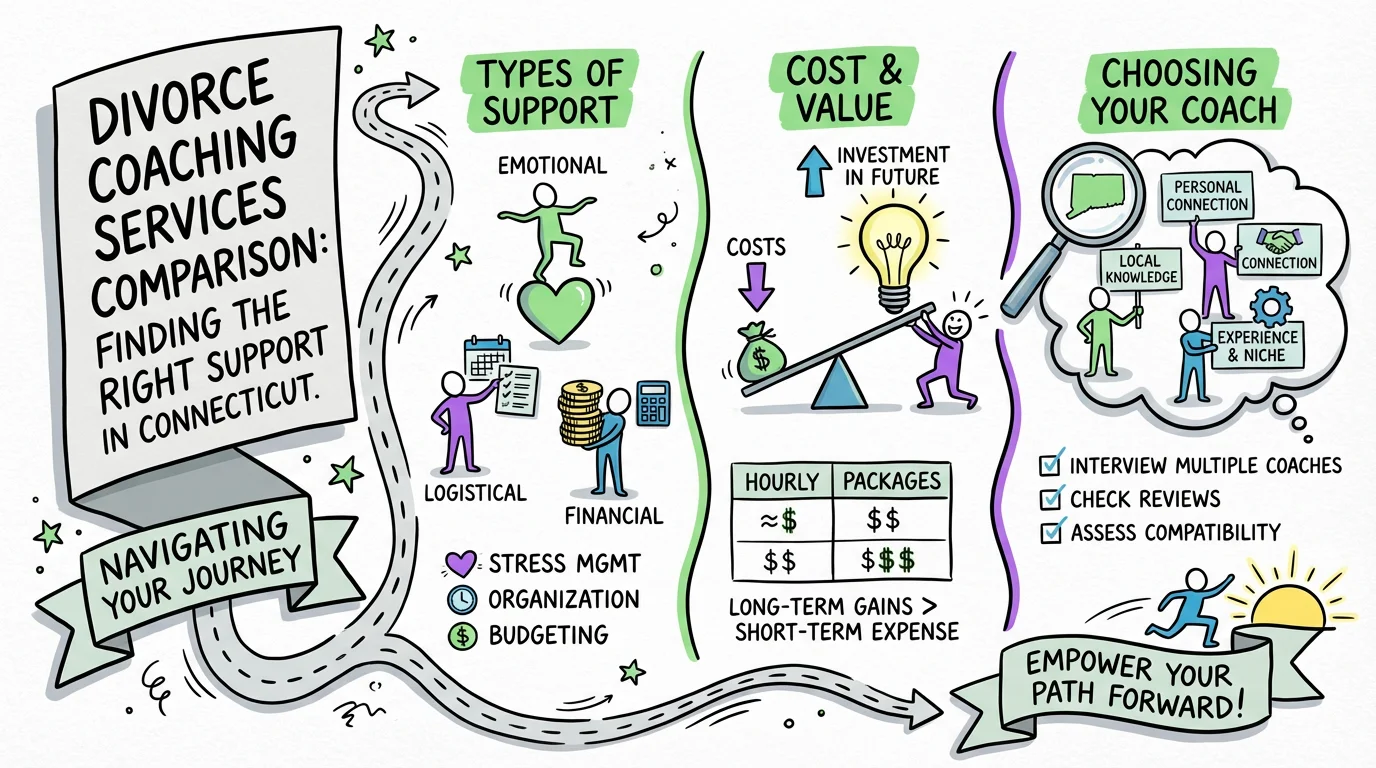
Divorce coaching services in Connecticut range from one-on-one professional coaching sessions ($75-$300 per hour) to comprehensive support platforms that combine guidance, tools, and community resources. The right choice depends on your specific needs—whether you're seeking emotional support, help navigating the legal process, financial guidance, or a combination of all three. Unlike therapy, which focuses on healing past wounds, divorce coaching is forward-focused, helping you make informed decisions and take practical steps through your divorce journey.
Understanding Divorce Coaching Services
Divorce coaches serve as your personal guide through one of life's most challenging transitions. They're not therapists, lawyers, or financial advisors—though many have backgrounds in these fields. Instead, they function as strategic partners who help you understand your options, prepare for important conversations and decisions, and stay focused on your goals when emotions run high.
In Connecticut, divorce coaching has grown significantly as more people recognize that navigating divorce requires more than just legal representation. While the Connecticut Judicial Branch provides Family Relations Counselors for mediation services under C.G.S. § 46b-53a, private divorce coaching offers more personalized, ongoing preparation. A good divorce coach helps bridge the gap between your attorney's legal advice and the emotional reality of ending a marriage. They can help you communicate more effectively with your spouse, prepare questions for your lawyer, organize your thoughts before mediation sessions, and maintain perspective during difficult negotiations.
The coaching relationship is also unique because it's entirely focused on your empowerment. While attorneys advocate for you in legal proceedings, divorce coaches teach you to advocate for yourself—in conversations with your spouse, in court if necessary, and in building your new life after divorce. This skill-building aspect makes coaching particularly valuable for people who feel overwhelmed or uncertain about their ability to handle the divorce process.
Types of Divorce Coaching Services
Individual Certified Divorce Coaches
Certified Divorce Coaches (CDCs) have completed specialized training through organizations like the Certified Divorce Coach Training Program or similar accredited programs. These professionals typically offer personalized, one-on-one sessions either in person, by phone, or via video conference.
Individual coaches provide highly customized support tailored to your specific situation. If you're dealing with a high-conflict spouse, a coach experienced in that area can teach you communication strategies that protect your emotional wellbeing while keeping negotiations productive. Sessions are typically scheduled weekly or bi-weekly, and many coaches offer between-session support via email or text for urgent questions.
The investment in an individual coach is significant—typically $150-$300 per hour in Connecticut—but many clients find the focused attention invaluable. A skilled coach can help you avoid costly mistakes, reduce conflict with your spouse (potentially saving thousands in legal fees), and move through the process more efficiently.
Therapy-Based Divorce Support
Licensed therapists and counselors who specialize in divorce offer a hybrid approach, combining emotional healing with practical guidance. These professionals can address underlying mental health concerns like anxiety or depression while also helping you navigate divorce decisions.
The advantage of working with a licensed mental health professional is their ability to treat clinical issues that may arise during divorce. Connecticut has many therapists who specialize in life transitions and divorce specifically. Sessions may also be covered by health insurance, making this option more affordable for some people than traditional divorce coaching.
However, therapy-based support may be less focused on the strategic and practical aspects of divorce. If your primary need is help understanding the legal process, organizing financial documents, or preparing for mediation, a therapist may not provide the structured guidance you need. Many people find value in combining therapy with other forms of divorce support.
Digital Platforms and Apps
Technology has created new options for divorce support that combine professional guidance with self-paced tools and resources. Platforms like Untangle's divorce management suite offer a modern approach to divorce support, providing tools for document organization, financial analysis, and step-by-step guidance through the Connecticut divorce process—all accessible whenever you need them.
Digital platforms excel at providing consistent, available support without the scheduling constraints of individual coaching. When you wake up at 2 AM worried about asset division, you can access resources immediately rather than waiting for your next appointment. The best platforms combine self-service tools with access to professional support when you need human guidance.
The cost advantage is also significant. While individual coaching might run $200+ per session, comprehensive digital platforms often provide unlimited access to tools and resources for a fraction of that monthly cost. For people who are organized and self-motivated, digital support can be incredibly effective and affordable.
Group Coaching Programs
Group coaching brings together people going through similar experiences, providing both professional guidance and peer support. Unlike the mandatory parenting education program required by Connecticut law (C.G.S. § 46b-69b), these group coaching sessions are voluntary and cover broader topics like communication strategies, financial planning, and self-care.
The community aspect of group coaching addresses a need that individual coaching cannot—connection with others who truly understand what you're experiencing. Divorce can be isolating, and hearing from others facing similar challenges reminds you that you're not alone. Many participants form lasting friendships that continue well beyond the program.
Group programs are also more affordable than individual coaching, typically ranging from $500-$1,500 for a complete program. However, they offer less personalized attention, and the fixed schedule may not work for everyone. If your situation involves unique complexities—a family business, international assets, or special needs children—you may need more individualized support.
Comparing Service Types: What's Right for You?
| Service Type | Cost Range | Best For | Limitations |
|---|---|---|---|
| Individual Certified Coach | $150-$300/hour | Complex situations, high-conflict divorces, personalized attention | Expensive, scheduling constraints |
| Therapy-Based Support | $100-$200/hour (may be covered by insurance) | Emotional healing, anxiety/depression, trauma processing | Less focus on practical/strategic aspects |
| Digital Platforms | $30-$150/month | Self-motivated individuals, document organization, financial tools | Less human connection, requires self-direction |
| Group Coaching | $500-$1,500/program | Community support, affordability, structured learning | Less personalized, fixed schedule |
| Hybrid Approach | Varies | Comprehensive support across all needs | Requires coordinating multiple providers |
Many Connecticut residents find that a combination approach works best. For example, using a digital platform like Untangle's comprehensive tools for day-to-day organization and guidance, while scheduling periodic sessions with an individual coach for complex decisions or emotionally charged negotiations.
What to Look for in a Divorce Coach
Credentials and Experience
Not all divorce coaches are created equal. Look for coaches who have completed recognized certification programs and have specific experience with Connecticut divorce law and processes. While coaches don't provide legal advice, understanding how Connecticut courts operate, what judges typically consider in custody decisions, and how assets are typically divided helps them prepare you effectively.
Ask potential coaches about their background. Many excellent divorce coaches have prior careers as attorneys, financial planners, mediators, or mental health professionals. This background informs their coaching approach and can provide additional value. However, be clear that coaching is their current role—you don't want someone who will blur boundaries between coaching and legal or financial advice.
Experience matters, but so does fit. A coach who's worked with hundreds of clients but doesn't connect with you personally won't be as effective as someone newer who truly understands your situation and communication style.
Communication Style and Availability
During your divorce, you'll face unexpected challenges and time-sensitive decisions. Understanding how a coach communicates and their availability between sessions is crucial. Some coaches offer unlimited email or text support; others are strictly session-based. Know what you need and find someone who can provide it.
Consider whether you prefer someone who takes a direct, no-nonsense approach or a gentler, more nurturing style. The best coach for you is someone whose communication style helps you stay calm and focused. Many coaches offer a free initial consultation—use this opportunity to assess whether their style works for you.
Specialized Focus Areas
Some coaches specialize in specific aspects of divorce. Financial divorce coaches focus on understanding marital assets, planning for post-divorce finances, and ensuring equitable division. Parenting coaches concentrate on developing custody arrangements and co-parenting relationships. Others specialize in high-conflict divorces or helping people navigate divorces involving narcissistic spouses.
If you know your divorce involves particular challenges, seek out a coach with relevant expertise. Tools like Untangle's Free AI Consultation can help you identify your specific needs and find appropriate support resources.
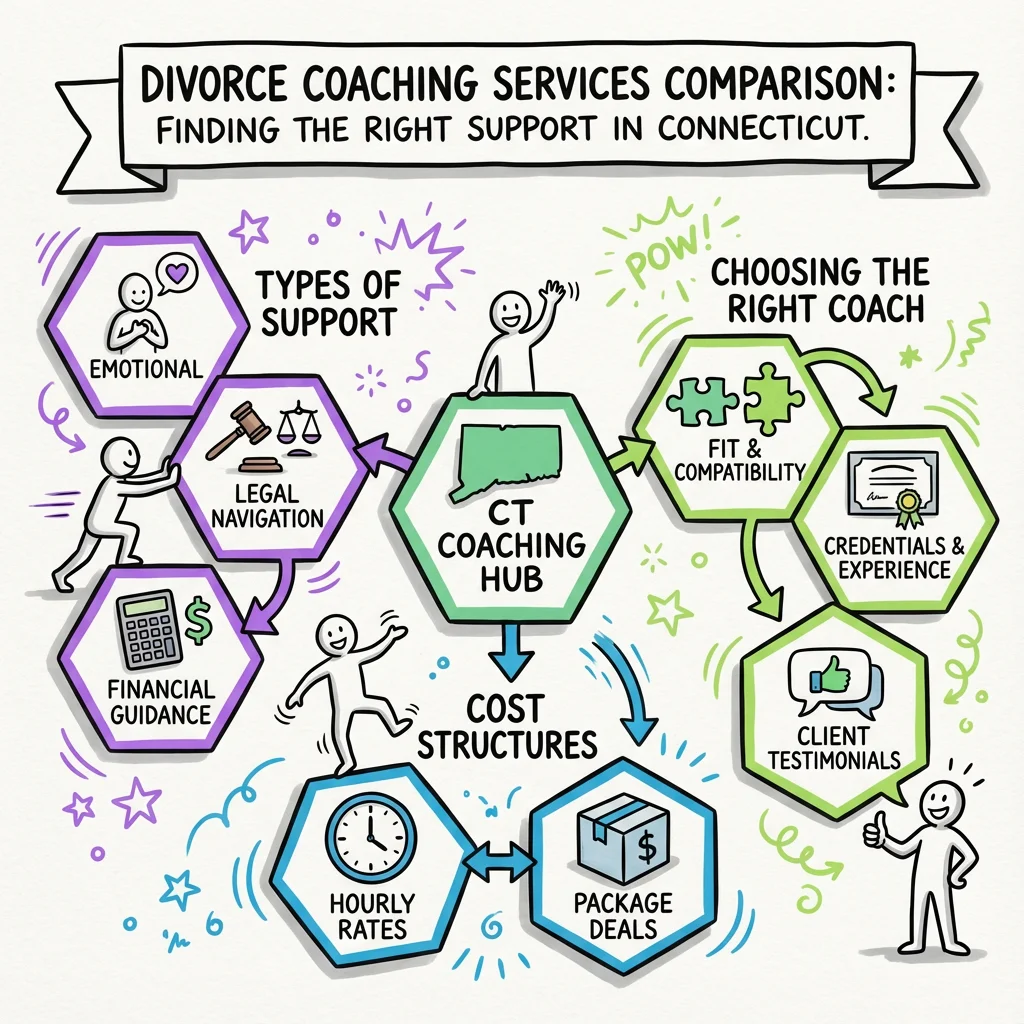
Building Your Support Team
The Role of Different Professionals
Divorce coaching works best as part of a comprehensive support team. Understanding how different professionals complement each other helps you build the right team for your situation.
Your divorce attorney handles legal strategy, document preparation, court filings, and representation in proceedings. Your divorce coach helps you prepare for attorney meetings, process legal information emotionally, and make decisions aligned with your values and goals. A financial advisor or CDFA (Certified Divorce Financial Analyst) helps ensure you meet the requirements for full financial disclosure as mandated by Connecticut Practice Book § 25-30 and analyzes long-term financial implications.
It is also helpful to be aware of the "Automatic Orders" that go into effect at the start of a case (Practice Book § 25-5), which restrict financial changes. A knowledgeable coach will remind you of these constraints to avoid compliance issues.
These roles should complement, not conflict with, each other. A good divorce coach will encourage you to consult with your attorney on legal questions and won't overstep their boundaries. Be wary of any professional who claims to handle everything—divorce is complex enough to warrant specialized support.
Coordinating Your Support
Managing multiple professionals can feel overwhelming when you're already stressed. Creating systems to keep everyone aligned and avoid duplicating efforts is essential. This might mean sharing key documents across your team (with appropriate permissions) or having your coach attend attorney meetings with you to help you process information afterward.
Digital tools can significantly ease this coordination burden. Tools like Untangle's case management feature help you organize documents, track conversations, and maintain a clear picture of your divorce progress—information you can easily share with any professional supporting you.
Practical Steps to Choose Your Support
- Assess your primary needs - Are you most struggling with emotional overwhelm, understanding the legal process, making financial decisions, or managing communication with your spouse? Your primary pain point should guide your first support choice.
- Set a realistic budget - Be honest about what you can afford, both for immediate support and throughout your divorce (which may take 6-18 months in Connecticut). Remember that good support often reduces overall divorce costs by preventing mistakes and reducing conflict.
- Research options in your area - Look for certified coaches in Connecticut, ask your attorney for recommendations, and explore digital platforms. Read reviews and testimonials from people in similar situations.
- Schedule consultations - Most coaches offer free initial consultations. Use these to assess fit, ask questions, and understand their approach. Pay attention to how you feel during the conversation.
- Start with one resource and expand - You don't need to build your entire support team immediately. Start with your most pressing need, and add resources as you identify additional gaps.
- Reassess periodically - Your needs will change as your divorce progresses. What you need during the initial filing phase differs from what you'll need during negotiations or post-decree adjustment.
When Professional Coaching Is Essential
While many people can navigate relatively amicable divorces with minimal outside support, certain situations make professional coaching particularly valuable.
If your spouse is high-conflict, manipulative, or you suspect narcissistic personality traits, a coach experienced in these dynamics can be invaluable. They can help you recognize manipulation tactics, maintain emotional boundaries, and communicate in ways that reduce conflict rather than escalate it. Without this guidance, high-conflict divorces often spiral into extended, expensive legal battles.
Complex financial situations—business ownership, significant assets, unusual property, or large income disparities—also benefit from professional support. While you'll need legal and financial professionals for the technical aspects, a coach helps you understand your options emotionally and ensure your decisions align with your long-term wellbeing, not just immediate desires.
If you have children, investing in coaching support often pays dividends for years. Learning effective co-parenting communication and developing a child-focused mindset early in the divorce process sets the foundation for healthier family dynamics long after the divorce is finalized. Your children will benefit from having a parent who navigated the divorce thoughtfully and maintained emotional stability.
Finally, if you're feeling completely overwhelmed and unable to function effectively, professional support isn't optional—it's essential. Divorce requires decision-making at a time when your emotional resources are depleted. A good coach helps you regain enough stability to make sound decisions, rather than choices you'll regret later. Combining coaching with tools like Untangle's personalized task dashboard can help you move forward even when you feel stuck.
Frequently Asked Questions
What is the difference between a divorce coach and a therapist in Connecticut?
A divorce coach is forward-focused on practical decision-making and navigating the divorce process, while a therapist focuses on healing past emotional wounds and mental health treatment.
How much does divorce coaching cost in CT?
Divorce coaching services in Connecticut typically range from $75 to $300 per hour, depending on the coach's credentials and the type of support provided.
What credentials should I look for when hiring a Connecticut divorce coach?
Look for coaches with certifications from recognized programs like CDC Certified Divorce Coach, along with relevant backgrounds in counseling, law, or financial planning.
Is hiring a divorce coach worth the money?
Divorce coaching can be worth the investment because it helps you make better decisions, communicate more effectively, and potentially reduce costly legal fees by being better prepared for attorney meetings and mediation.
Can a divorce coach help me prepare for mediation in Connecticut?
Yes, a divorce coach can help you organize your thoughts, prepare questions, and develop communication strategies before mediation sessions to help you advocate for yourself more effectively.
Legal Citations
- • C.G.S. § 46b-53a View Source
- • C.G.S. § 46b-69b View Source
- • Connecticut Practice Book § 25-30 View Source
- • Practice Book § 25-5 View Source