Best Divorce Apps for Stay-at-Home Moms in Connecticut: Essential Tools & Resources
Discover the best divorce apps for stay-at-home moms in Connecticut. Learn how digital tools can help you navigate financial disclosure, alimony, and custody.
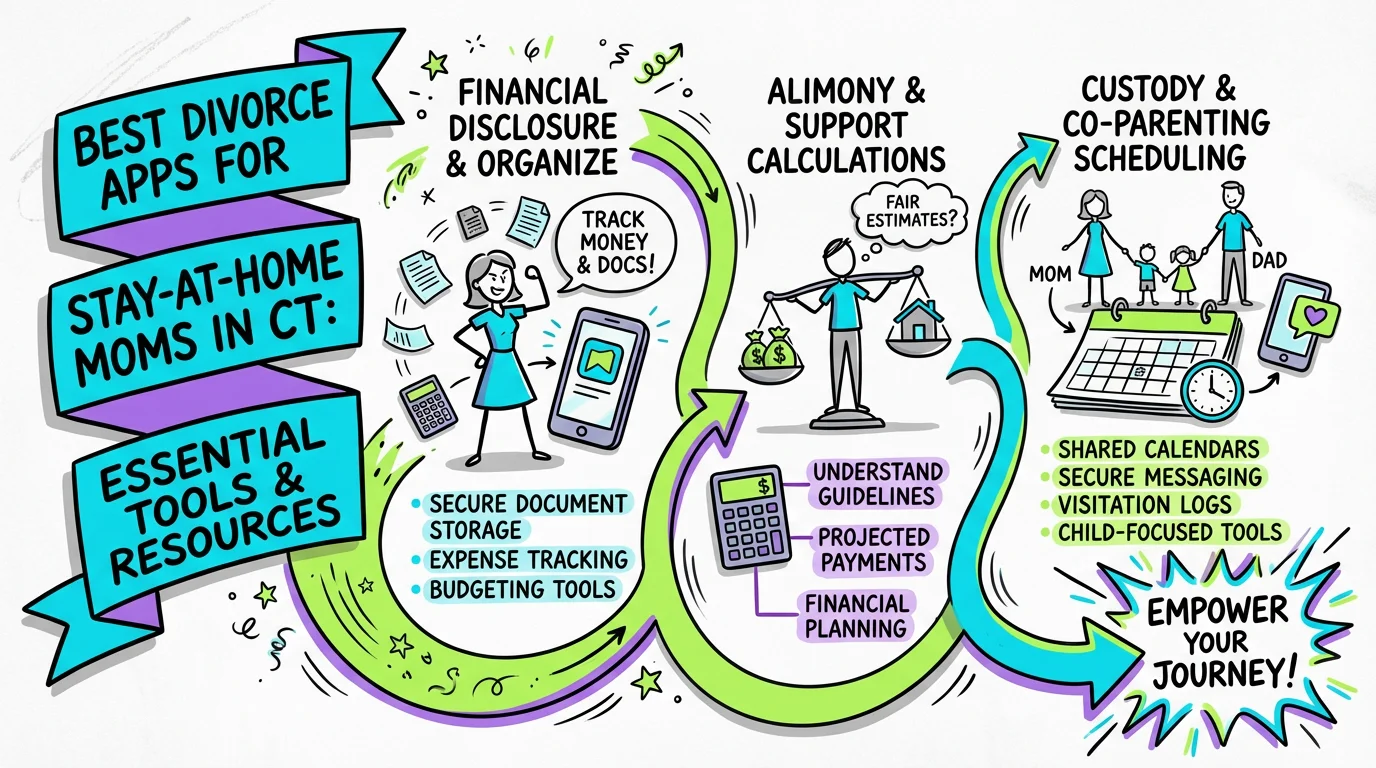
The best divorce apps for stay-at-home moms in Connecticut are those that help you organize finances you may not have tracked, understand your rights to alimony and property division, and prepare the detailed documentation courts require. As a financially dependent spouse, you're entitled to significant legal protections under Connecticut law—including pendente lite (temporary) support, attorney's fees from your spouse, and equitable property division. The right digital tools can help you access these protections even when you haven't been the primary earner.
Why Stay-at-Home Moms Need Specialized Divorce Tools
Connecticut law explicitly recognizes that stay-at-home parents contribute to the marriage in ways that deserve financial protection during divorce. Under C.G.S. § 46b-82, courts consider "the contribution of each of the parties in the acquisition, preservation or appreciation in value of their respective estates" when awarding alimony—and this includes homemaking and childcare contributions. You don't need to have earned a paycheck to be entitled to a fair share of marital assets.
The challenge for many stay-at-home moms is that they've been removed from the family's day-to-day finances. Your spouse may have handled investments, tax filings, and major financial decisions while you managed the household. This information gap can feel overwhelming when you're suddenly expected to complete detailed financial affidavits and negotiate your future. Digital tools bridge this gap by helping you gather, organize, and understand financial information you may never have tracked before.
Using the right apps also helps level the playing field. In cases like Oudheusden v. Oudheusden, Connecticut courts have awarded substantial alimony—in that case, $18,000 per month—to spouses who sacrificed career opportunities to support the family unit. But securing fair outcomes requires thorough documentation. Courts can't protect what they can't see, making your ability to present organized, complete financial information critical to your case.
Essential Features in Divorce Apps for Stay-at-Home Moms
Financial Organization and Discovery
Connecticut's mandatory disclosure rules under Practice Book § 25-32 require extensive financial documentation, including three years of tax returns, 24 months of bank statements, pay stubs, and retirement account statements. For stay-at-home moms who haven't managed these records, this can feel like searching for needles in haystacks you didn't know existed.
Look for apps that help you:
- Track down and organize financial documents across multiple accounts
- Create a comprehensive inventory of marital assets (including those you may not have realized existed)
- Calculate your household's true living expenses
- Document your contributions to the marriage over time
Tools like Untangle's financial organization features are specifically designed for this scenario. Rather than starting from scratch, you can input information as you discover it and build a complete picture gradually. The platform helps you identify gaps in your knowledge so you know what questions to ask and what documents to request.
Child Support and Custody Planning
As a stay-at-home mom, you've likely been the primary caregiver for your children. Connecticut law under C.G.S. § 46b-84 requires both parents to maintain minor children "according to their respective abilities." This means child support calculations consider both parents' earning capacity—including your potential future earnings if you re-enter the workforce.
The best divorce apps help you:
- Estimate child support using Connecticut's guidelines
- Document your parenting schedule and caregiving history
- Track expenses related to your children's needs
- Plan for custody arrangements that reflect your family's reality
Untangle's child support calculator uses Connecticut's actual guidelines to give you realistic expectations. Understanding these numbers early helps you make informed decisions about custody proposals and negotiate from a position of knowledge rather than uncertainty.
Understanding Your Financial Rights in Connecticut
Temporary Support During Divorce (Pendente Lite)
You don't have to wait until your divorce is final to receive financial support. Under C.G.S. § 46b-83, Connecticut courts can award alimony and support "pendente lite"—meaning while the case is pending. This is crucial for stay-at-home moms who may otherwise be left without income during what can be a lengthy divorce process.
To request pendente lite support, you'll need to file a motion with a sworn financial affidavit. Courts consider your current needs and your spouse's ability to pay. The automatic orders under Practice Book § 25-5 also protect you by prohibiting either spouse from hiding assets, canceling insurance, or making major financial changes once divorce papers are served.
| Type of Support | When Available | Key Considerations |
|---|---|---|
| Pendente Lite Alimony | During divorce proceedings | Based on immediate needs and spouse's ability to pay |
| Pendente Lite Child Support | During divorce proceedings | Follows CT child support guidelines |
| Final Alimony | After divorce decree | Can be time-limited or indefinite; modifiable or non-modifiable |
| Attorney's Fees | Any time during case | Court can order spouse to pay your legal costs |
Attorney's Fees: You May Not Have to Pay Out of Pocket
One of the most important protections for financially dependent spouses is C.G.S. § 46b-62, which allows courts to order one spouse to pay the other's attorney's fees "in accordance with their respective financial abilities." This means your spouse's higher income can be used to fund your legal representation, ensuring you have equal access to quality legal help.
Don't assume you can't afford an attorney because you don't have independent income. Many Connecticut family law attorneys understand this dynamic and will take cases knowing fees will come from the other spouse. Use divorce apps to document the income disparity between you and your spouse—this documentation supports your request for fee coverage.
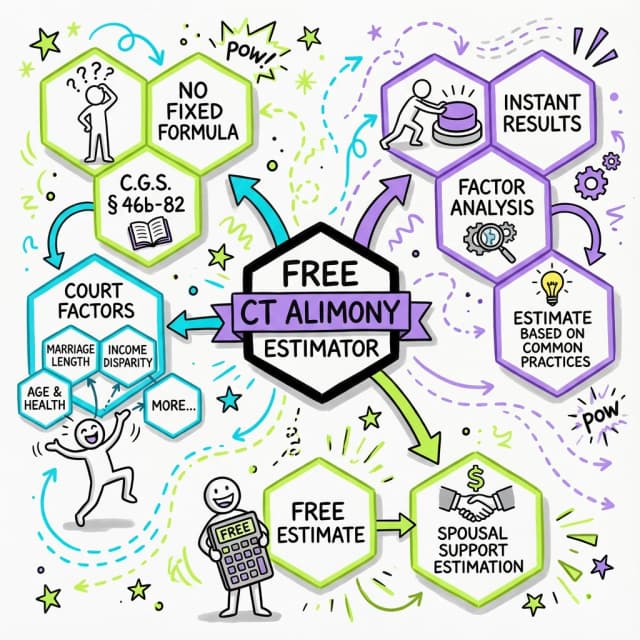
Try our free CT alimony calculator
Get an instant estimate based on Connecticut's statutory factors. No signup required.

Step-by-Step: Using Digital Tools to Prepare for Divorce
-
Gather what you have access to. Start by collecting any financial documents you can find: bank statements, tax returns, mortgage documents, credit card statements. Even partial information is valuable. Upload these to a secure platform where you can organize them systematically.
-
Complete a financial affidavit draft. Connecticut requires the Financial Affidavit (Form JD-FM-006) listing all income, expenses, assets, and liabilities. Working through this form—even before you file—helps you identify what you know and what you need to discover. Tools like Untangle's financial affidavit generation can simplify this daunting task by walking you through each section and compiling your information accurately using a guided questionnaire.
-
Document your contributions. Make a detailed record of your homemaking and childcare contributions throughout the marriage. Include career opportunities you declined, education you deferred, and skills you developed managing the household. Connecticut courts consider these factors under C.G.S. § 46b-81 when dividing property.
-
Calculate your post-divorce needs. Estimate what it will cost you to live independently, including housing, healthcare, transportation, and child-related expenses. Be realistic about the transition—you may need to re-enter the workforce, but you're entitled to support that allows you to do so at an appropriate pace.
-
Understand the timeline. Connecticut divorces typically take 90 days minimum (the mandatory waiting period) but can extend much longer with contested issues. Use this time to educate yourself about your rights and build your financial knowledge using Untangle's AI legal guidance.
-
Request mandatory disclosure. Once divorce proceedings begin, you're entitled to comprehensive financial disclosure from your spouse under Practice Book § 25-32. This includes tax returns, pay stubs, account statements, and business records if applicable. Document everything you request and receive.
Comparing Divorce Apps: What to Look For
| Feature | Why It Matters for Stay-at-Home Moms |
|---|---|
| Financial organization | Helps you track assets you didn't manage during marriage |
| Connecticut-specific calculations | Ensures alimony and support estimates reflect CT law |
| Document storage | Keeps everything organized for court filings |
| Guided questionnaires | Walks you through complex forms step-by-step |
| Educational resources | Builds your knowledge to make informed decisions |
| Security and privacy | Protects sensitive information during a vulnerable time |
Generic divorce apps may not account for Connecticut's specific statutory framework. The factors courts consider under C.G.S. § 46b-82 for alimony include length of marriage, causes of dissolution, age, health, occupation, employability, and "the opportunity of each for future acquisition of capital assets and income"—nuances that matter significantly for stay-at-home moms planning to re-enter the workforce. For a clear understanding of what you might expect, a tool like Untangle's alimony calculator can provide estimates based on Connecticut's specific statutory factors, helping you plan your future and negotiate effectively.
Building Your Support Team
When Digital Tools Are Enough
For uncontested divorces where both spouses agree on major issues, digital tools can guide you through the entire process. You can prepare your own paperwork, understand your rights, and ensure nothing falls through the cracks. This works best when:
- You and your spouse communicate reasonably well
- You have a clear picture of marital assets
- You agree on custody arrangements
- Neither spouse is hiding assets or being deceptive
When to Get Professional Help
Even the best divorce app can't replace legal advice in complex situations. Consider consulting a Connecticut family law attorney if:
- Your spouse owns businesses or has complex compensation (stock options, bonuses, etc.)
- You suspect hidden assets or financial deception
- There's a history of domestic abuse or coercive control
- You've been out of the workforce for many years and need substantial rehabilitative alimony
- Your spouse has hired an attorney and you're facing contested custody
Remember that under C.G.S. § 46b-62, you can request that your spouse pay your attorney's fees. Don't let your current lack of income prevent you from getting the representation you need. The court in Grabe v. Hokin reinforced that financial orders in divorce should account for the realities of each spouse's economic position, including income disparities that developed during the marriage.
The transition from stay-at-home mom to independent person is significant, but Connecticut law provides meaningful protections for spouses who sacrificed career advancement for family. Using digital tools effectively helps you understand and access those protections, whether you ultimately proceed on your own or with professional guidance.
Frequently Asked Questions
How do stay-at-home moms protect themselves financially during a Connecticut divorce?
Stay-at-home moms in Connecticut can protect themselves by using divorce planning apps to track marital assets, requesting pendente lite (temporary) support under C.G.S. § 46b-82, and documenting their homemaking contributions which courts explicitly recognize when awarding alimony and dividing property.
Can I get my spouse to pay for my divorce attorney if I'm a stay-at-home mom in CT?
Yes, Connecticut courts can order a working spouse to pay the stay-at-home parent's attorney fees to ensure both parties have equal access to legal representation during divorce proceedings.
What apps help track marital assets during a Connecticut divorce?
Apps like asset tracking and financial organization tools help divorcing spouses in Connecticut gather bank statements, investment accounts, property records, and other documentation required for the detailed financial affidavits courts mandate.
How much alimony can a stay-at-home mom get in Connecticut?
Alimony amounts vary widely based on factors like marriage length and lifestyle, but Connecticut courts have awarded substantial amounts—including $18,000 per month in the Oudheusden case—to spouses who sacrificed career opportunities to support the family.
What financial resources are available for divorcing women without income in Connecticut?
Connecticut divorcing women without income can access temporary support (pendente lite), request spouse-paid attorney fees, use free divorce planning apps, and work with attorneys who accept payment from future settlement proceeds.
Legal Citations
- • Practice Book § 25-5 - Automatic Orders upon Service of Complaint View Source
- • Practice Book § 25-32 - Mandatory Disclosure and Production View Source
- • Oudheusden v. Oudheusden, 338 Conn. 761 View Source
- • Grabe v. Hokin, 341 Conn. 360 View Source
- • Financial Affidavit Long Form (JD-FM-006) View Source