Connecticut Custody Agreement Tools Online | Creating Parenting Plans in CT
Discover online tools for creating Connecticut custody agreements. Learn about parenting plans, legal requirements, and resources to protect your children during divorce.
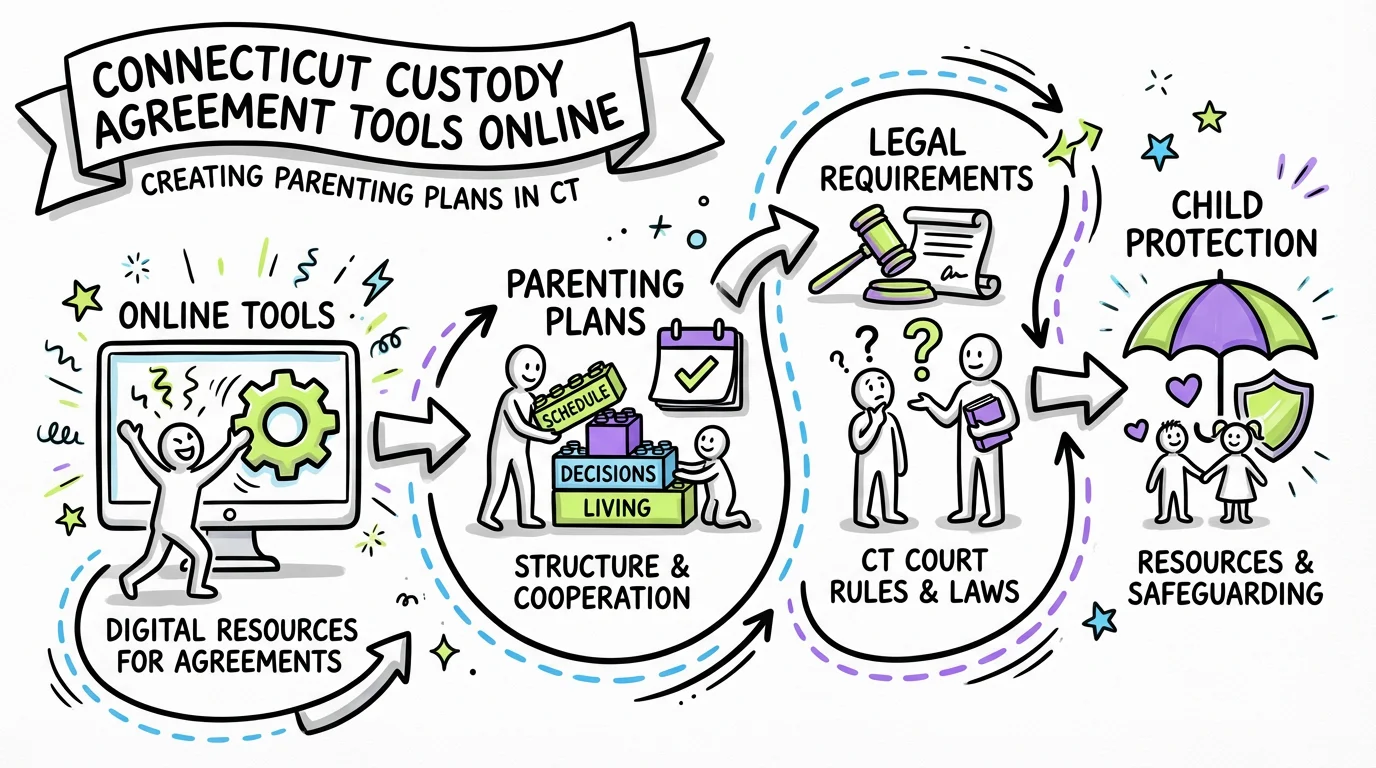
Online custody agreement tools enable Connecticut parents to draft comprehensive parenting plans covering schedules, decision-making, and communication protocols without immediate attorney intervention. These platforms help ensure compliance with Connecticut state statutes while minimizing legal costs, allowing families to document clear arrangements for court review that prioritize their children's wellbeing.
Understanding Connecticut Custody Agreements
Connecticut law recognizes two distinct types of custody: legal custody (decision-making authority) and physical custody (where the child lives). Under C.G.S. § 46b-56a, "joint custody" means an order awarding legal custody to both parents, providing for joint decision-making, and sharing physical custody in a way that assures the child continuing contact with both parents. The court may also award joint legal custody without joint physical custody when parents agree to share only decision-making responsibilities.
When parents can agree on custody arrangements, Connecticut courts generally prefer to honor those agreements. According to C.G.S. § 46b-66, when parties submit a final agreement concerning custody, care, education, visitation, maintenance, or support of their children, the court will inquire into the financial resources, actual needs of the parties, and their respective fitness to have physical custody. To ensure you have all necessary data ready for this review, Untangle's financial affidavit generation can help organize the required financial disclosures alongside your parenting plan.
For parents whose primary concern is protecting their children, understanding these legal distinctions is crucial before using any online tool. The agreement you create must address both legal and physical custody in ways that comply with Connecticut law, while also being practical enough to work for your family's daily life.
What Makes an Effective Custody Agreement Tool
Essential Features to Look For
The best online custody agreement tools for Connecticut parents include several key features. First, they should allow you to create detailed parenting time schedules that account for regular weekday/weekend arrangements, holidays, school breaks, and summer vacation. Second, they should help you document decision-making protocols for education, healthcare, religious upbringing, and extracurricular activities. Third, they should include provisions for communication between parents and between each parent and the children.
Tools like Untangle's parenting plan builder guide you through creating schedules that work for both parents while ensuring your children maintain meaningful relationships with each of you. These tools help you think through scenarios you might not otherwise consider—like how to handle schedule changes, transportation logistics, or what happens when a child is sick on the other parent's day.
Beyond scheduling, effective tools help you document important details like right of first refusal (giving the other parent the opportunity to care for the child before using a babysitter), communication methods between households, and protocols for introducing new partners to the children. Connecticut courts look favorably on comprehensive agreements that anticipate potential conflicts and provide clear resolution methods.
Connecticut-Specific Requirements
Connecticut has specific requirements that any custody agreement must address. Under Practice Book Rule § 25-5, automatic orders take effect once a divorce or custody action begins. For cases involving children, these orders prohibit either party from permanently removing the minor children from Connecticut without written consent of the other party or a court order. Any online tool you use should help you incorporate these restrictions into your agreement.
Additionally, C.G.S. § 46b-56a allows the court to require parents to submit a parental responsibility plan as part of any custody arrangement. This plan must address how parents will make major decisions affecting the child's welfare, the schedule for physical custody, and how the parents will communicate about the child's needs. Online tools that help you create this plan in advance demonstrate to the court that you've thoughtfully considered your children's needs.
Creating a Comprehensive Parenting Plan
Step-by-Step Process
- Start with your children's current routine - Document their school schedule, extracurricular activities, medical appointments, and social commitments. The best custody arrangements minimize disruption to children's established patterns.
- Map out a regular parenting schedule - Decide on weekday and weekend arrangements. Consider your work schedules, commute times, and your children's activities when determining what's practical.
- Plan for holidays and special occasions - Create an alternating schedule for major holidays, birthdays, Mother's Day, Father's Day, and other important family events. Be specific about pickup and dropoff times.
- Address summer and school breaks - Determine how extended school breaks will be divided. Many Connecticut families alternate weeks during summer or split the break into defined periods.
- Document decision-making authority - Specify how you'll make major decisions about education, healthcare, religious upbringing, and extracurricular activities. Will one parent have final say, or will you require mutual agreement?
- Establish communication protocols - Define how you'll communicate about the children (text, email, co-parenting app), how often, and how you'll handle emergencies.
- Include dispute resolution methods - Describe how you'll handle disagreements before escalating to court. Connecticut offers mediation services under C.G.S. § 46b-53a that can help resolve custody and visitation disputes.
For a systematic approach, using an automated builder ensures nothing important is overlooked and your plan aligns with Connecticut's expectations. The platform helps you consider scenarios specific to Connecticut families and creates documentation that aligns with what courts expect to see.
Protecting Your Children's Interests
For parents whose primary concern is their children's safety and wellbeing, custody agreement tools should help you address specific protective provisions. These might include restrictions on overnight guests, requirements for age-appropriate supervision, agreements about substance use around children, or protocols for addressing concerning behavior.
Connecticut courts prioritize the best interests of the child in all custody determinations. When you can demonstrate through your agreement that you've carefully considered your children's physical safety, emotional needs, educational requirements, and relationship with both parents, you strengthen your position. Online tools that help you articulate these considerations in clear, specific language are invaluable.
If you have concerns about your children's safety with the other parent, document these concerns carefully. While online tools can help you create protective provisions, serious safety issues may require court intervention, restraining orders, or supervised visitation arrangements that go beyond what standard templates address.
Connecticut Court Requirements and Processes
The Parenting Education Program
Connecticut requires most divorcing parents with minor children to complete a parenting education program. Under C.G.S. § 46b-69b, the Judicial Department has established this program to educate parents on the impact on children of family restructuring. The course costs $125 and must be completed within sixty days of the return date of your complaint (which is typically several weeks after filing).
This requirement exists separately from any custody agreement you create online. However, completing the parenting education program often helps parents create better custody agreements because it provides perspective on children's developmental needs and the effects of parental conflict. Form JD-FM-149 (Request for Relief from Judgment - Parent Education Program) is available if you need an extension or waiver of this requirement.
Pathways Case Management
Connecticut uses a case management system called "Pathways" to move family cases through the court efficiently. Under Practice Book Rule § 25-50A, a Resolution Plan Date is set 30-60 days from your return date. At this meeting, you'll work with a Family Relations counselor who will identify areas of agreement, assess the likelihood of settlement, and recommend which track your case should follow—Track A (minimal court involvement), Track B (moderate), or Track C (complex).
If you arrive at your Resolution Plan Date with a well-drafted custody agreement created using online tools, you're more likely to be placed on Track A, which means faster resolution and less expense. To ensure you present a clear, child-focused plan, Untangle's case details management features can help you organize your proposals and documentation before this important meeting.
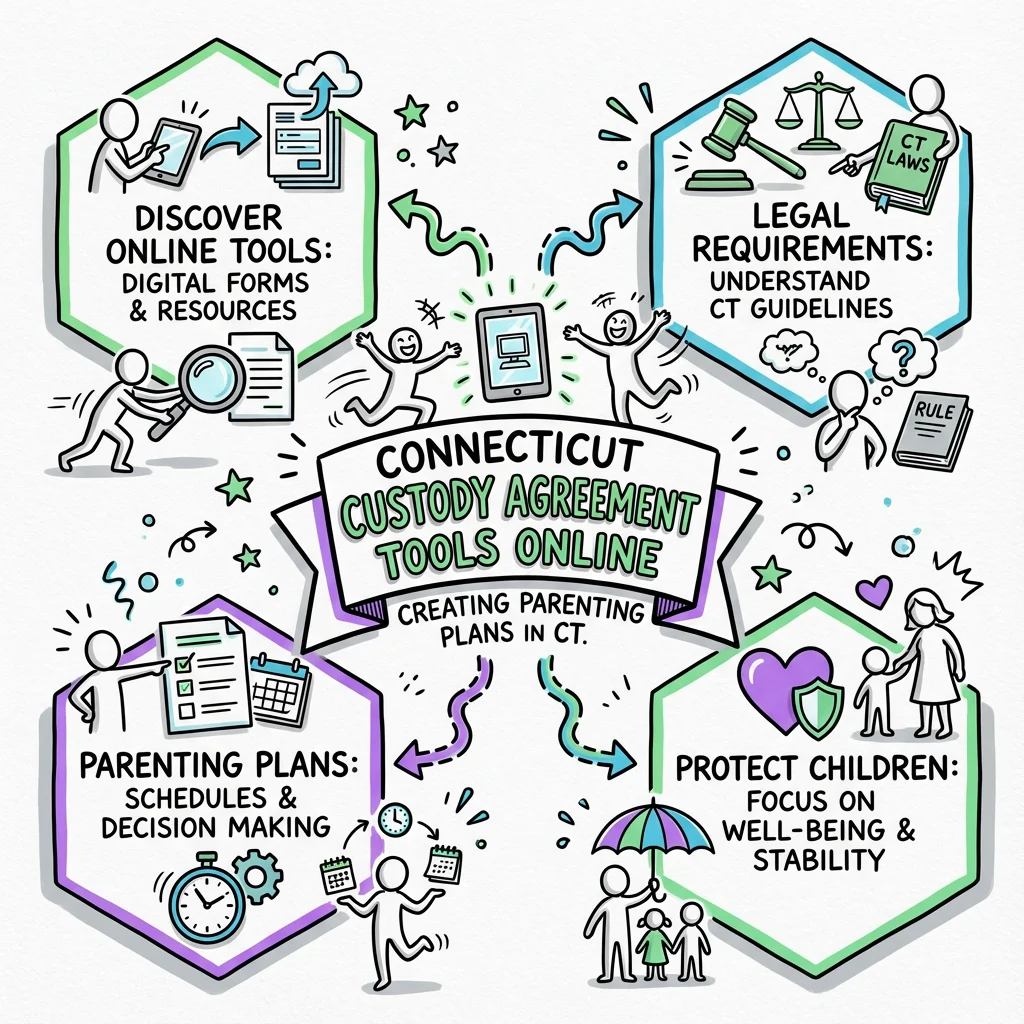
Comparison: Online Custody Agreement Options
| Feature | Basic Templates | Comprehensive Tools | Attorney-Drafted |
|---|---|---|---|
| Cost | Free-$50 | $50-$200 | $500-$2,000+ |
| Connecticut-specific provisions | Rarely | Often | Always |
| Schedule visualization | No | Yes | Varies |
| Legal compliance check | No | Some | Yes |
| Customization | Limited | Moderate | Full |
| Court-ready formatting | Rarely | Usually | Always |
| Ongoing support | No | Sometimes | Yes |
| Time investment | 2-4 hours | 4-8 hours | 1-3 meetings |
For most protective parents, comprehensive online tools offer the best balance of cost-effectiveness and thoroughness. They provide enough structure to ensure you don't miss important provisions while remaining affordable enough to preserve resources for other aspects of your divorce.
When Online Tools Aren't Enough
Situations Requiring Professional Help
While online custody agreement tools work well for many Connecticut families, certain situations require attorney involvement. If your co-parent has a history of domestic violence, substance abuse, or child neglect, you need legal representation to ensure appropriate protective orders and supervised visitation arrangements. Online templates cannot adequately address complex safety concerns.
Similarly, if your co-parent is uncooperative or refuses to participate in creating an agreement, you'll need to proceed through contested litigation rather than trying to create a mutual agreement. Connecticut courts can order custody evaluations under Practice Book Rule § 25-60 when parents cannot agree, but this process requires court involvement that goes beyond online tools.
High-conflict situations, cases involving parental relocation, special needs children, or significant mental health concerns also benefit from professional guidance. An experienced family law attorney can help you navigate these complexities while keeping your children's interests protected.
Using Tools to Prepare for Attorney Meetings
Even when you need an attorney, online custody agreement tools can reduce your legal costs by helping you organize your thoughts and priorities before meetings. When you arrive at an attorney consultation with a draft parenting schedule, a list of concerns, and clear goals for your children's future, you'll spend less time (and money) on basic information gathering.
To streamline the process, Untangle's children's information management features can help you compile the essential details attorneys need—like school schedules, medical appointments, and extracurricular activities—along with your proposed parenting time arrangement. This preparation demonstrates to your attorney that you're a serious, engaged parent focused on practical solutions rather than conflict.
Moving Forward: Protecting What Matters Most
Creating a custody agreement is one of the most important tasks you'll undertake during your divorce. The schedule and provisions you establish will shape your children's daily lives and their relationships with both parents for years to come. Online tools provide valuable structure for this process, helping you think through scenarios, document decisions, and create proposals that Connecticut courts can review and approve.
Remember that any agreement you create online is a starting point, not a final document. Connecticut law requires court review of all custody agreements to ensure they serve the children's best interests. The court may suggest modifications or request additional provisions based on your family's specific circumstances.
Your children are watching how you handle this transition. By using available tools thoughtfully, focusing on practical solutions rather than past grievances, and keeping your children's needs at the center of every decision, you demonstrate the kind of co-parenting approach that benefits everyone. The agreement you create today sets the foundation for your family's future—take the time to get it right.
Frequently Asked Questions
Can I create a legally binding custody agreement online in Connecticut?
You can draft a custody agreement using online tools, but it must be submitted to and approved by a Connecticut court to become legally binding under C.G.S. § 46b-66.
What's the best free custody calendar app for divorced parents in CT?
Popular free options include OurFamilyWizard, Cozi, and Custody Connection, which allow Connecticut co-parents to share schedules, track parenting time, and communicate about custody exchanges.
How do I write a Connecticut parenting plan without a lawyer?
You can use online custody agreement templates or generators that guide you through addressing legal custody, physical custody, visitation schedules, and decision-making responsibilities required under Connecticut law.
What should a Connecticut custody agreement include?
A CT custody agreement must address legal custody (decision-making authority), physical custody arrangements, a detailed parenting schedule, holiday and vacation time, and communication protocols between parents.
Are online custody agreement templates valid in Connecticut courts?
Online templates can serve as a starting point, but Connecticut courts will review the agreement to ensure it meets the child's best interests and complies with state custody laws before approval.
Legal Citations
- • C.G.S. § 46b-56a - Joint custody. Definition. Presumption. Conciliation. Parental responsibility plan. View Source
- • C.G.S. § 46b-66 - Review of final agreement; incorporation into decree. View Source
- • C.G.S. § 46b-69b - Parenting education program. View Source
- • C.G.S. § 46b-53a - Mediation program for persons filing for dissolution of marriage. View Source
- • Practice Book Rule § 25-5 - Automatic Orders upon Service of Complaint or Application View Source
- • Practice Book Rule § 25-50A - Case Management under Pathways View Source
- • Practice Book Rule § 25-60 - Evaluations, Studies, Family-Services Mediation Reports View Source
- • Form JD-FM-149 - Request for Relief from Judgment - Parent Education Program View Source