Connecticut Collaborative Divorce: A Complete Guide to Amicable Dissolution
Learn how Connecticut collaborative divorce works, including nonadversarial dissolution options, requirements, costs, and steps to achieve a smooth, amicable split.
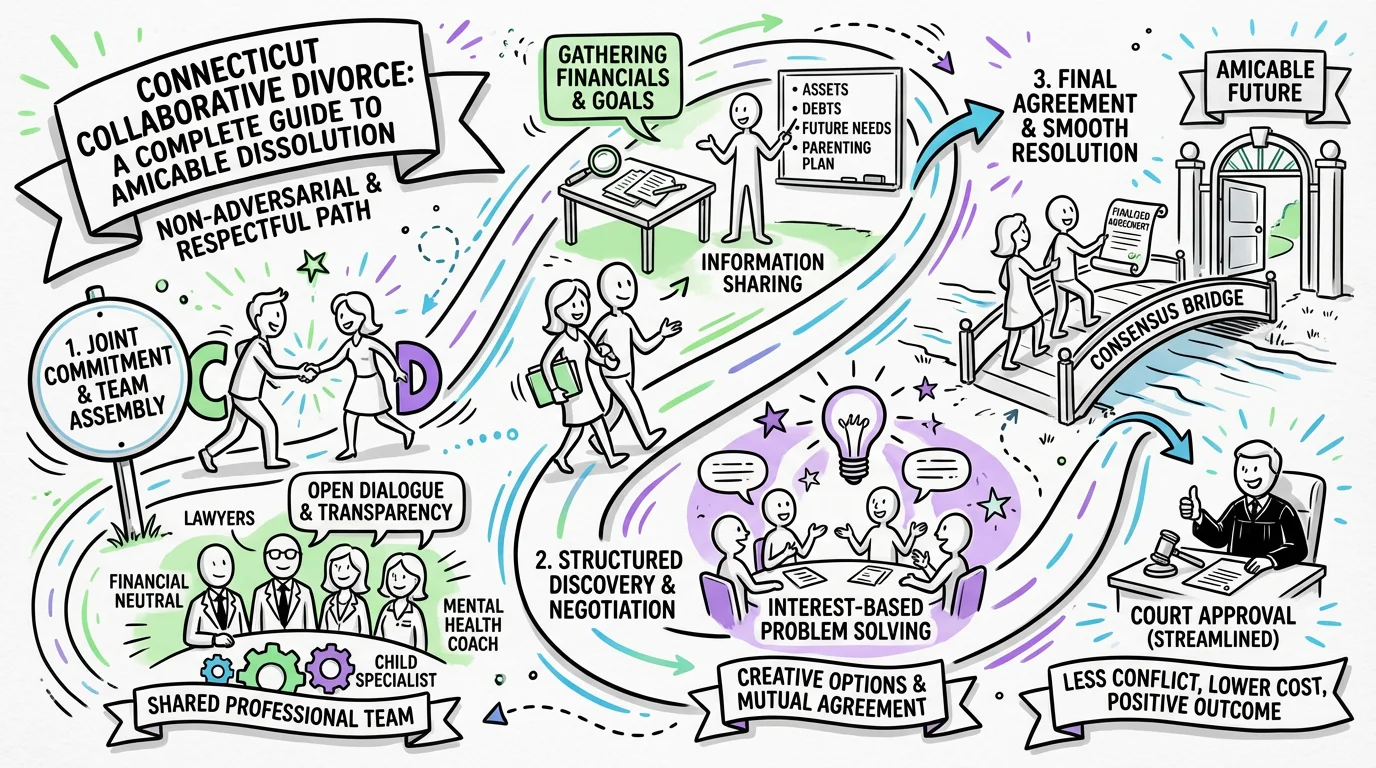
Connecticut offers couples who agree on ending their marriage a streamlined, nonadversarial dissolution process that minimizes court involvement, reduces costs, and allows both parties to maintain control over the outcome. Under C.G.S. § 46b-44a, spouses can file a joint petition for dissolution when they've reached agreement on all major issues—including property division, alimony, and child custody—potentially finalizing their divorce in as little as 30 days without the conflict and expense of traditional litigation.
Understanding Connecticut's Nonadversarial Divorce Process
Connecticut recognizes that not every divorce needs to be a courtroom battle. The state's nonadversarial dissolution pathway, codified in C.G.S. § 46b-44a through C.G.S. § 46b-44d, provides a collaborative framework specifically designed for couples who can work together toward a mutually acceptable resolution. This process differs significantly from traditional contested divorces, where each spouse hires separate attorneys to advocate adversarial positions before a judge.
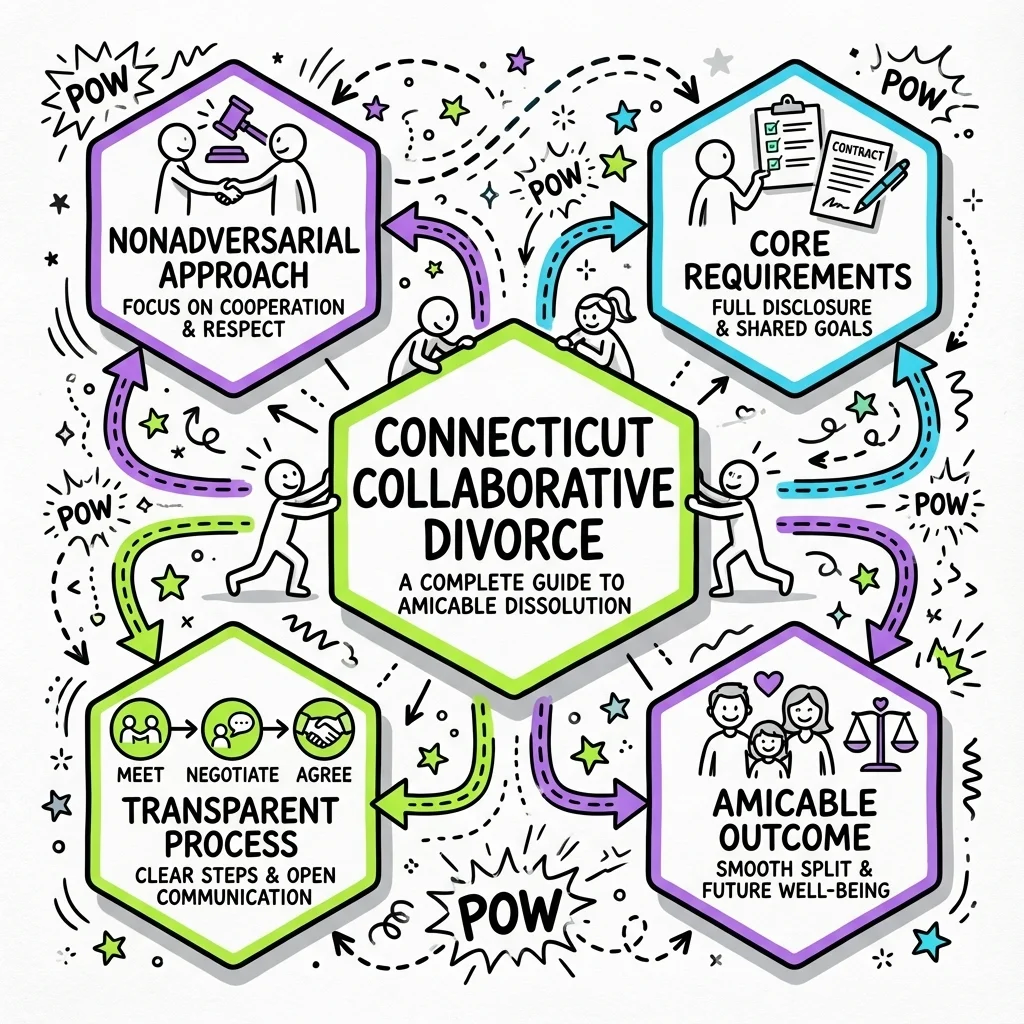
The collaborative approach in Connecticut emphasizes cooperation over conflict. Both spouses commit to resolving all issues through negotiation and open communication rather than litigation. This doesn't mean you'll agree on everything immediately, but it does require a shared commitment to finding solutions that work for both parties. Many couples find that this approach preserves important relationships—particularly valuable when children are involved and co-parenting will continue for years.
For couples navigating this process, organizing financial information early is essential. Tools like Untangle's financial affidavit preparation can help you gather and organize the documentation you'll need, ensuring both parties have complete transparency from the start.
Requirements for Filing a Joint Petition
To qualify for Connecticut's nonadversarial dissolution process, couples must meet specific criteria established by statute. Understanding these requirements upfront helps ensure your case proceeds smoothly through the system.
Eligibility Criteria
Under C.G.S. § 46b-44a, couples filing a joint petition must attest under oath that certain conditions exist at the time of filing. Both parties must agree that the marriage has irretrievably broken down—there's no requirement to prove fault or assign blame. Additionally, you'll need to demonstrate that you've reached agreement on all substantive matters including property division, debt allocation, alimony (if applicable), and any issues involving minor children.
Residency requirements also apply. At least one spouse must be a Connecticut resident, and the joint petition must be filed in the judicial district where that spouse lives. The petition itself must be notarized, with each party attesting to the required conditions under oath.
Required Documentation
Connecticut courts require specific paperwork to process a nonadversarial dissolution. Under Practice Book Rule § 25-5B, automatic orders take effect immediately upon filing a joint petition, restraining both parties from dissipating assets, canceling insurance, or making major financial changes. Both petitioners must file sworn financial statements with the petition, providing full disclosure of income, expenses, assets, and liabilities.
The Short Form Financial Affidavit (JD-FM-006) is available for couples where neither party's net income exceeds $75,000 per year and total assets are less than $75,000. Couples with more complex finances will need the long-form version. Practice Book Rule § 25-30 requires updated sworn statements within 30 days before judgment unless the court waives this requirement.
The Settlement Agreement: Heart of Your Collaborative Divorce
Your settlement agreement is the foundation of a successful nonadversarial dissolution. This comprehensive document outlines exactly how you and your spouse will divide your lives going forward, and it must address every aspect of your separation to receive court approval.
What Your Agreement Must Cover
A complete settlement agreement typically addresses property division (including real estate, retirement accounts, vehicles, and personal property), debt allocation, spousal support arrangements, and—if you have minor children—custody, visitation schedules, child support, and educational expenses. Under C.G.S. § 46b-51, both parties must execute a written stipulation that the marriage has broken down irretrievably, and this can be done outside of court as part of your collaborative process.
Connecticut courts take their review role seriously. Under C.G.S. § 46b-66, the court must inquire into the financial resources and actual needs of both parties, as well as fitness for custody and visitation with any minor children. The goal is ensuring the agreement is fair and equitable—not that it's perfectly equal, but that both parties understand what they're agreeing to and that the terms are reasonable under the circumstances.
Court Review and Approval
Once you file your joint petition with an accompanying settlement agreement, C.G.S. § 46b-44c establishes that the court will assign a disposition date not less than 30 days after filing. This waiting period allows time for reflection and ensures neither party is rushing into a decision they'll regret.
If after reviewing your settlement agreement the court cannot determine whether it's fair and equitable, C.G.S. § 46b-44d provides that the matter will be docketed for a hearing within 30 days. The court will then require both parties to appear and explain the agreement's terms. However, if the court finds your agreement acceptable, it may enter a decree of dissolution on the disposition date—or within five days afterward—often without requiring your physical presence in court.
Collaborative Divorce vs. Other Options
Understanding how collaborative divorce compares to other dissolution methods helps you choose the right path for your situation.
| Feature | Collaborative/Nonadversarial | Mediated Divorce | Traditional Contested |
|---|---|---|---|
| Court Involvement | Minimal—often no hearings required | Moderate—court approves mediated agreement | Extensive—judge decides disputed issues |
| Timeline | As few as 30-35 days | 3-6 months typical | 6-18+ months |
| Cost Range | $500-$3,000 | $3,000-$8,000 | $15,000-$50,000+ |
| Control Over Outcome | Full control by parties | High control with neutral guidance | Judge makes final decisions |
| Best For | Couples in full agreement | Couples who need help negotiating | High-conflict situations |
| Attorney Requirement | Optional but recommended | Optional (mediator is neutral) | Strongly recommended |
When Collaborative Works Best
The nonadversarial pathway shines when both spouses genuinely want to cooperate and have already discussed—or are willing to discuss—the major issues openly. It works particularly well for couples without minor children, those with relatively straightforward finances, and situations where both parties trust each other to provide honest financial disclosure.
Even couples with children can use the collaborative process successfully, provided they can agree on custody arrangements and child support. Under Practice Book Rule § 25-49, a case is considered "uncontested" when both parties appear and no aspect is disputed—this is the definition of an ideal collaborative divorce candidate.
Step-by-Step: Navigating Your Collaborative Divorce
Following a structured approach helps ensure nothing falls through the cracks during your nonadversarial dissolution.
-
Gather Financial Documentation - Before anything else, both spouses should compile complete records of income, assets, debts, and expenses. This includes tax returns, pay stubs, bank statements, retirement account statements, mortgage documents, and credit card statements. Untangle's automatic document generation can help you create a comprehensive financial picture.
-
Discuss and Negotiate Terms - Have open conversations about how you'll divide property, handle debts, and address any spousal support. If you have children, work through custody arrangements, parenting schedules, and child support calculations. Many couples find it helpful to work with a mediator for this phase, even in collaborative divorces.
-
Draft Your Settlement Agreement - Put everything in writing. Your agreement should be detailed and specific—vague terms lead to enforcement problems later. Consider having an attorney review the agreement to ensure it addresses all necessary issues and complies with Connecticut law.
-
Complete Required Forms - Prepare your joint petition, financial affidavits, and any other required court forms. The Certificate of Compliance (JD-FM-175) may be required depending on your circumstances. Preparing these documents can be daunting, but Untangle's document generation tools can streamline the process, ensuring all necessary forms are accurately completed.
-
File Your Joint Petition - Submit all paperwork to the Superior Court in the judicial district where either spouse resides. Both parties must sign the notarized petition attesting to required conditions under C.G.S. § 46b-44a.
-
Wait for Your Disposition Date - The court assigns a date at least 30 days after filing. During this time, automatic orders under Practice Book Rule § 25-5B remain in effect—neither spouse can hide assets, cancel insurance, or make major financial moves.
-
Receive Your Decree - If the court approves your agreement without requiring a hearing, you'll receive your dissolution decree on or shortly after the disposition date. Your divorce is then final.
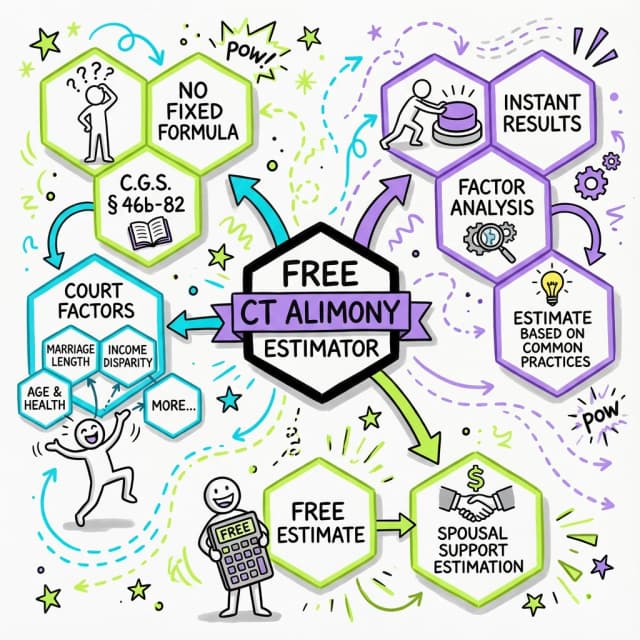
Try our free CT alimony calculator
Get an instant estimate based on Connecticut's statutory factors. No signup required.
What Happens If You Change Your Mind?
Connecticut law recognizes that circumstances can change during the divorce process. Under C.G.S. § 46b-44b (referenced in § 46b-44c), either party may file a notice of revocation before the disposition date. If this happens, the nonadversarial process stops, and the case may need to proceed through traditional channels.
This protection exists because divorce is a significant legal step with lasting consequences. The 30-day minimum waiting period gives both spouses time to carefully consider whether the settlement agreement truly represents a fair resolution. If either party develops concerns about any aspect of the agreement, they have the right to halt the process and seek additional negotiation or court intervention.
Managing Finances During Your Collaborative Divorce
Even in the most amicable divorces, financial transparency and proper management are essential. The automatic orders that take effect upon filing create legal obligations for both spouses.
Under Practice Book Rule § 25-5B, these orders mirror the restraints in § 25-5(b), meaning neither party can sell, transfer, or encumber property; incur unreasonable debts; or cancel insurance policies. Violating these orders can result in contempt of court charges—a serious matter even in an otherwise friendly divorce.
Untangle's expense tracking with AI can help both spouses maintain clear records during the divorce process, making it easier to demonstrate compliance with automatic orders and ensuring accurate financial disclosures on your sworn statements.
When to Seek Professional Help
While Connecticut's nonadversarial process is designed to be accessible without attorneys, certain situations benefit from professional guidance.
Consider Consulting an Attorney If:
- You have significant assets, business interests, or complex investment portfolios
- One spouse earns substantially more than the other
- You're uncertain whether proposed terms are fair
- There are pension or retirement benefits to divide
- Either spouse has concerns about hidden assets
- The agreement includes spousal support provisions
A Mediator May Help When:
- You agree on wanting a collaborative divorce but struggle with specific issues
- Communication between spouses has become difficult
- You need a neutral third party to facilitate productive discussions
- There are children involved and you want help developing a parenting plan
Remember, even in a nonadversarial divorce, the court reviews your agreement under C.G.S. § 46b-66 to ensure fairness. Having professional input on the front end often prevents delays or complications during the court review phase.
Moving Forward with Confidence
Choosing a collaborative divorce in Connecticut reflects a mature, practical approach to ending your marriage. By working together rather than against each other, you preserve resources, protect relationships, and maintain control over decisions that will shape your future.
The nonadversarial dissolution process under C.G.S. § 46b-44a offers a streamlined path for couples who can agree—or who are committed to finding agreement—on the terms of their separation. With proper preparation, honest communication, and attention to legal requirements, many Connecticut couples finalize their divorces in just over a month with minimal stress and expense.
Untangle's comprehensive divorce planning tools can guide you through each step of the process, from initial financial organization through final paperwork, helping ensure your collaborative divorce proceeds as smoothly as possible.
Frequently Asked Questions
How do I find a certified collaborative divorce lawyer in Connecticut?
You can find certified collaborative divorce attorneys through the Connecticut Collaborative Law Group directory or by searching for lawyers who have completed collaborative law training and are members of the International Academy of Collaborative Professionals.
What is the success rate of collaborative divorce in CT?
Collaborative divorce in Connecticut has a success rate of approximately 85-90%, meaning most couples who commit to the process reach a settlement without having to transition to traditional litigation.
Do I need a financial specialist for a Connecticut collaborative divorce?
While not required, many Connecticut collaborative divorce teams include a neutral financial specialist who helps both spouses understand marital assets, tax implications, and create fair property division proposals.
How much does a collaborative divorce cost in Connecticut?
Collaborative divorce in Connecticut typically costs between $15,000 and $50,000 total for both parties, which is generally 30-50% less than a traditional contested divorce.
What happens if collaborative divorce fails in CT?
If collaborative divorce fails in Connecticut, both collaborative attorneys must withdraw from the case, and each spouse must hire new litigation attorneys to proceed with a contested divorce in court.
Legal Citations
- • C.G.S. § 46b-44a View Source
- • C.G.S. § 46b-44d View Source
- • Practice Book Rule § 25-5B View Source
- • Practice Book Rule § 25-30 View Source
- • C.G.S. § 46b-51 View Source
- • C.G.S. § 46b-66 View Source
- • C.G.S. § 46b-44c View Source
- • Practice Book Rule § 25-49 View Source
- • C.G.S. § 46b-44b View Source