CompleteCase vs Untangle: Comparing Online Divorce Tools for Connecticut Couples
Compare CompleteCase and Untangle for Connecticut divorce. See which online divorce tool best supports amicable couples seeking a smooth, collaborative process.
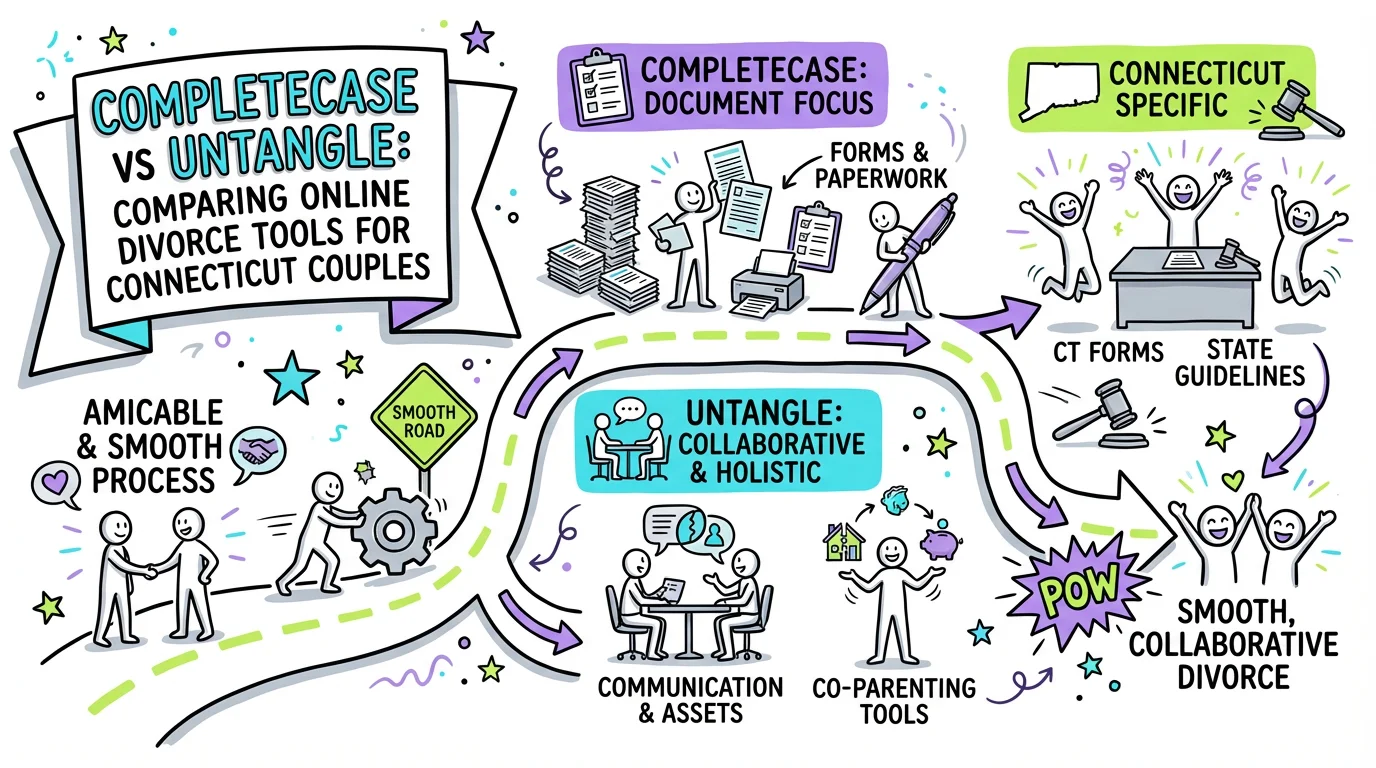
When comparing CompleteCase and Untangle for your Connecticut divorce, the key difference lies in their approach: CompleteCase focuses primarily on document preparation and filing assistance, while Untangle provides comprehensive support for the entire divorce process including financial organization, asset division guidance, and collaborative negotiation tools. For amicable couples who already agree on most issues, Untangle offers deeper functionality to help you work through the details together, whereas CompleteCase may be sufficient if you only need help generating court forms.
Understanding Your Options for an Amicable Connecticut Divorce
If you and your spouse are approaching divorce collaboratively, you're already in a better position than most. Connecticut courts strongly favor uncontested divorces where both parties reach agreement, and the right tools can help you maintain that cooperative spirit throughout the process. The challenge isn't whether you can agree—it's organizing the financial information, understanding what needs to be decided, and documenting your agreements properly for court approval. To ensure your agreements are correctly formatted for court, tools offering automatic document generation can be invaluable.
Online divorce tools have emerged to fill the gap between expensive attorney-led divorces and confusing DIY approaches. However, not all platforms offer the same level of support. Some focus narrowly on paperwork generation, while others provide end-to-end guidance through asset division, parenting plans, and financial disclosure requirements. Understanding these differences helps you choose the right tool for your specific situation.
Connecticut's divorce process requires several mandatory disclosures and forms, including financial affidavits that detail income, expenses, assets, and debts. Whether you use CompleteCase, Untangle, or another service, you'll need to gather extensive financial documentation and reach agreements on property division, potential alimony (C.G.S. § 46b-82), and—if you have children—custody and support arrangements.
CompleteCase: Document-Focused Approach
CompleteCase positions itself as an affordable document preparation service for uncontested divorces. The platform guides users through a questionnaire-based process that generates the necessary court forms based on your answers. For couples who have already worked out every detail of their divorce agreement, this straightforward approach can be appealing.
The service operates on a simple model: you answer questions about your situation, and the system produces completed forms ready for filing. CompleteCase covers all 50 states, including Connecticut, and adapts its forms to local requirements. The platform is designed for couples who can check "yes" to being in complete agreement on all issues before they begin.
However, CompleteCase's document-generation focus means it provides limited help with the substantive decisions you need to make. If you're uncertain about how to divide retirement accounts, what constitutes fair spousal support, or how to structure a parenting schedule, you'll need to work those details out elsewhere before using the service. The platform assumes you've already done the hard work of negotiation and agreement.
Untangle: Comprehensive Divorce Support
Untangle takes a different approach by supporting you through the entire divorce journey, not just the paperwork phase. The platform recognizes that even amicable couples need help understanding what decisions must be made, organizing financial information, and ensuring their agreements are complete and fair.
The platform includes financial affidavit generation tools that help you compile the asset, debt, income, and expense information required for Connecticut's mandatory financial affidavits. Rather than scrambling to gather documents at the last minute, you can build a comprehensive financial picture over time—which also helps ensure nothing important is overlooked during negotiations with your spouse.
For couples who agree in principle but haven't worked out specifics, Untangle's asset disclosure features provide frameworks for discussing and documenting how you'll split property. This is particularly valuable for Connecticut divorces, where courts apply equitable distribution principles (C.G.S. § 46b-81) that don't necessarily mean a 50/50 split. Understanding the factors courts consider helps you and your spouse reach agreements that would likely be approved.
Feature-by-Feature Comparison
| Feature | CompleteCase | Untangle |
|---|---|---|
| Document preparation | Yes | Yes |
| Connecticut-specific forms | Yes | Yes |
| Financial organization tools | Limited | Comprehensive |
| Asset division guidance | No | Yes |
| Spousal support calculators | No | Yes |
| Parenting plan tools | Basic | Detailed |
| Collaborative workspace | No | Yes |
| Progress tracking | Basic | Detailed |
| Educational resources | Limited | Extensive |
| Support for complex assets | Limited | Yes |
This comparison highlights a fundamental difference in philosophy. CompleteCase answers the question "How do I fill out these forms?" while Untangle addresses "How do I navigate my entire divorce successfully?"
When CompleteCase May Be Sufficient
CompleteCase works best for couples with genuinely simple situations. If you've been married a short time, have no children, own no real estate, have minimal retirement savings, and have already agreed in writing on exactly how to divide everything, document preparation may be all you need.
The platform also suits couples who have already worked with a mediator or collaborative divorce attorneys and simply need a cost-effective way to generate final paperwork. In these cases, the heavy lifting is done—you just need the forms completed correctly.
However, most divorces involve at least some complexity that simple form generation doesn't address. Even couples who think they agree on everything often discover gaps when they start working through details. Who gets the airline miles? How do you handle joint debts? What if one spouse wants to keep the house but can't refinance the mortgage? These common questions require more than a questionnaire.
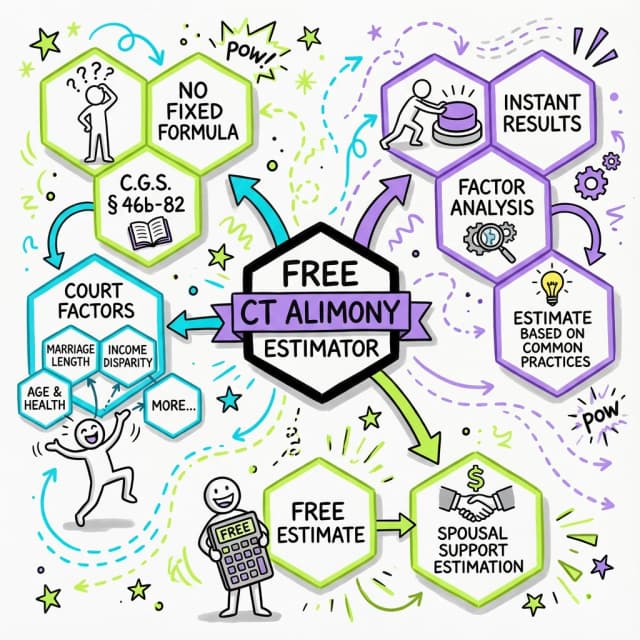
Try our free CT alimony calculator
Get an instant estimate based on Connecticut's statutory factors. No signup required.
When Untangle Is the Better Choice
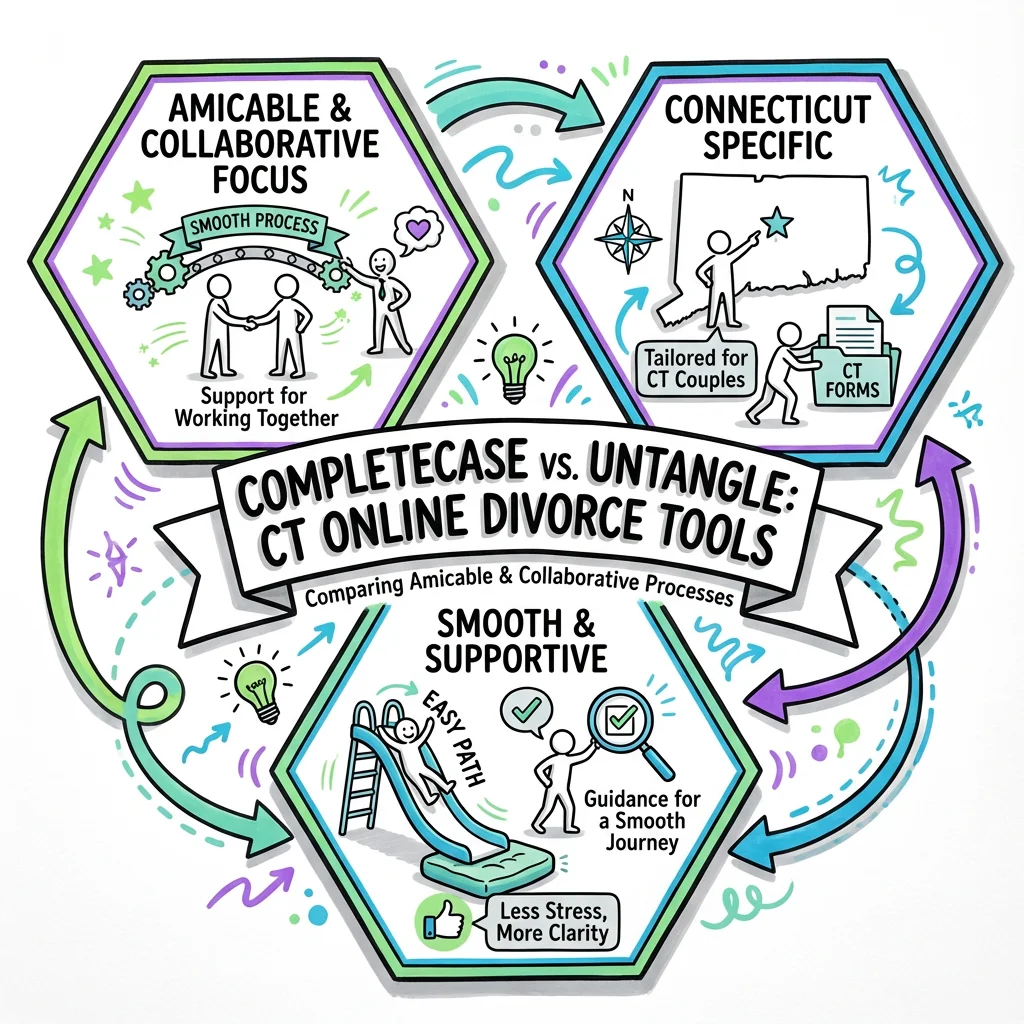
Untangle becomes the better choice when your divorce involves any complexity beyond the most basic scenarios. If you own a home, have retirement accounts, need to create a parenting plan, or want guidance on Connecticut-specific requirements, the platform's comprehensive approach pays dividends.
Untangle's case management tools particularly benefit amicable couples by providing a shared workspace where both spouses can contribute information and review proposed agreements. This transparency builds trust and reduces the chance of misunderstandings later. When both parties can see the same financial picture, negotiations become more productive.
The platform also helps prevent costly oversights. Connecticut requires full financial disclosure, and missing information can delay your case or create problems down the road. Untangle's systematic approach to financial organization ensures you're gathering everything needed while you're still in the preparation phase—not discovering gaps when you're ready to file.
Making Your Decision: Key Factors to Consider
Complexity of Your Financial Situation
Consider what you're actually dividing. Basic bank accounts and personal property require little guidance. But if your marital estate includes real estate, retirement plans (401(k)s, pensions, IRAs), stock options, business interests, or significant debt, you benefit from tools that help you understand the implications of different division approaches.
Connecticut follows equitable distribution, meaning courts divide property fairly—but not necessarily equally. Factors like each spouse's income, earning capacity, length of marriage, and contributions to the marriage all influence what's "equitable" under C.G.S. § 46b-81. Understanding these factors helps you negotiate agreements that feel fair to both parties and are likely to receive court approval.
Parenting Plan Requirements
If you have children, Connecticut requires a detailed parenting plan covering custody, visitation schedules, decision-making authority, and holiday arrangements (C.G.S. § 46b-56). While CompleteCase generates basic parenting plan forms, Untangle's parenting plan builder helps you think through the practical details of shared parenting.
Creating a comprehensive parenting plan is one of the most important things you'll do during your divorce. Vague or incomplete plans lead to conflicts later. A good platform helps you consider scenarios you might not have thought of—school breaks, vacation time, transportation logistics, communication protocols, and more.
Your Comfort with DIY Legal Processes
Be honest about how confident you feel navigating legal requirements independently. Connecticut's divorce process involves specific procedural steps, mandatory waiting periods, and court filing requirements. If you're comfortable researching these requirements and ensuring compliance, document-generation services may work fine. Untangle can further streamline this by offering features for electronic court filing, guiding you through the submission process.
If you'd rather have guidance at each step, Untangle's educational resources and progress tracking help you understand what comes next and why. The platform explains Connecticut's requirements in plain language rather than assuming you already know how the process works.
The True Cost of Your Decision
Price comparisons should consider more than the platform fee. The cheapest option upfront can become expensive if it leads to mistakes, delays, or agreements that don't serve your interests.
CompleteCase typically charges a flat fee for document preparation. This is genuinely affordable if the service meets your needs. However, if you file incomplete paperwork or reach an agreement that a Connecticut court rejects as unfair, you'll spend more fixing problems than you saved.
Untangle's comprehensive approach costs more than basic document preparation but aims to prevent the oversights and errors that create problems later. For complex situations, the additional investment often pays for itself in reduced stress, fewer delays, and better outcomes.
| Cost Factor | CompleteCase | Untangle |
|---|---|---|
| Platform fee | Lower | Higher |
| Risk of incomplete filings | Higher | Lower |
| Need for additional professional help | More likely | Less likely |
| Time investment | Lower (but assumes prep is done) | Higher (but more comprehensive) |
| Long-term satisfaction with outcome | Varies | Typically higher |
When to Get Professional Help
Both CompleteCase and Untangle are designed for uncontested divorces where spouses can work together. However, even amicable divorces sometimes benefit from professional guidance. Consider consulting a Connecticut family law attorney if your situation involves:
- Significant assets or complex property division questions
- A family business that needs valuation
- Concerns about hidden assets or incomplete disclosure
- Pension plans requiring Qualified Domestic Relations Orders (QDROs)
- Custody disputes or concerns about children's welfare
- Domestic violence history
The right online tools reduce your need for expensive legal representation, but they don't replace attorneys entirely for complex situations. Many couples find a hybrid approach works well—using platforms like Untangle for organization and preparation while consulting an attorney for specific legal questions.
Ultimately, the best choice depends on your specific circumstances. For genuinely simple, short-term marriages with minimal assets, document preparation services like CompleteCase may suffice. For most couples navigating real-world divorce complexity, Untangle's comprehensive support helps ensure you don't just complete your divorce—you complete it well, with agreements that serve both parties fairly for years to come.
Frequently Asked Questions
How much does CompleteCase cost compared to Untangle for a Connecticut divorce?
CompleteCase typically charges a flat fee for document preparation only, while Untangle offers tiered pricing that includes additional features like financial organization tools and collaborative negotiation support.
Which online divorce service is better for couples who already agree on everything in CT?
For couples who fully agree on all terms, CompleteCase may be sufficient for basic form preparation, but Untangle provides more comprehensive tools to help document and organize those agreements for Connecticut court approval.
What features does Untangle offer that CompleteCase doesn't for Connecticut divorces?
Untangle offers financial organization tools, asset division guidance, and collaborative negotiation features, while CompleteCase focuses primarily on generating and filing Connecticut divorce court forms.
Are CompleteCase and Untangle reliable for filing uncontested divorce papers in Connecticut?
Both services can help with uncontested Connecticut divorces, but you should review recent user feedback and verify that either platform's forms comply with current Connecticut court requirements.
Can I complete my entire Connecticut divorce using just CompleteCase or Untangle without a lawyer?
Both platforms are designed to help amicable couples complete uncontested divorces without attorneys, though complex situations involving significant assets, child custody disputes, or disagreements may still require legal counsel.
Legal Citations
- • C.G.S. § 46b-82 View Source
- • C.G.S. § 46b-81 View Source
- • C.G.S. § 46b-56 View Source