Can I Stay in My Home During a Connecticut Divorce? Your Rights Explained
Learn your rights to stay in the marital home during a Connecticut divorce, including automatic court orders, exclusive possession motions, and pendente lite support.
Need help with your divorce? We can help you untangle everything.
Get Started Today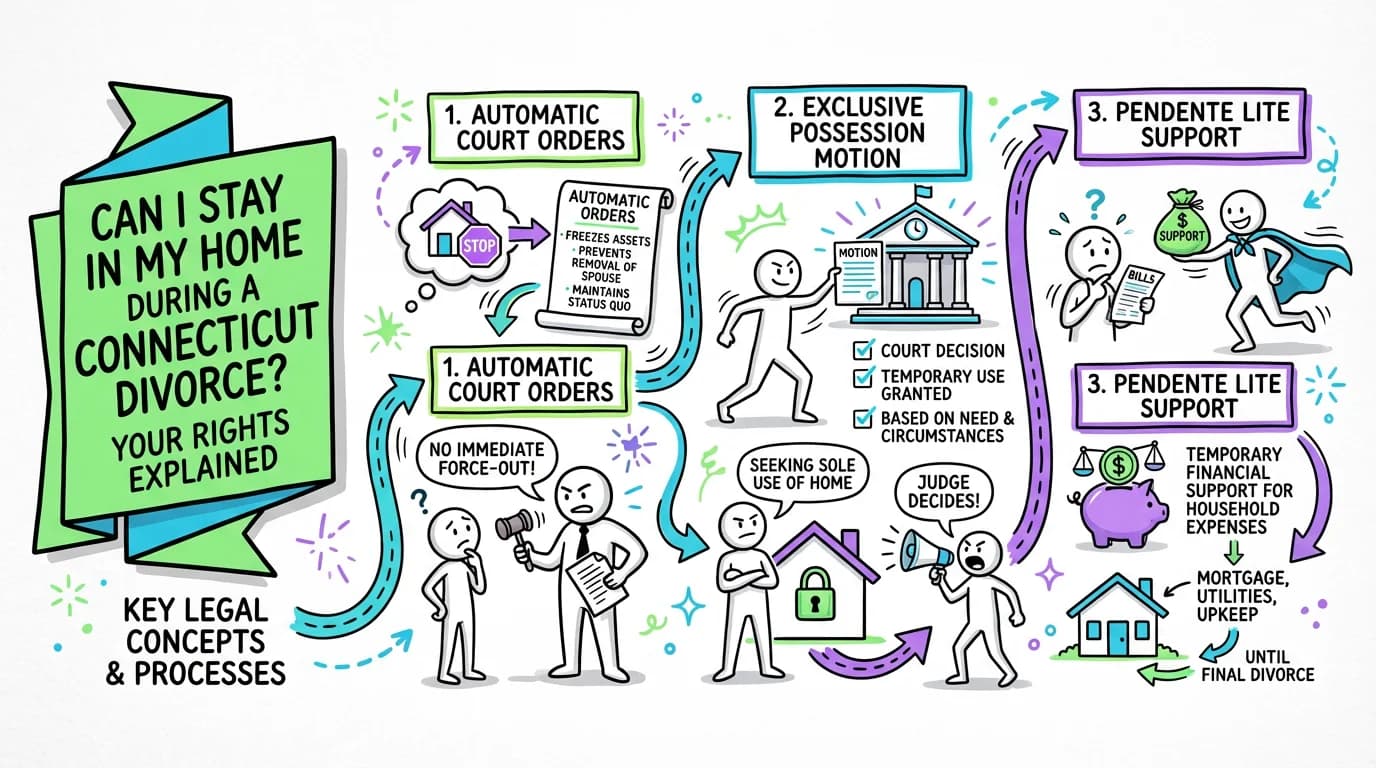
Can I Stay in My Home During a Connecticut Divorce? Your Rights Explained
Yes, you can generally stay in your marital home while your Connecticut divorce is pending. Under Connecticut's automatic court orders, neither spouse can deny the other use of the primary residence once a divorce action begins—unless a court orders otherwise. This protection exists specifically to prevent one spouse from forcing the other out during this vulnerable time, giving you stability while you navigate the divorce process.
Understanding Your Right to Stay in the Marital Home
Connecticut law recognizes that housing stability during divorce is critical, especially for dependent spouses who may not have independent income or an immediate place to go. The moment divorce papers are served, automatic orders under Practice Book Rule 25-5 take effect for both parties. These orders include a specific provision stating that "if the parties still live together, neither may deny the other the use of the primary residence absent court order."
This means your spouse cannot change the locks, remove your belongings, or pressure you to leave. These protections remain in place throughout the entire divorce process until a judge modifies or terminates them. Violating these automatic orders can result in contempt of court charges, providing you with meaningful legal protection.
For stay-at-home spouses who have been financially dependent on their partner, this protection is particularly important. You've contributed to the household in ways that may not show up on a paycheck—raising children, managing the home, supporting your spouse's career. Connecticut law acknowledges these contributions and ensures you won't be left without shelter while the courts determine a fair resolution.
How Automatic Orders Protect You During Divorce
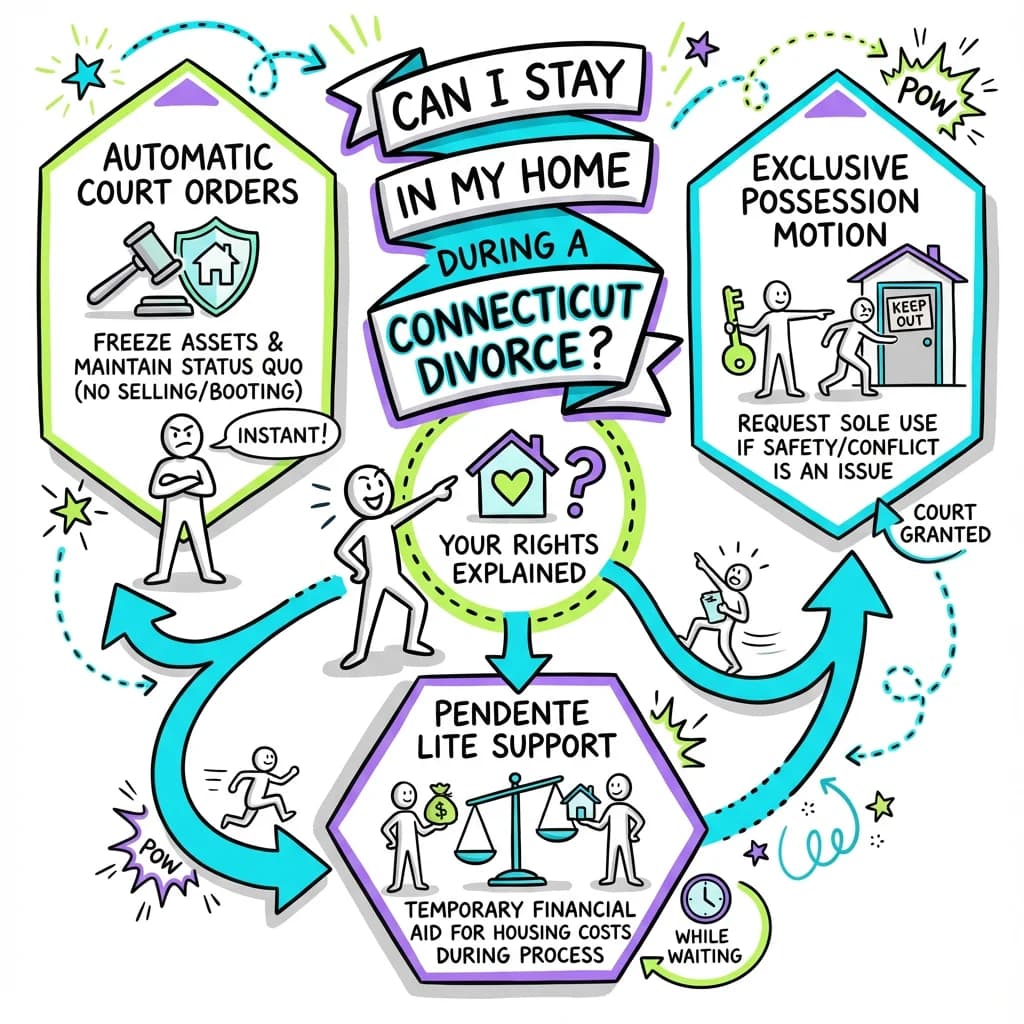
Connecticut's automatic orders are designed to maintain the status quo and prevent either spouse from gaining an unfair advantage during the divorce process. Under Practice Book Rule 25-5, these orders apply to both parties "pendente lite" (Latin for "while the litigation is pending") from the moment the divorce action begins.
The automatic orders do much more than protect your housing. They also prohibit either spouse from hiding assets, canceling insurance policies, taking on excessive debt, or making major financial changes without consent or court approval. For a dependent spouse, this means your access to marital funds and benefits should remain relatively stable while the divorce proceeds.
It's important to document your living situation and any attempts by your spouse to pressure you to leave. Keep records of any conversations, texts, or emails where your spouse threatens to remove you from the home or suggests you have no right to stay. These records can be valuable if you need to ask the court to enforce the automatic orders or address violations.
When Exclusive Possession May Be Necessary
While automatic orders protect your right to stay, living under the same roof as your spouse during a contentious divorce can be extremely difficult. In some situations, you may want to ask the court for exclusive possession of the marital home, meaning your spouse would be required to leave.
Under Practice Book Rule 25-25, you can file a Motion for Exclusive Possession. To do so, you'll need to provide specific information to the court:
- The nature of the property (whether it's rented or owned)
- How long each party has lived there or held ownership
- Who currently lives in the household
- The grounds supporting your request for exclusive possession
Courts typically grant exclusive possession when there are concerns about safety, domestic violence, or when the conflict between spouses makes continued cohabitation harmful—particularly to children. Having dependent children in the home can strengthen your request, as courts prioritize minimizing disruption to their lives.
If you're experiencing domestic violence or feel unsafe, exclusive possession becomes even more critical. Connecticut courts take these situations seriously and can issue emergency orders to protect you and your children. Don't wait to seek help if your safety is at risk.
Financial Support While Your Divorce Is Pending
Staying in the home is only part of the equation—you also need to know how you'll pay for it. Connecticut law allows either spouse to request "pendente lite" support, which provides financial assistance during the divorce process. Under C.G.S. § 46b-83, the court can award both alimony and support pendente lite, as well as grant use of the family home to either party.
To request pendente lite support, you'll need to file a motion with the court accompanied by a financial affidavit. The Financial Affidavit Long Form requires detailed information about your income, expenses, assets, and debts. This document gives the court a clear picture of your financial situation and your need for support. Because the court relies heavily on these numbers, using Untangle’s financial affidavit tool can help you organize your monthly expenses accurately so you don't underestimate your actual needs.
The court considers several factors when awarding pendente lite support, including:
- Each spouse's income and earning capacity
- The length of the marriage
- The standard of living established during the marriage
- Each spouse's financial needs and obligations
- The dependent spouse's contributions to the household
For stay-at-home spouses, demonstrating your financial dependence is typically straightforward, but you'll need to clearly document your household expenses and show why support is necessary to maintain reasonable stability. To get a sense of what your potential support might look like, you can use an alimony calculator to see how Connecticut's guidelines might apply to your marriage.
Comparing Your Housing Options During Divorce
| Option | Pros | Cons | Best For |
|---|---|---|---|
| Stay in home together | Maintains stability; no immediate housing costs | High conflict potential; emotional stress | Low-conflict situations; short-term divorces |
| Stay with exclusive possession | Safety and peace; maintains children's routine | May require court hearing; spouse needs alternative housing | Domestic violence situations; primary caregivers |
| Voluntarily move out | Reduces conflict; fresh start | May affect property claims; creates housing costs | Those with safe alternatives; no children |
| Negotiate temporary arrangement | Flexible; avoids court involvement | Requires cooperation; may not be enforceable | Cooperative divorces; creative solutions |
Understanding these options helps you make an informed decision based on your specific circumstances. There's no one-size-fits-all answer—what matters most is your safety, your children's wellbeing, and protecting your legal rights.
How the Court Decides Who Gets the House Long-Term
While pendente lite arrangements address the immediate situation, the final disposition of the marital home comes later in the divorce process. Under C.G.S. § 46b-81, Connecticut courts have broad authority to assign property to either spouse when entering the final divorce decree.
Connecticut is an "equitable distribution" state, which means the court divides marital property fairly—though not necessarily equally. When deciding what happens to the home, the court considers factors outlined in C.G.S. § 46b-82, including:
- The length of the marriage
- The causes for the dissolution (in some cases)
- Each spouse's age, health, and earning capacity
- Each spouse's contribution to the acquisition of assets
- The needs of any minor children
For stay-at-home spouses, your non-financial contributions to the marriage carry significant weight. Courts recognize that supporting a spouse's career, raising children, and managing a household have real economic value, even without a paycheck. These contributions can influence both property division and alimony awards.
Using Untangle's settlement analysis tools can help you understand what a fair division might look like and prepare for negotiations. Having a clear picture of your options empowers you to advocate for yourself effectively.
Steps to Protect Your Right to Stay in the Home
-
Understand the automatic orders — Familiarize yourself with Practice Book Rule 25-5 so you know exactly what protections you have. Neither spouse can deny the other access to the primary residence without a court order.
-
Document everything — Keep records of your living situation, any threats or pressure to leave, and your financial contributions to the household. This documentation supports any motions you may need to file.
-
Complete your financial affidavit carefully — The Financial Affidavit Long Form is critical for requesting pendente lite support. Take time to gather accurate information about income, expenses, and assets.
-
File for pendente lite support promptly — Don't wait to request financial support if you need it. Under C.G.S. § 46b-83, support can be awarded from the date you file your application.
-
Consider whether exclusive possession is appropriate — If living together creates an unsafe or hostile environment, consult with an attorney about filing a Motion for Exclusive Possession under Practice Book Rule 25-25.
-
Stay organized throughout the process — Divorce involves extensive paperwork and deadlines. Since you'll need to prove your ongoing financial needs to the court, Untangle’s income tracking and document management features can help you keep every receipt and statement in order, reducing stress during this difficult time.
What Happens If Your Spouse Violates Your Rights
If your spouse attempts to force you out of the home, changes the locks, or otherwise violates the automatic orders, you have legal recourse. You can file a motion for contempt with the court, asking the judge to enforce the automatic orders and potentially sanction your spouse for the violation.
Connecticut courts take violations of automatic orders seriously. In Kosar v. Giangrande, the Appellate Court addressed issues related to contempt proceedings in divorce cases, emphasizing the importance of proper procedure and the court's discretion in handling violations. While each case is different, courts generally act to protect the spouse whose rights have been violated.
If you're facing a violation, document the incident thoroughly—take photos of changed locks, save threatening messages, and note dates and times. This evidence strengthens your position when asking the court to intervene. Acting quickly is important; don't assume the situation will resolve itself.
When to Seek Professional Legal Help
While understanding your rights empowers you to make informed decisions, certain situations call for professional legal guidance:
- Domestic violence or safety concerns — If you're in danger, seek help immediately. Connecticut has resources for domestic violence survivors, and courts can issue protective orders.
- Complex financial situations — If your spouse controls all the finances or you suspect hidden assets, an attorney can help protect your interests.
- High-conflict situations — When communication has broken down completely, legal representation ensures your voice is heard.
- Children involved — Custody and support decisions have long-lasting impacts; professional guidance helps protect your children's interests.
Even if you're pursuing an uncontested divorce, consulting with an attorney for an initial assessment can help you understand your rights and avoid costly mistakes. Many Connecticut family law attorneys offer free or low-cost consultations.
For organizing your financial information, understanding your options, and preparing for conversations with attorneys or mediators, Untangle provides tools designed specifically for people navigating divorce. Having your documents organized and your questions prepared makes every professional consultation more productive.
Moving Forward with Confidence
Knowing you have the right to stay in your home during your Connecticut divorce provides crucial peace of mind during an uncertain time. The automatic orders protect you, pendente lite support can help with expenses, and the court system provides remedies if your spouse violates your rights.
As a stay-at-home spouse, you've invested years in your marriage and family. Connecticut law recognizes the value of those contributions and provides mechanisms to ensure you're not left without resources or housing while the divorce is finalized. Take time to understand your rights, document your situation carefully, and don't hesitate to seek help when you need it.
Your path forward may feel overwhelming right now, but you have more protection and more options than you might realize. Focus on one step at a time, lean on your support system, and remember that this difficult chapter is temporary—a bridge to the next phase of your life.
Frequently Asked Questions
How do I request exclusive possession of my marital home during a Connecticut divorce?
You can file a motion for exclusive possession with the court, asking a judge to grant you sole use of the marital home based on factors like safety concerns, children's needs, or financial circumstances.
Who pays the mortgage and bills on the house while a CT divorce is pending?
Connecticut's automatic orders generally require both spouses to maintain the financial status quo, meaning whoever was paying the mortgage and household bills before the divorce should continue doing so unless the court orders otherwise.
Will I lose my rights to the house if I move out during my Connecticut divorce?
Moving out of your marital home during a Connecticut divorce does not automatically forfeit your legal ownership rights or claim to the property, but it may affect your chances of being awarded the home in the final settlement.
Can a Connecticut judge force my spouse to leave our home before the divorce is finalized?
Yes, a Connecticut judge can issue an order for exclusive possession requiring your spouse to vacate the marital home if you demonstrate valid reasons such as domestic violence, harassment, or that it's in the best interests of minor children.
What factors does a CT court consider when deciding who stays in the marital home during divorce?
Connecticut courts typically consider factors including which parent has primary custody of the children, each spouse's financial resources, safety concerns, proximity to schools and work, and the overall best interests of the family.
Legal Citations
- • C.G.S. § 46b-83 - Alimony, support and use of family home awarded pendente lite View Source
- • C.G.S. § 46b-82 - Alimony View Source
- • C.G.S. § 46b-81 - Assignment of property and transfer of title View Source
- • Practice Book Rule 25-5 - Automatic Orders upon Service of Complaint or Application View Source
- • Practice Book Rule 25-25 - Motion for Exclusive Possession View Source
- • Kosar v. Giangrande, 228 Conn. App. 749 View Source