BetterHelp vs Untangle for Divorce: Which Platform Is Right for You?
Compare BetterHelp and Untangle for divorce support. Learn which platform best fits your emotional, practical, and legal needs during your Connecticut divorce.
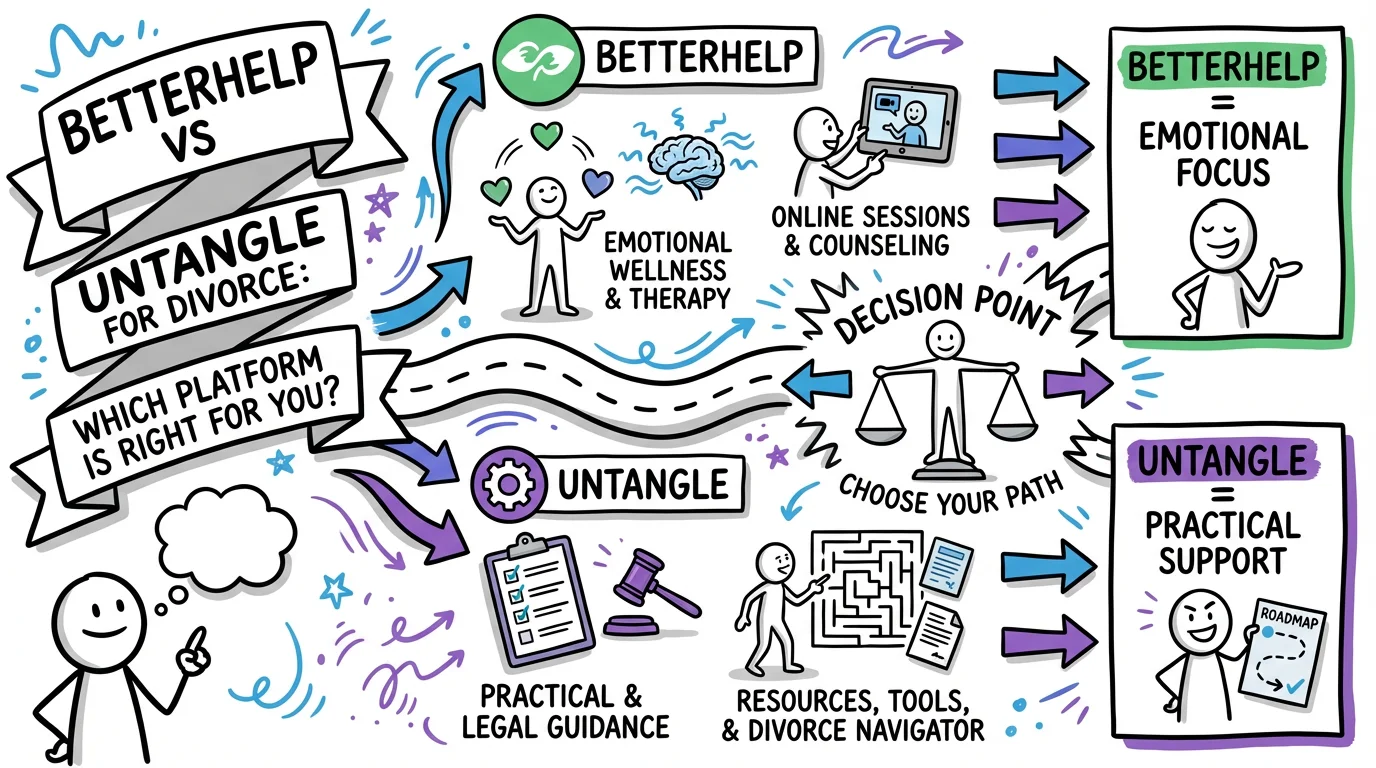
BetterHelp and Untangle serve fundamentally different purposes for those navigating divorce. BetterHelp is an online therapy platform that connects you with licensed mental health professionals for general emotional support, while Untangle is a divorce-specific platform that combines AI-powered guidance, practical tools, and emotional support designed specifically for people going through separation. The best choice depends on whether you need traditional therapy for broader mental health concerns or targeted divorce guidance that addresses both the emotional and practical aspects of ending a marriage. Untangle can simplify your divorce journey by organizing the complex legal and financial tasks that often cause the most stress.
Understanding What Each Platform Offers
When you're in the middle of a divorce, everything feels urgent and interconnected. Your emotional state affects your decision-making, your financial stress impacts your mental health, and the legal complexities can leave you paralyzed. Understanding what each platform actually provides helps you make an informed choice—or recognize that you might benefit from both.
BetterHelp has established itself as a leading telehealth therapy platform, offering access to licensed therapists, counselors, and psychologists through video calls, phone sessions, and messaging. Their therapists are trained in various modalities like cognitive behavioral therapy (CBT), and some specialize in relationship issues or life transitions. However, BetterHelp is a general mental health platform—divorce is just one of many issues their therapists address, and they don't provide divorce-specific tools, document preparation, or legal guidance.
Untangle takes a different approach by building everything around the divorce experience itself. Rather than offering general therapy, Untangle provides AI-powered divorce guidance that understands Connecticut-specific laws, helps you organize financial documents, prepares you for negotiations, and offers emotional support through content and tools designed specifically for this transition. For example, you can get instant answers on Connecticut-specific laws using Untangle's AI legal guidance, and streamline document organization with its financial affidavit generation feature. It's the difference between seeing a general practitioner and seeing a specialist—both have value, but they serve different needs.
Comparing Core Features
Understanding the specific features of each platform helps clarify which aligns with your current needs. Here's a detailed breakdown:
| Feature | BetterHelp | Untangle |
|---|---|---|
| Primary Focus | General mental health therapy | Divorce-specific guidance and support |
| Professional Support | Licensed therapists (video/phone/chat) | AI-powered assistance with expert-reviewed content |
| Divorce Legal Guidance | No | Yes - Connecticut-specific |
| Financial Planning Tools | No | Yes - asset division, budgeting |
| Document Preparation | No | Yes - divorce-related documents |
| Emotional Support | Traditional therapy sessions | Divorce-focused content and exercises |
| Availability | Scheduled appointments | 24/7 AI availability |
| Cost Structure | $65-$100+/week | Subscription-based, typically lower |
| Connecticut-Specific | Therapists may/may not know CT law | Built for Connecticut divorce |
This comparison reveals a fundamental distinction: BetterHelp excels at providing professional mental health care through human connection, while Untangle specializes in comprehensive divorce support that addresses practical, legal, and emotional needs simultaneously.
When BetterHelp Makes Sense
BetterHelp may be the right choice if your primary need is processing deep emotional trauma or if you have mental health concerns that extend beyond the divorce itself. Traditional therapy with a licensed professional provides a level of clinical care that AI platforms cannot replace.
If you're experiencing symptoms of clinical depression, severe anxiety, or if your divorce involves particularly traumatic circumstances like domestic abuse or betrayal trauma, working with a licensed therapist is essential. These situations require professional clinical assessment and potentially ongoing treatment that goes beyond divorce support. A BetterHelp therapist can help you develop coping strategies, work through past trauma that may be surfacing during your divorce, and monitor your mental health over time.
Additionally, if you already have a relationship with a BetterHelp therapist or have found the platform helpful for other life challenges, continuing that relationship during your divorce makes sense. Consistency in mental health care matters, and a therapist who already knows your history can provide valuable continuity during this difficult transition.
When Untangle Is the Better Fit
For many people going through divorce in Connecticut, Untangle addresses the most pressing daily challenges more directly than traditional therapy alone. If you're lying awake at night wondering how assets will be divided, what happens with custody, or how to even begin the divorce process, Untangle provides answers when you need them.
The platform shines when you need practical guidance alongside emotional support. Divorce involves countless decisions—from understanding equitable distribution under C.G.S. § 46b-81 to figuring out how to co-parent effectively. Untangle's AI legal guidance can help you understand what to expect, prepare questions for your attorney, and organize the financial information you'll need. For structured co-parenting agreements, explore Untangle's parenting plan builder. This practical empowerment often provides more immediate relief than talking through feelings alone.
Untangle also offers significant advantages in terms of accessibility and cost. While BetterHelp therapists work scheduled appointments (and you may wait days for your next session), Untangle's AI guidance is available whenever anxiety strikes—whether that's 2 AM when you can't sleep or during your lunch break when you need to make a quick decision. For someone feeling overwhelmed by the constant demands of divorce, this 24/7 availability can be invaluable.
The Emotional Support You Actually Need During Divorce
Divorce creates a unique emotional landscape that doesn't always fit neatly into traditional therapy frameworks. Yes, you're grieving the end of a relationship. But you're also terrified about finances, confused about legal processes, worried about your children, and exhausted from making hundreds of decisions while emotionally depleted.
Traditional therapy excels at helping you process grief, manage anxiety, and develop healthier thought patterns. These are valuable skills that serve you during and after divorce. However, therapy sessions typically don't help you understand what "equitable distribution" means for your retirement accounts or how Connecticut courts approach parenting plans under C.G.S. § 46b-56. When your anxiety stems from not knowing what happens next, information is often the most effective intervention.
This is where Untangle's approach to emotional support differs meaningfully. By combining practical guidance with emotional awareness, the platform addresses the interconnected nature of divorce stress. Understanding your options reduces fear of the unknown. Having organized finances reduces overwhelm. Knowing what to expect in mediation builds confidence. Untangle recognizes that during divorce, emotional support and practical guidance aren't separate needs—they're deeply intertwined.
Building Your Support System
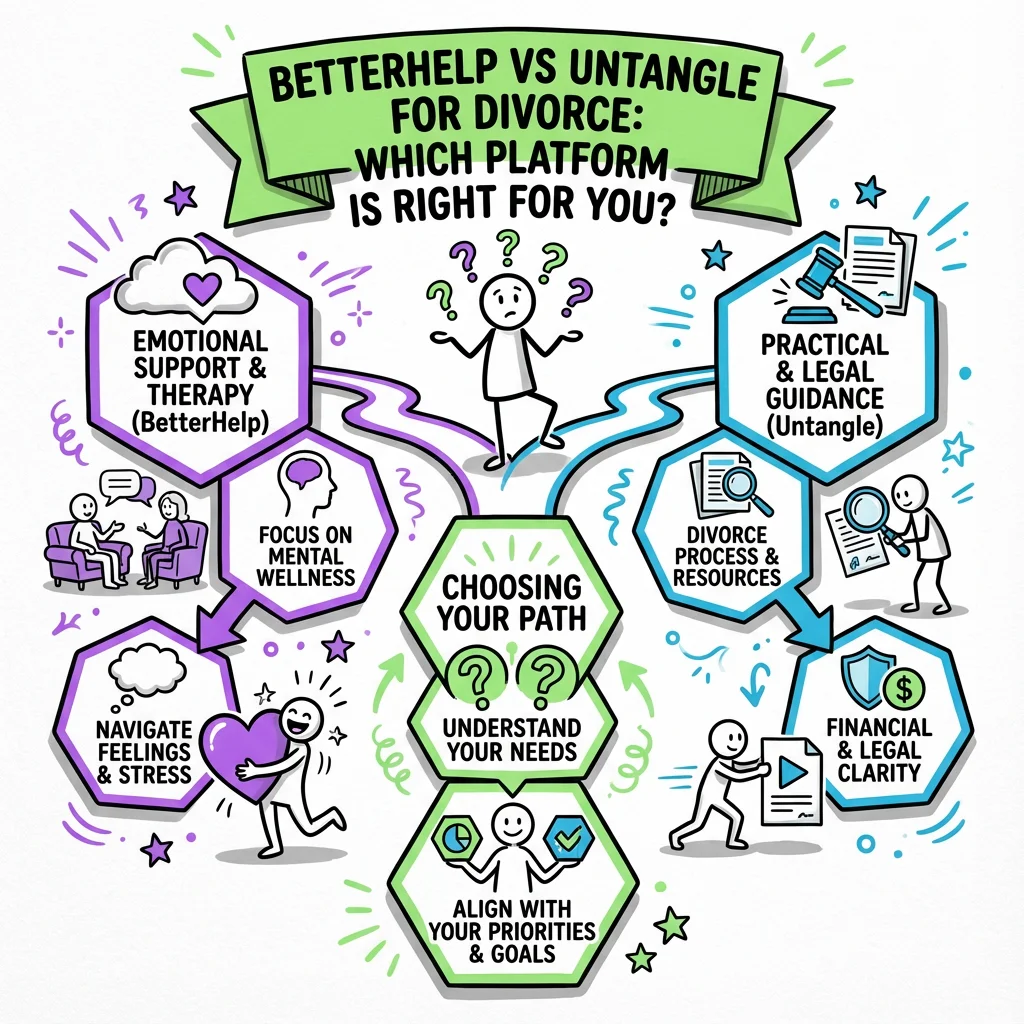
The healthiest approach to divorce rarely involves choosing just one support option. Think of it as building a support ecosystem where different resources serve different needs.
Consider this framework for building comprehensive support:
- Immediate practical needs: Use Untangle for Connecticut-specific legal guidance, document organization, and understanding your options
- Deep emotional processing: Consider traditional therapy (BetterHelp or local therapists) if you're struggling with depression, anxiety, or trauma
- Daily emotional regulation: Use Untangle's resources for divorce-specific coping strategies and stress management
- Financial understanding: Leverage Untangle's financial tools, such as asset disclosure, to gain clarity on asset division and budgeting, which helps satisfy requirements like Practice Book § 25-30.
- Community connection: Seek support groups (local or online) for peer connection with others who understand
Many people find that starting with Untangle addresses their most urgent needs—understanding the process, organizing documents, reducing overwhelm—while also revealing whether they need additional mental health support. The platform can help you recognize when traditional therapy would be beneficial and what type of support to seek.
Cost Considerations
Financial stress is already a major component of divorce anxiety, so understanding the cost implications of each platform matters.
BetterHelp typically costs between $65-$100+ per week, billed monthly. This adds up to $260-$400+ per month for ongoing therapy. While many people find therapy invaluable, this cost can feel prohibitive when you're also paying for attorneys, potentially maintaining two households, and facing an uncertain financial future.
Untangle offers subscription-based pricing that's typically more accessible, and the platform's comprehensive approach means you're getting legal guidance, financial tools, and emotional support in one package. For someone trying to manage divorce costs carefully, Untangle often provides more immediate value per dollar spent.
The cost comparison also includes an often-overlooked factor: attorney efficiency. When you use Untangle's tools to organize financial documents, understand Connecticut divorce law basics, and prepare questions in advance, you often spend less time (and money) with your attorney. Being prepared for meetings and understanding terminology means fewer billable hours spent on education.
Making Your Decision
Choosing between BetterHelp and Untangle—or deciding to use both—comes down to honest self-assessment of your current needs.
Choose Untangle if:
- You need to understand the divorce process in Connecticut
- Practical overwhelm (documents, finances, legal decisions) is your primary source of stress
- You want guidance available whenever you need it, not just during scheduled appointments
- Cost is a significant concern
- You're feeling paralyzed by not knowing what comes next
Choose BetterHelp if:
- You're experiencing clinical symptoms of depression or anxiety that need professional monitoring
- Your divorce involves trauma that requires specialized therapeutic intervention
- You prefer traditional talk therapy with a human professional
- You have mental health concerns beyond the divorce itself
Consider using both if:
- You have the financial resources and the time
- You recognize needs in both categories
- Your divorce is particularly complex or contentious
- You're experiencing both practical overwhelm and significant mental health symptoms
When to Seek Additional Help
No matter which platform you choose, certain situations call for additional professional support. If you're experiencing thoughts of self-harm, please reach out to a crisis helpline immediately. If your divorce involves domestic violence or abuse, connect with local resources like the Connecticut Coalition Against Domestic Violence in addition to any platform support.
For complex legal situations—high-asset divorces, custody disputes, or cases involving hidden assets—both platforms can help you prepare, but you'll also need a qualified Connecticut family law attorney. Untangle can help you prepare to make the most of your attorney consultations, potentially saving money while ensuring you don't miss important issues. Start your free AI consultation with Untangle to see how it can help you get organized.
Remember that seeking help—whether through Untangle, BetterHelp, or other resources—is a sign of strength, not weakness. Divorce is one of life's most challenging transitions, and you don't have to navigate it alone. The right support system looks different for everyone, and there's no shame in trying different approaches until you find what works for you.
Frequently Asked Questions
How much does BetterHelp cost compared to Untangle for divorce support?
BetterHelp typically costs $65-$100 per week for unlimited messaging and weekly live sessions, while Untangle offers divorce-specific guidance and tools at a different price point designed for the duration of your divorce process.
Does BetterHelp have therapists who specialize in divorce in Connecticut?
BetterHelp has therapists who address relationship issues and life transitions, but they are general mental health providers rather than divorce specialists, and they cannot provide Connecticut-specific legal guidance or practical divorce tools.
Is divorce coaching through Untangle as effective as traditional therapy through BetterHelp?
Divorce coaching and therapy serve different purposes—Untangle provides practical divorce guidance, document organization, and state-specific legal information, while BetterHelp offers clinical mental health treatment for deeper emotional issues like depression or anxiety.
Can I use both BetterHelp and Untangle during my Connecticut divorce?
Yes, many people benefit from using both platforms together—BetterHelp for processing deeper emotional challenges with a licensed therapist and Untangle for practical divorce guidance, Connecticut-specific legal information, and organizational tools.
Which platform is better if I need help with Connecticut divorce paperwork and emotional support?
Untangle is better suited for divorce paperwork assistance and Connecticut-specific guidance since it's designed specifically for divorce, while BetterHelp focuses solely on emotional support without practical divorce tools or document preparation features.
Legal Citations
- • C.G.S. § 46b-81 View Source
- • C.G.S. § 46b-56 View Source
- • Practice Book § 25-30 View Source