Best Online Divorce Options for Fast Filing in Connecticut
Learn Connecticut's fastest divorce paths, including nonadversarial dissolution that can finalize in 35 days. Compare online divorce options and avoid common delays.
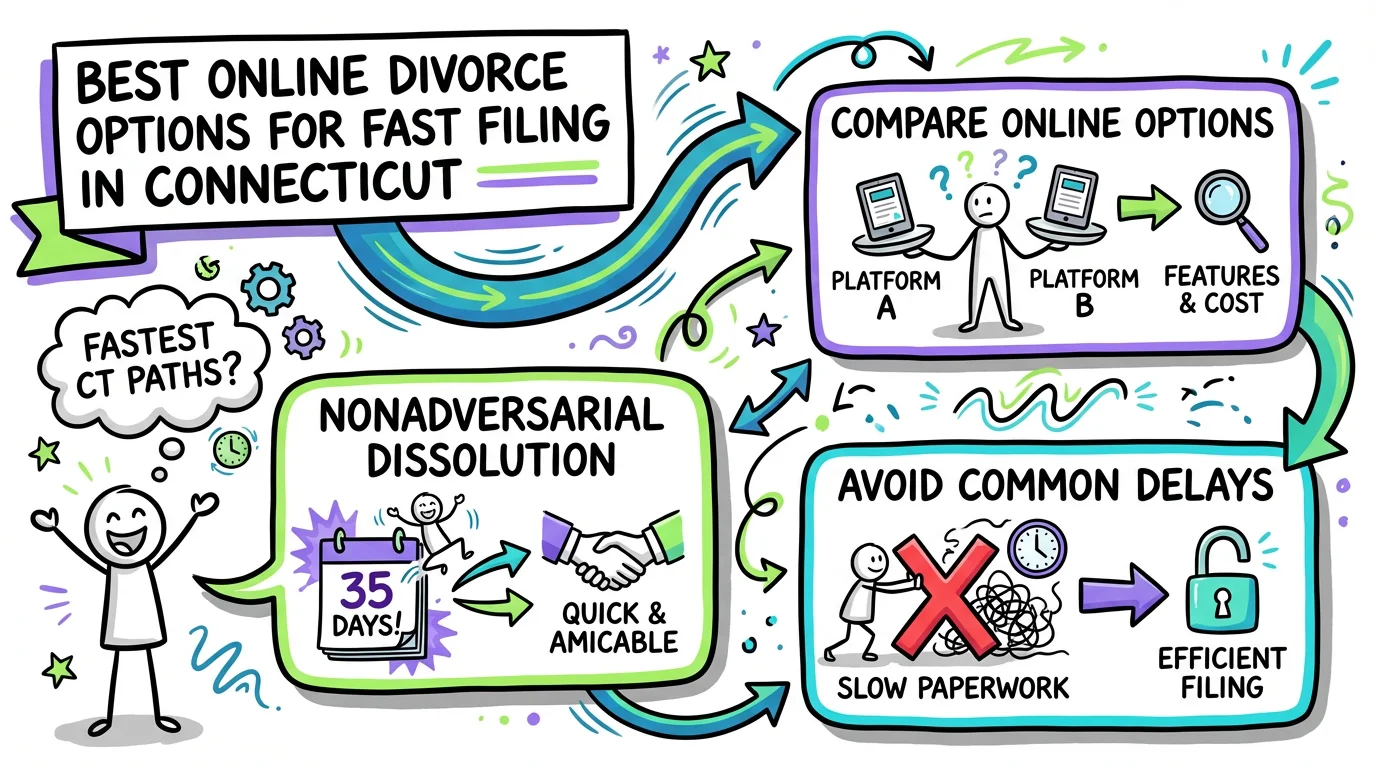
The best online divorce options for fast filing in Connecticut are those that specifically support the nonadversarial dissolution process, which can finalize your divorce in as few as 35 days. While basic document preparation services can generate standard forms, comprehensive platforms like Untangle provide the necessary validation to ensure your settlement agreement and financial affidavits meet the strict criteria of C.G.S. § 46b-44a. This accuracy is critical, as errors in these documents are the primary cause of delays that push cases from the fast-track 35-day timeline into the standard 6-month contested route.
Understanding Connecticut's Fast-Track Divorce Options
Connecticut offers two primary paths to divorce, and choosing the right one dramatically affects your timeline. The nonadversarial dissolution (also called "uncontested divorce") is designed specifically for couples who want a quick, streamlined process. Under C.G.S. § 46b-44a, couples can file a joint petition and potentially receive their final decree without ever appearing in court.
The key difference comes down to agreement. In a nonadversarial case, both parties file together and have already resolved all issues—property division, debt allocation, and any other matters. The court assigns a disposition date no less than 30 days after filing, and if everything is in order, the decree can be entered on that date or within five days afterward. Compare this to contested divorces, which under C.G.S. § 46b-67 cannot proceed until after the return date—typically adding months to your timeline.
What makes this process "fast" isn't just the legal timeline—it's the elimination of back-and-forth negotiations, multiple court appearances, and discovery disputes. When you and your spouse are aligned from the start, you bypass the friction points that slow most divorces to a crawl.
Eligibility Requirements for Connecticut's Fastest Divorce
Before you invest time in online divorce preparation, verify that you qualify for the nonadversarial process. Connecticut law sets specific criteria under C.G.S. § 46b-44a that must be met at the time of filing:
| Requirement | What It Means |
|---|---|
| Residency | At least one spouse must be a Connecticut resident |
| No Minor Children | The couple cannot have minor children together |
| No Pregnancy | The wife cannot be pregnant at the time of filing |
| Full Agreement | Both parties must agree on all terms of the dissolution |
| Joint Filing | Both spouses must sign the notarized joint petition |
If you have minor children, you're not eligible for the nonadversarial track—but you can still pursue an uncontested divorce through the standard process. This takes longer (the 90-day "cooling off" period applies), but agreement between spouses still speeds things considerably. Parents must also complete a court-approved parent education program, which adds another requirement to your checklist.
The agreement requirement is where many couples stumble. "Full agreement" means you've resolved everything: who keeps the house, how retirement accounts are divided, whether either spouse receives alimony, and how debts are allocated. Tools like Untangle's financial comparison tools can help you and your spouse work through these decisions systematically before you file, ensuring you don't hit unexpected roadblocks.
What Online Divorce Services Actually Do
Online divorce services fall into two categories: document preparation platforms and comprehensive divorce tools. Understanding the difference helps you choose the right option for your situation.
Document preparation services generate completed court forms based on your answers to an online questionnaire. They handle formatting, ensure you're using current forms, and provide filing instructions. However, they typically don't help you negotiate terms with your spouse or understand whether proposed agreements are fair. You answer questions, they produce paperwork—nothing more.
Comprehensive divorce tools like Untangle go further by helping you organize financial information, understand Connecticut-specific requirements, and work through the substance of your agreement—not just the paperwork. This approach addresses the real bottleneck in most divorces: reaching agreement on the terms. The fastest paperwork in the world won't help if you and your spouse are stuck on how to divide a retirement account.
For Connecticut filers specifically, you'll need the following core documents regardless of which service you use:
- Joint Petition for Nonadversarial Dissolution (if eligible)
- Settlement Agreement covering all terms of your divorce
- Financial Affidavit (Form JD-FM-006 for most couples)
- Certificate of Compliance (Form JD-FM-175)
The financial affidavit requirement under Practice Book Rule § 25-30 is particularly important. Each party must file a sworn statement showing current income, expenses, assets, and liabilities. Getting this right the first time prevents delays—courts will not finalize your divorce if financial disclosure is incomplete or inconsistent with your settlement agreement. Tools like Untangle's financial affidavit generation can streamline this critical step, helping you accurately compile all required financial data to avoid court delays.
Step-by-Step: The Fastest Path to Filing
Here's how to maximize speed while ensuring your divorce proceeds without hiccups:
-
Confirm eligibility for nonadversarial dissolution - Verify that you meet the strict criteria for nonadversarial dissolution, specifically regarding residency, lack of minor children, and full agreement on all terms. If you have minor children, you must use the standard uncontested process instead.
-
Gather financial documents - Bank statements, retirement account statements, property valuations, debt balances, pay stubs, and tax returns. You'll need these for your financial affidavit and settlement agreement. To systematically gather and organize this critical financial information, Untangle's complete asset inventory can help you compile all necessary details.
-
Draft your settlement agreement - This document specifies exactly how you're dividing everything. Untangle's automatic document generation helps ensure you address all required elements and don't overlook assets or issues that could cause problems later.
-
Complete financial affidavits - Both spouses must complete Form JD-FM-006 (short form if neither spouse's income exceeds $75,000 and total assets are under $75,000).
-
Prepare and notarize the joint petition - Under C.G.S. § 46b-44a, both parties must sign under oath attesting that all conditions are met.
-
File with the court - Submit your complete packet to the Superior Court in the judicial district where either spouse resides. Pay the filing fee (currently around $350).
-
Wait for disposition - The court assigns a date at least 30 days out. If your paperwork is in order and no issues arise, your decree can be entered without a hearing.
The most common delays occur at step 3 (settlement agreement disputes) and step 4 (financial affidavit errors). Rushing through these steps often backfires—incomplete or inconsistent documents trigger court inquiries that add weeks to your timeline.
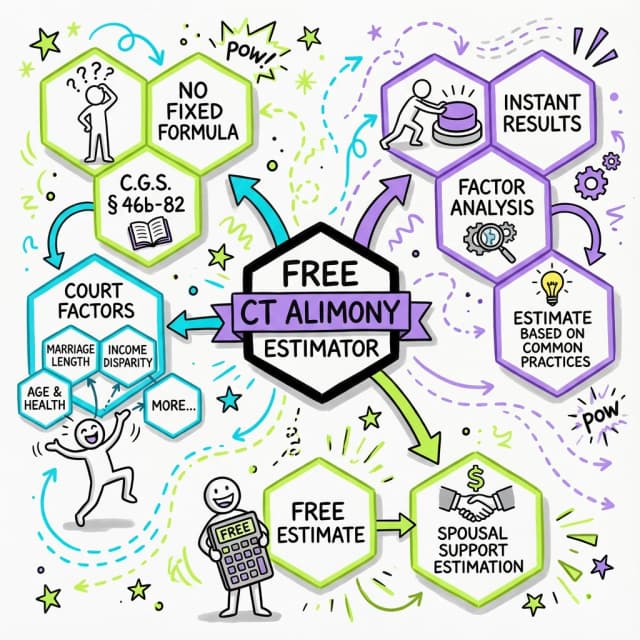
Try our free CT alimony calculator
Get an instant estimate based on Connecticut's statutory factors. No signup required.
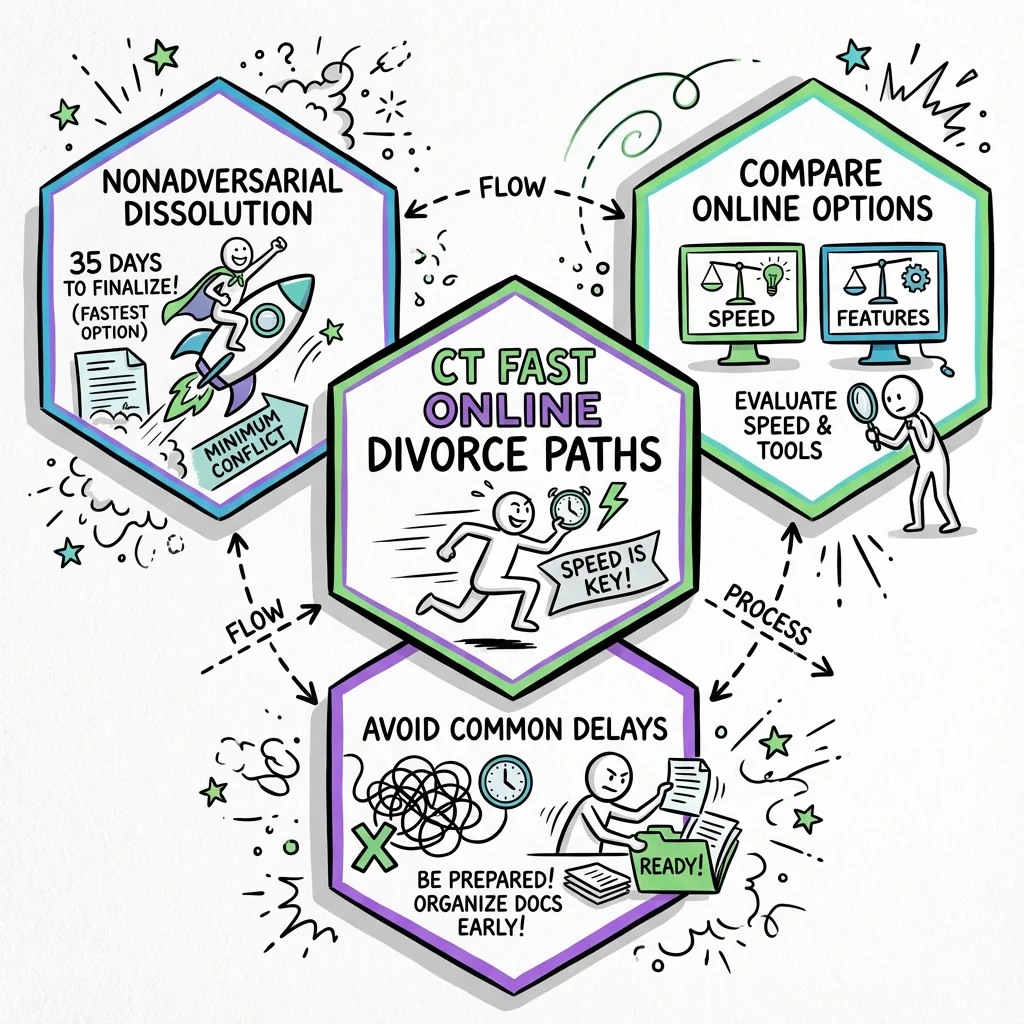
Timeline Comparison: How Fast Is Fast?
Understanding realistic timelines helps you set appropriate expectations:
| Divorce Type | Minimum Timeline | Typical Timeline | Key Factors |
|---|---|---|---|
| Nonadversarial (no children) | 30-35 days | 35-60 days | Settlement agreement quality, court scheduling |
| Uncontested with children | 90+ days | 4-6 months | Parent education requirement, 90-day waiting period |
| Contested | 6+ months | 12-18 months | Discovery, motions, trial scheduling |
The 30-day minimum for nonadversarial cases comes directly from C.G.S. § 46b-44c, which requires the disposition date be "not less than thirty days" after filing. The court may enter the decree on that date or within five days afterward—meaning your absolute fastest timeline is about 30-35 days from filing.
However, "minimum" and "typical" differ because courts can move cases to the regular docket if issues arise. Under C.G.S. § 46b-44d, if the court "cannot determine whether such settlement agreement is fair and equitable," they'll schedule a hearing within 30 days of the original disposition date. This is why settlement agreement quality matters so much—a well-drafted agreement that clearly addresses all issues sails through, while a vague or incomplete one triggers additional review.
Common Mistakes That Slow Down Your Divorce
Speed seekers often create their own delays by cutting corners. Here are the most common pitfalls:
Incomplete financial disclosure - Courts take financial transparency seriously. If your financial affidavit doesn't match your settlement agreement, or if obvious assets are missing, expect questions that delay finalization. Practice Book Rule § 25-30 requires sworn statements in the specific Judicial Branch format—improvised spreadsheets won't cut it.
Vague settlement agreement terms - "We'll split the retirement accounts" isn't specific enough. Courts need exact amounts, account numbers, and transfer mechanisms. Similarly, "we'll sell the house and split proceeds" needs details about timeline, listing price decisions, and what happens if it doesn't sell.
Missing signatures or notarization - The joint petition must be notarized with both parties attesting under oath. A single missing signature sends your paperwork back and restarts the clock.
Filing in the wrong judicial district - Connecticut requires filing in the judicial district where at least one party resides. Filing in the wrong location means starting over.
Attempting nonadversarial when ineligible - If you have minor children or don't meet other requirements, your nonadversarial petition will be rejected. Know your eligibility before investing time in the wrong forms.
Using Untangle's personalized task dashboard helps you avoid these errors by walking you through requirements systematically and flagging common mistakes before they cause delays.
What Happens After You File
Once your joint petition is filed, the automatic orders under Practice Book Rule § 25-5B take effect immediately. These orders restrict both parties from selling or transferring property, changing insurance beneficiaries, or incurring unusual debts. They're designed to maintain the status quo until the divorce is final.
The court clerk assigns your disposition date—at least 30 days out—and you wait. During this period, either party can revoke the joint petition by filing a notice of revocation under C.G.S. § 46b-44b. If that happens, the case moves to the regular family docket and your fast-track timeline evaporates.
Assuming no revocation and no issues with your paperwork, the court reviews your settlement agreement. If they determine it's "fair and equitable," they can enter the decree without requiring you to appear in court. This is the ideal outcome—your divorce finalizes with minimal additional effort.
If the court has questions, they'll schedule a brief hearing. This isn't necessarily a problem; it just means the judge wants clarification on something in your agreement. Being prepared to explain your reasoning (especially around property division) helps these hearings go smoothly.
When DIY Online Divorce Isn't Enough
While online tools work well for straightforward situations, some circumstances warrant professional legal guidance even when you're seeking speed:
Complex assets - Business ownership, stock options, multiple properties, or significant retirement accounts benefit from professional valuation and division strategies. Mistakes here can cost far more than attorney fees.
Significant income disparity - When one spouse earns substantially more, alimony calculations become important. What seems "fair" to both parties now might not hold up over time—or might not satisfy the court's review.
Debt complexity - Joint debts, underwater mortgages, or tax liabilities require careful handling. Your settlement agreement binds you and your spouse, but creditors aren't party to it—meaning poor planning can leave you liable for debts you thought were your ex's responsibility.
Any hesitation about terms - If you're agreeing to terms just to get it done fast, that's a red flag. A few extra weeks of negotiation beats years of regret over a settlement that shortchanged you.
Connecticut courts under C.G.S. § 46b-44d will scrutinize settlement agreements to ensure they're fair and equitable. If your agreement seems one-sided or unclear, the court may require a hearing or modifications—defeating your speed objective entirely. Taking time to get the agreement right, whether through Untangle's AI-assisted mediation or with professional help, usually produces a faster overall result than rushing through with an agreement that triggers court concerns.
Frequently Asked Questions
Are online divorce services legitimate in Connecticut?
Yes, online divorce services are legitimate document preparation tools in Connecticut, but they cannot provide legal advice—they simply help you complete and organize the required court forms for filing.
How much do online divorce services cost in CT compared to hiring an attorney?
Online divorce services in Connecticut typically cost between $150-$500 for document preparation, while hiring an attorney for an uncontested divorce can range from $1,500-$5,000 or more depending on complexity.
Can I file for divorce in Connecticut without a lawyer using online forms?
Yes, Connecticut allows you to file for divorce without a lawyer (called "pro se" filing), and online services can help you prepare DIY divorce documents, though both spouses must still meet all legal requirements and court deadlines.
What is the difference between online divorce and nonadversarial dissolution in CT?
Online divorce refers to how you prepare your paperwork, while nonadversarial dissolution is Connecticut's legal process for uncontested divorces—you can use online services to prepare documents for a nonadversarial filing if you qualify.
How do I choose the best online divorce service for Connecticut?
Look for online divorce services that specifically offer Connecticut court forms, have positive customer reviews, provide clear pricing without hidden fees, and offer customer support if you have questions during the document preparation process.
Legal Citations
- • C.G.S. § 46b-44a - Nonadversarial dissolution of marriage View Source
- • C.G.S. § 46b-67 - Waiting period; waiver View Source
- • C.G.S. § 46b-44c - Disposition of nonadversarial dissolution View Source
- • C.G.S. § 46b-44d - Revocation of nonadversarial dissolution View Source
- • C.G.S. § 46b-44b - Effect of termination of nonadversarial dissolution View Source
- • Connecticut Practice Book Rule § 25-5B - Automatic Orders upon Filing of Joint Petition View Source
- • Connecticut Practice Book Rule § 25-30 - Statements To Be Filed View Source
- • Form JD-FM-006 - Financial Affidavit Short Form View Source
- • Form JD-FM-175 - Certificate of Compliance View Source