Finding the Best Military Divorce Lawyer in Connecticut | Expert Guide
Learn how to find the best military divorce lawyer in Connecticut. Understand USFSPA, military pension division, and unique regulations affecting service members and spouses.

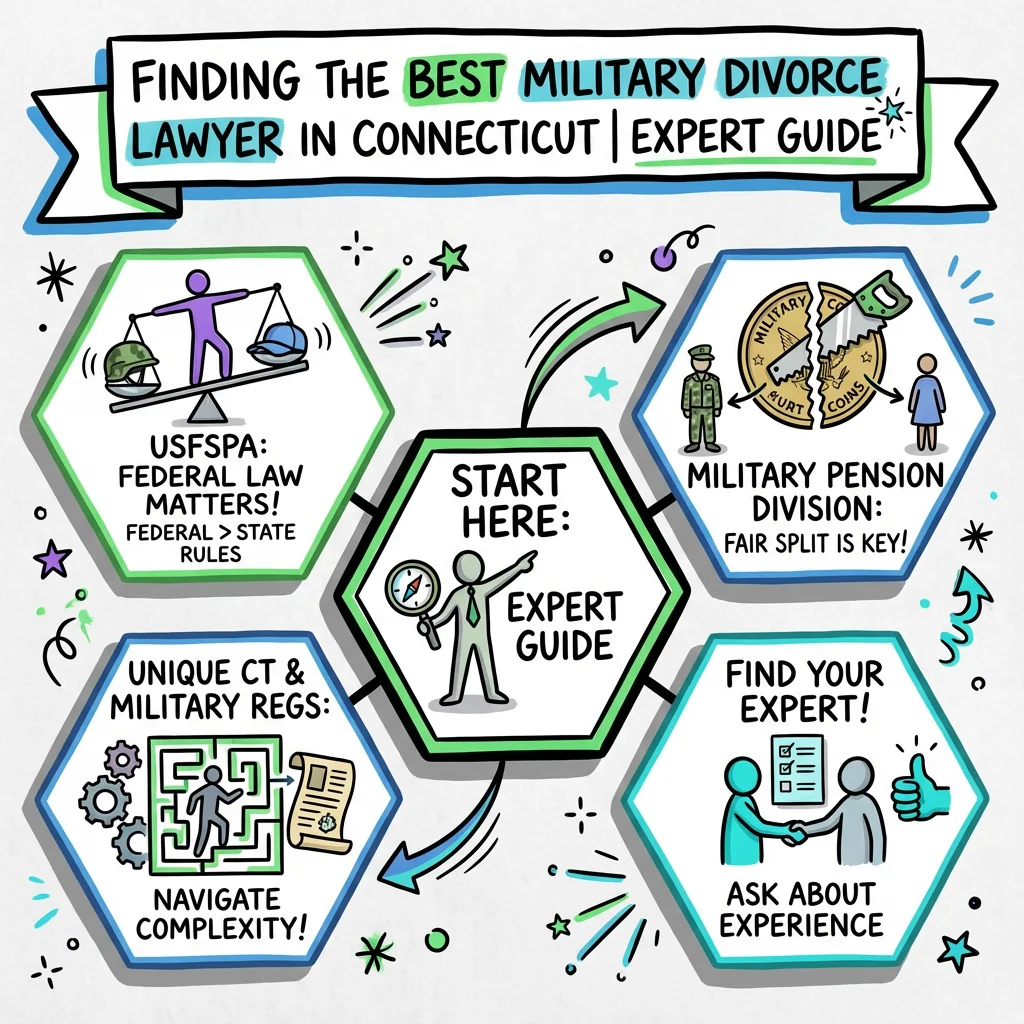
The best military divorce lawyer in Connecticut is one who has specific experience with the Uniformed Services Former Spouses' Protection Act (USFSPA), military pension division, Survivor Benefit Plan (SBP) elections, and the unique jurisdictional rules that apply to service members. Unlike civilian divorces, military divorces involve federal regulations that intersect with Connecticut state law, making specialized knowledge essential for protecting your rights as a military spouse.
Why Military Divorce Requires Specialized Legal Knowledge
Military divorces are fundamentally different from civilian divorces because they involve a complex overlay of federal laws that Connecticut courts must navigate alongside state divorce statutes. The USFSPA (10 U.S.C. § 1408) allows state courts to treat military retirement pay as marital property, but the specifics of how this division works—including the 10/10 rule for direct payments from DFAS—require an attorney who understands both systems intimately.
For military spouses, this specialized knowledge directly impacts your financial future. An attorney unfamiliar with military benefits might not know to address the Survivor Benefit Plan, which provides continued income if your former spouse dies before you. They might also miss critical deadlines or fail to properly value military retirement benefits, which can be worth hundreds of thousands of dollars over a lifetime.
Beyond retirement benefits, military divorces often involve unique circumstances like frequent relocations, deployment schedules affecting custody arrangements, and access to TRICARE health insurance. A qualified military divorce attorney will anticipate these issues and ensure your settlement agreement addresses them comprehensively rather than using generic language that may be rejected by federal agencies.
Key Qualifications to Look for in a Military Divorce Attorney
Experience with USFSPA and Military Pension Division
The most critical qualification is demonstrated experience dividing military retirement benefits. Under USFSPA, Connecticut courts can divide military pensions as marital property, but the calculation method matters enormously. Your attorney should understand the difference between the "fixed percentage" and "hypothetical" methods of division, and which approach better protects your interests based on the length of service and rank at the time of divorce.
A knowledgeable attorney will also understand the 10/10 rule, which determines whether you can receive your share of retirement pay directly from the Defense Finance and Accounting Services (DFAS) or must rely on your ex-spouse to forward payments. If you were married for at least 10 years while your spouse performed at least 10 years of creditable military service, DFAS will pay you directly—a significant protection that avoids future enforcement issues.
Understanding of Survivor Benefit Plan (SBP) Issues
The Survivor Benefit Plan is often overlooked in military divorces, but it can be one of the most valuable benefits at stake. SBP provides a monthly annuity to a surviving spouse (or former spouse) if the service member dies. Without proper election, you could lose all pension income upon your ex-spouse's death, leaving you without the financial support you relied upon.
Your attorney must know that SBP elections must be made within one year of the divorce decree and that specific language in your divorce agreement is required. A "deemed election" may need to be filed by the former spouse if the service member fails to do so. Missing this strict one-year deadline can have devastating financial consequences that are often impossible to undo.
Familiarity with Military-Specific Custody Challenges
Military families face unique custody challenges, including deployments, PCS (Permanent Change of Station) moves, and the potential for one parent to be stationed overseas. The best military divorce lawyers understand how to incorporate family care plans, address communication requirements during deployments, and build flexibility into custody arrangements. Standard possession schedules rarely work for active-duty families.
Connecticut courts focus on the best interests of the child, but military schedules require creative solutions. Your attorney should know how to incorporate provisions that allow for "makeup time" upon a service member's return from deployment and how to navigate jurisdiction issues if a child is moved across state lines due to military orders.
Questions to Ask Potential Military Divorce Attorneys
When interviewing attorneys, ask specific questions to gauge their military divorce expertise:
| Question | Why It Matters |
|---|---|
| How many military divorces have you handled? | Experience indicates familiarity with complex regulations |
| Can you explain how USFSPA affects pension division? | Tests actual knowledge vs. general claims |
| What is the 10/10 rule and does it apply to my case? | Critical for determining direct DFAS payments |
| How do you handle SBP elections in divorce decrees? | Prevents loss of survivor benefits |
| What language do you use for military pension division orders? | DFAS has specific requirements for processing |
| How do you address TRICARE eligibility in settlements? | Affects healthcare coverage post-divorce |
Tools like Untangle's AI Legal Guidance can help you prepare additional questions or clarify answers you receive to ensure the attorney truly understands the nuances of your military case.
Understanding Your Rights as a Military Spouse
Healthcare Benefits (TRICARE)
Your continued eligibility for TRICARE after divorce depends on the length of your marriage and your spouse's service. Under the 20/20/20 rule, if you were married for at least 20 years, your spouse served at least 20 years, and there was at least a 20-year overlap between the marriage and military service, you retain full TRICARE benefits. The 20/20/15 rule provides transitional benefits for one year if the overlap was only 15 years. Understanding which category you fall into is essential for long-term health planning.
Even if you don't qualify for continued TRICARE, you can purchase temporary coverage through the Continued Health Care Benefit Program (CHCBP) for up to 36 months. A knowledgeable attorney will explain these options and help you plan for healthcare coverage transitions, ensuring you don't have a gap in coverage once the divorce is finalized.
Commissary and Exchange Privileges
Military spouses who meet the 20/20/20 requirements also retain commissary, exchange, and MWR (Morale, Welfare, and Recreation) privileges. These benefits can provide significant savings over a lifetime, particularly for groceries and household goods. It is important to verify your ID card status and ensure you are properly registered in DEERS post-divorce.
Your attorney should help you document eligibility and ensure these privileges are addressed in your divorce proceedings. While the court cannot "grant" these privileges (as they are statutory federal entitlements), ensuring the divorce decree accurately reflects the marriage dates is vital for administrative processing.
Housing and Relocation Considerations
If you're currently living in military housing, your divorce will affect your housing situation. Understanding the timeline and your options is crucial for planning your next steps. Typically, a non-military spouse loses the right to live in on-base housing shortly after the divorce is final, necessitating a move.
Your attorney should help you negotiate appropriate transition periods and, if applicable, address any claims to housing allowance (BAH) in temporary support arrangements. Since BAH is a significant component of a service member's compensation, it must be correctly calculated in child support and alimony worksheets.
The Connecticut Military Divorce Process
Step 1: Determine Proper Jurisdiction
Military divorces have unique jurisdictional requirements. Under C.G.S. § 46b-44, Connecticut courts can handle your divorce if one party has been a resident for at least 12 months prior to the decree. For military members, "residence" can be complicated by where they are stationed versus their home of record.
Your attorney will help establish proper jurisdiction to avoid complications. It is possible for a service member to be stationed in Connecticut but maintain legal residency in another state (like Florida or Texas) for tax purposes. Deciding where to file—Connecticut or the home of record—can have massive implications for alimony, pension division, and child custody, so this strategic decision must be made early.
Step 2: File Required Documents
Like all Connecticut divorces, military divorces require filing standard court forms. You must start with the Summons Family Actions (JD-FM-003), the Divorce Complaint (JD-FM-159), and the Notice of Automatic Court Orders (JD-FM-158). These documents officially begin the legal process and set restrictions on asset transfers.
You will also need to complete a Financial Affidavit—either the Short Form (JD-FM-006) or the Long Form depending on your income and assets. When preparing these crucial documents, tools like Untangle's Financial Affidavit Generation can help you automatically generate your Connecticut short or long form financial affidavits, ensuring accuracy and saving time.
Step 3: Address Service Member Civil Relief Act (SCRA) Issues
The SCRA (50 U.S.C. § 3931) provides protections for active-duty service members, including the right to request a stay (postponement) of proceedings if military duties materially affect their ability to participate. This prevents default judgments against service members who are deployed or unable to attend court due to their service.
Your attorney should understand these protections and how they might affect your timeline. If your spouse invokes the SCRA to delay the divorce, your lawyer can help determine if the stay is legitimate and negotiate interim support agreements so you are not left without financial resources during the delay.
Step 4: Complete Financial Discovery
Military divorce financial discovery requires obtaining Leave and Earnings Statements (LES), military retirement point statements, and documentation of all military benefits. The LES is critical because it reveals not just base pay, but also tax-free allowances like BAH and BAS, as well as special combat pay or flight pay that affects support calculations.
Your attorney should know exactly what documents to request and how to interpret them. Using Untangle's Asset Disclosure tools can help you catalog and track all military benefits and other marital assets, ensuring nothing is overlooked during negotiations. Properly identifying every component of military compensation is the only way to ensure a fair financial settlement.
Step 5: Negotiate Settlement or Proceed to Trial
Most military divorces settle before trial, but having an attorney prepared to litigate is essential for strong negotiation. Settlement agreements in military divorces must include specific language for military pension division orders that DFAS will accept. Generic language often results in rejected orders, requiring parties to return to court years later.
During negotiation, your attorney will trade off various assets—perhaps keeping the house in exchange for a smaller portion of the pension, or vice versa. They will ensure that the final agreement explicitly addresses SBP costs, the method of pension calculation, and exactly how the "marital share" is defined (e.g., months of marriage overlapping service vs. total service).
Step 6: Obtain Proper Pension Division Orders
After your divorce is final, a separate order dividing military retirement benefits must be submitted to DFAS. This order has specific formatting and language requirements that differ significantly from civilian pension division orders (QDROs). It must be a "qualifying court order" under federal regulations.
An experienced military divorce attorney will ensure your order meets DFAS requirements before the judge signs it. If this step is mishandled, DFAS will reject the order, and you will not receive your share of the retirement pay. Correcting this after the fact can be expensive and time-consuming, reinforcing why getting it right the first time is crucial.
Try our free CT alimony calculator
Get an instant estimate based on Connecticut's statutory factors. No signup required.
Cost Considerations for Military Divorce in Connecticut
| Service Type | Typical Cost Range | Best For |
|---|---|---|
| Full representation by military divorce specialist | $10,000 - $25,000+ | Complex cases with significant pension value |
| Unbundled legal services | $2,000 - $7,000 | Specific issues like pension division only |
| Mediation with military-experienced mediator | $3,000 - $8,000 | Cooperative spouses seeking cost efficiency |
| Legal document preparation services | $1,000 - $3,000 | Straightforward cases needing form assistance |
The complexity of your case significantly affects costs. Factors that increase expense include contested custody, high pension values, disputes over deployment-related issues, and cases requiring expert valuation of military benefits. It is often worth investing in a specialist to protect a pension worth hundreds of thousands of dollars.
Untangle's AI Consultation can help you understand your options and budget for your divorce, clarifying what services you actually need versus what might be handled more affordably through mediation or partial representation.
Finding Military Divorce Attorneys in Connecticut
Bar Association and Legal Referrals
The Connecticut Bar Association offers a lawyer referral service that can connect you with attorneys who handle military divorces. However, simply asking for a "family law" attorney is insufficient. You must specifically request someone with military family law experience. Ask for their track record with USFSPA cases to ensure they aren't learning on your dime.
Military Legal Assistance and JAG
While JAG officers typically cannot represent you in state divorce proceedings, military legal assistance offices can provide invaluable initial advice. They can review settlement drafts, explain your rights under the SCRA, and often maintain lists of civilian attorneys who have successfully represented service members in the past. This can be an excellent starting point for building your shortlist.
Veteran Service Organizations
Organizations like the American Legion, VFW, and Military Officers Association of America (MOAA) often maintain networks of professionals who work with military families. These organizations understand the unique culture and needs of service members and can sometimes point you toward attorneys who offer discounted services or pro bono assistance for junior enlisted personnel.
Online Legal Directories
Legal directories allow you to filter by practice area and read reviews from former clients. When researching, look for attorneys with multiple reviews specifically mentioning "military divorce," "pension division," or "deployment custody." General divorce reviews are helpful, but specific mentions of military issues indicate the specialized experience you need.
When Self-Representation Is Not Advisable
While some Connecticut divorces can be handled without an attorney, military divorces generally require legal representation due to their complexity. Self-representation is particularly risky when:
- Significant military retirement benefits are at stake: The value of military pensions often exceeds $500,000 or more over a lifetime, making proper division critical
- Your spouse has more than 15 years of service: Higher pension values require more sophisticated analysis and protection
- You need to preserve SBP coverage: The technical requirements and deadlines make attorney involvement essential
- Custody disputes involve deployment or relocation: Military-specific provisions require specialized drafting
- You don't qualify for the 10/10 rule: Direct enforcement through DFAS isn't available, requiring alternative protections
Even if you plan to use mediation or collaborative divorce, having a consulting attorney review any proposed agreement is strongly recommended for military divorces. The stakes are simply too high for mistakes.
Protecting Yourself During the Process
Throughout your military divorce, maintain organized records of all financial documents, communications with your spouse, and military benefit information. Untangle's Case Management tools provide a safe place to keep sensitive military and financial records organized and accessible when you need them, ensuring you are always prepared for meetings or court dates.
Document your spouse's military career history, including duty stations, ranks, and service dates. This information is crucial for calculating pension division and determining benefit eligibility. If your spouse is uncooperative with providing documentation, your attorney can use discovery tools to obtain necessary records directly from military sources if needed.
Finally, be patient but proactive. Military divorces often take longer than civilian divorces due to SCRA issues, deployment schedules, and the complexity of benefit division. Working with an experienced military divorce attorney from the start helps ensure the process moves as smoothly as possible while protecting your rights and your future financial security.
Frequently Asked Questions
How much does a military divorce lawyer consultation cost in Connecticut?
Most Connecticut military divorce attorneys offer initial consultations ranging from free to $300, with many providing free 30-minute consultations to discuss your case and their experience with military-specific issues.
What questions should I ask a military divorce lawyer before hiring them?
Ask about their experience with USFSPA, how many military divorces they've handled, their familiarity with military pension division and the 10/10 rule, and whether they understand Survivor Benefit Plan elections.
Is there legal aid available for military divorce cases in Connecticut?
Yes, military members may access free legal assistance through their installation's legal office for basic advice, and Connecticut also offers legal aid programs for qualifying low-income spouses going through military divorce.
How do I find an attorney experienced in military divorce in CT?
Look for Connecticut family law attorneys who specifically advertise military divorce experience, are members of military law associations, or have handled cases involving USFSPA and military pension division.
What makes military divorce different from regular divorce in Connecticut?
Military divorces involve federal laws like USFSPA that govern pension division, unique jurisdictional rules based on the service member's duty station, and special considerations for TRICARE benefits, deployment schedules, and the Survivor Benefit Plan.
Legal Citations
- • 10 U.S.C. § 1408 - Payment of retired or retainer pay View Source
- • 50 U.S.C. § 3931 - Protection of service members against default judgments View Source
- • JD-FM-003 - Summons Family Actions View Source
- • JD-FM-159 - Divorce Complaint (Dissolution of Marriage) View Source
- • JD-FM-158 - Notice of Automatic Court Orders View Source
- • JD-FM-006 - Financial Affidavit Short Form View Source