Best DIY Divorce Websites for Connecticut: Compare Your Options
Compare the best DIY divorce websites for Connecticut residents. Learn which platforms handle CT-specific forms, costs, and requirements for uncontested divorces.
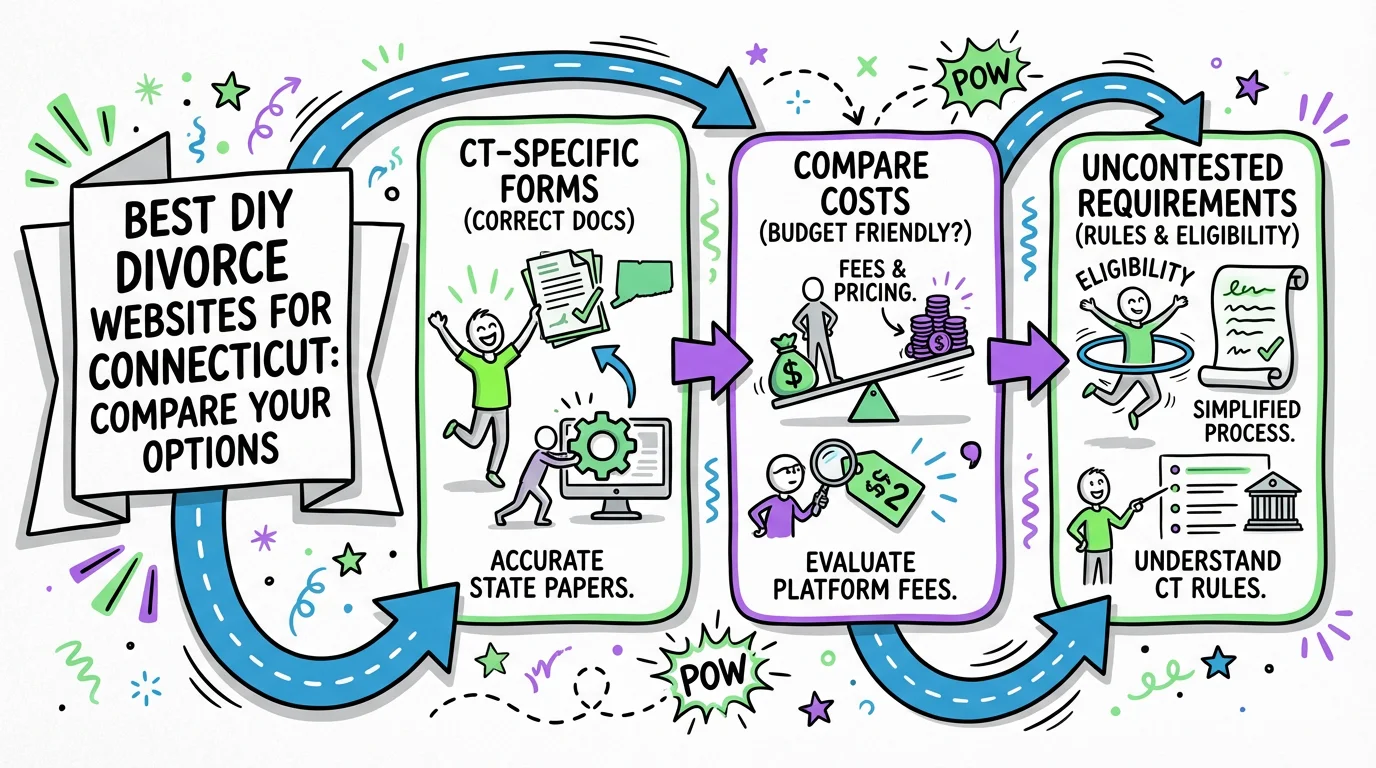
The best DIY divorce websites for Connecticut are those that understand the state's specific legal requirements, generate CT-compliant forms, and guide you through the nonadversarial dissolution process. For Connecticut residents seeking an uncontested divorce, platforms like Untangle offer Connecticut-specific guidance that accounts for the state's unique filing procedures under C.G.S. § 46b-44a, while general services like CompleteCase, 3StepDivorce, and DivorceWriter provide basic form preparation. The key difference lies in whether the platform truly understands Connecticut's court system or simply fills in generic templates.
Understanding DIY Divorce in Connecticut
Connecticut offers a streamlined "nonadversarial dissolution" process specifically designed for couples who agree on all terms of their divorce. This isn't just an uncontested divorce—it's a distinct legal pathway that allows qualifying couples to file a joint petition and potentially finalize their divorce without a court appearance. Under C.G.S. § 46b-44a, couples can commence this action by filing together in the judicial district where one party resides, provided they meet specific eligibility requirements.
The nonadversarial process requires both parties to attest under oath that their marriage has broken down irretrievably and that they've reached a complete agreement on all matters. This includes property division, debt allocation, and if applicable, child custody, visitation, and support. The beauty of this system is efficiency: once you file, the court assigns a disposition date no less than thirty days after filing, as outlined in C.G.S. § 46b-44c. If everything is in order and no party revokes their petition, the court can enter your divorce decree without requiring you to appear.
However, the simplicity of this process on paper doesn't mean the paperwork itself is simple. Connecticut requires specific forms, sworn financial statements, and a settlement agreement that the court must review for fairness under C.G.S. § 46b-44d. This is where choosing the right DIY platform becomes critical—you need a service that doesn't just fill in blanks but actually helps you navigate these Connecticut-specific requirements. Untangle, for example, offers automatic document generation tailored specifically for Connecticut, ensuring compliance with state regulations and court procedures.
What to Look for in a DIY Divorce Website
Connecticut-Specific Form Generation
Not all divorce websites are created equal when it comes to state compliance. Connecticut courts require specific Judicial Branch forms, including the Summons for Family Actions (JD-FM-003), Financial Affidavits (JD-FM-006), Notice of Automatic Court Orders (JD-FM-158), and the Certificate of Compliance (JD-FM-175). A quality DIY platform should generate these exact forms, not generic versions that may be rejected by Connecticut clerks.
The financial affidavit requirement is particularly important. Under Practice Book Rule § 25-30, each party must file a sworn statement showing current income, expenses, assets, and liabilities in the Judicial Branch format at least five business days before any hearing. Connecticut offers both a short form (for parties whose net income doesn't exceed $75,000 and total assets are under $75,000) and a long form for higher-asset cases. The best DIY websites help you determine which form applies to your situation and guide you through completing it accurately. With Untangle's financial affidavit generation feature, you're guided step-by-step through the process, helping you accurately complete the complex Judicial Branch forms required by Connecticut courts.
Beyond just forms, look for platforms that explain Connecticut's automatic orders. Under Practice Book Rule § 25-5B, automatic restraining orders take effect immediately upon filing a joint petition. These orders prevent either party from selling, transferring, or encumbering property; canceling insurance; and making major financial decisions without consent. Understanding these restrictions is essential, and a good platform will explain them clearly.
Settlement Agreement Guidance
Your settlement agreement is the heart of your DIY divorce. Connecticut courts review this document carefully to ensure it's "fair and equitable" under C.G.S. § 46b-44d. If the court can't make this determination from your paperwork alone, your case gets scheduled for a hearing—defeating much of the DIY advantage. Quality platforms provide templates and guidance that help you create agreements the court will accept without additional appearances.
Tools like Untangle's automatic document generation walk you through each required element, ensuring you don't miss critical provisions that Connecticut courts expect to see. This includes specific language about property division, any alimony arrangements, and detailed parenting plans if you have minor children. The platform helps you think through scenarios you might not have considered, reducing the chance of court rejection or future disputes.
Comparing Popular DIY Divorce Platforms
| Feature | Untangle | CompleteCase | 3StepDivorce | DivorceWriter |
|---|---|---|---|---|
| Connecticut-Specific Forms | Yes | Limited | Limited | Limited |
| Settlement Agreement Builder | Interactive | Template-based | Template-based | Template-based |
| Financial Affidavit Help | Guided | Basic | Basic | Basic |
| Court Filing Instructions | CT-specific | General | General | General |
| Asset/Debt Division Tools | Yes | No | No | No |
| Parenting Plan Builder | Yes | Basic | Basic | Basic |
| Price Range | Varies | $199-299 | $199-299 | $139-299 |
| Money-Back Guarantee | Yes | Yes | Yes | Yes |
What Sets Connecticut-Focused Platforms Apart
Generic divorce websites typically use a one-size-fits-all approach, asking you questions and then populating forms that may or may not match what Connecticut courts actually require. They might generate a settlement agreement that's legally valid but doesn't address Connecticut-specific requirements like the sworn stipulation that your marriage has broken down irretrievably, which C.G.S. § 46b-51 requires both parties to execute personally (not through attorneys).
Connecticut-focused platforms understand nuances like the Pathways case management system outlined in Practice Book Rule § 25-50A. Even nonadversarial dissolutions interact with this system, and understanding how your case will be tracked (Track A for simple cases, Track B for moderate complexity, or Track C for complex matters) helps you prepare appropriate documentation from the start.
Additionally, platforms designed for Connecticut can help you navigate the privacy requirements under Practice Book Rule § 25-59B, which governs how personal identifying information should be handled in court filings. Generic platforms often miss these details, potentially requiring you to refile documents or respond to court orders about improper filings.
Step-by-Step: Using a DIY Divorce Website for Connecticut
-
Verify Your Eligibility - Before paying for any service, confirm you qualify for Connecticut's nonadversarial dissolution. Both parties must agree to the divorce, have reached agreement on all issues, and one spouse must be a Connecticut resident. Most platforms have a free eligibility quiz to start.
-
Gather Your Information - You'll need both parties' full legal names, addresses, Social Security numbers, employment information, complete financial data (income, expenses, assets, debts), and if applicable, children's information including birthdates and current custody arrangements.
-
Complete the Questionnaire - Quality platforms like Untangle ask detailed questions about your situation, using your answers to generate appropriate forms and flag potential issues. This is where Connecticut-specific platforms shine—they ask about things like automatic orders and the 90-day waiting period that generic sites might skip.
-
Review Generated Documents - Don't just accept whatever the platform produces. Review each form carefully, comparing it against the official Connecticut Judicial Branch versions. Look for your Financial Affidavit (JD-FM-006), the Notice of Automatic Court Orders (JD-FM-158), and your settlement agreement.
-
File with the Court - Connecticut allows electronic filing through its e-filing system for many family matters. Your DIY platform should provide specific instructions for filing in Connecticut Superior Court, including which judicial district handles your case based on residence.
-
Wait for Your Disposition Date - After filing, the court assigns a disposition date at least 30 days out. During this period, either party can file a notice of revocation to stop the process. If no revocation is filed and your settlement agreement is approved, your divorce can be finalized without a hearing.
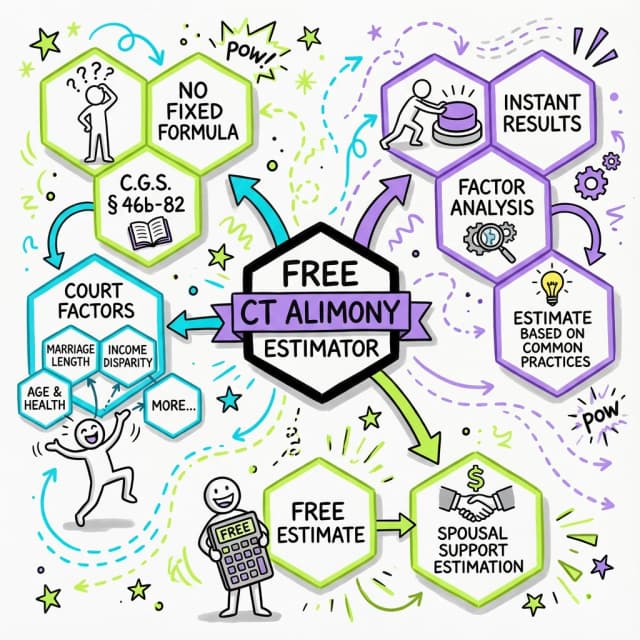
Try our free CT alimony calculator
Get an instant estimate based on Connecticut's statutory factors. No signup required.
Hidden Costs and Considerations
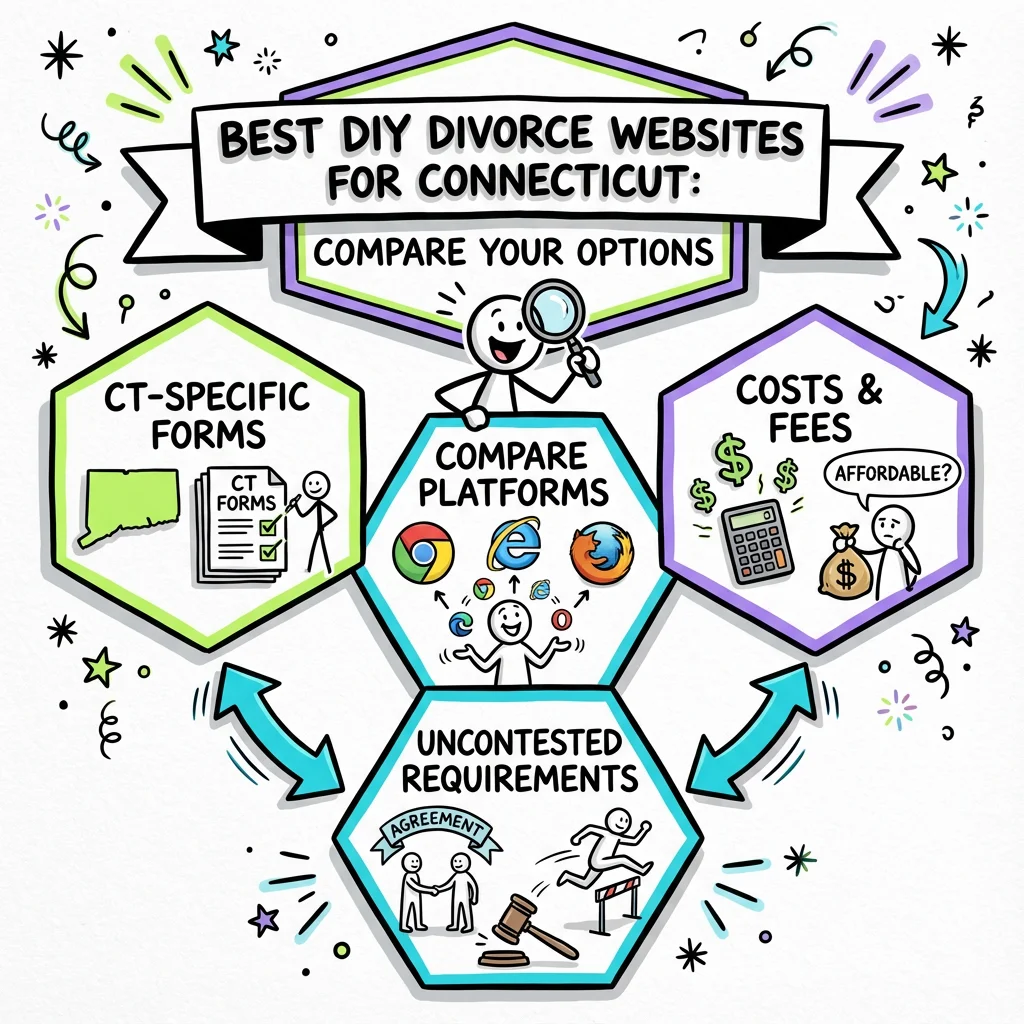
While DIY divorce websites advertise prices in the $150-300 range, the true cost of a Connecticut divorce includes additional expenses you should budget for. Court filing fees in Connecticut run approximately $350-400 for a dissolution action. If you have minor children, Connecticut requires completion of a parenting education program, which costs an additional $50-125 depending on the provider. Some platforms charge extra for expedited processing, customer support, or additional document revisions.
The most significant hidden cost, however, is the risk of mistakes. If your settlement agreement is rejected because it doesn't meet Connecticut's fairness standard under C.G.S. § 46b-44d, you'll need to revise and potentially attend a hearing. If your financial affidavit contains errors, you may face delays or sanctions. Generic platforms that don't understand Connecticut requirements increase this risk substantially.
Using Untangle's personalized task dashboard can help you track completion and accuracy before filing, potentially saving hundreds of dollars in court fees for rejected filings or attorney consultations to fix problems. The platform's Connecticut-specific guidance helps ensure your documents meet court expectations the first time.
When DIY Isn't the Right Choice
DIY divorce works best for couples with straightforward situations: short marriages, no children or agreed custody arrangements, minimal assets, no significant debts, and no history of domestic violence or power imbalances. If your situation is more complex, the money saved on a DIY platform may be dwarfed by problems that arise later.
Connecticut's Pathways system, under Practice Book Rule § 25-50A, automatically evaluates divorce cases for complexity. If your case gets assigned to Track B or Track C, you're likely dealing with issues that benefit from professional guidance. Signs you might need more help include: disagreement on any significant issue, complex assets like businesses or retirement accounts, concerns about hidden assets or debts, history of abuse or intimidation, or significant income disparity between spouses.
Even if you start with a DIY approach, know that you can add professional help later. Some attorneys offer "unbundled" services where they review your DIY documents without taking over your entire case. Practice Book Rule § 25-6A specifically addresses situations where self-represented parties work alongside attorneys, recognizing that many people need a middle ground between full DIY and full representation.
Making Your Decision
The best DIY divorce website for you depends on your specific situation, comfort level with legal documents, and the complexity of your case. For Connecticut residents, prioritizing platforms that understand the state's nonadversarial dissolution process, generate proper Judicial Branch forms, and provide guidance on settlement agreements is essential. Generic platforms may cost less upfront but can create problems that far exceed any savings.
Take advantage of free consultations and eligibility quizzes offered by various platforms. Compare what each service actually provides for Connecticut divorces, not just their general marketing claims. And remember that your settlement agreement will govern important aspects of your life for years to come—investing in getting it right the first time is almost always worthwhile. Untangle's personalized task dashboard combines the cost savings of DIY with the security of Connecticut-specific expertise, helping budget-conscious couples navigate divorce confidently.
Frequently Asked Questions
How much do DIY divorce websites cost compared to hiring a Connecticut divorce attorney?
DIY divorce websites typically cost between $150-$500 for form preparation, while hiring a Connecticut divorce attorney can range from $3,000 to $15,000 or more depending on case complexity.
What should I look for when choosing an online divorce service for Connecticut?
Look for a service that specifically generates Connecticut-compliant forms, understands the state's nonadversarial dissolution process under C.G.S. § 46b-44a, and provides guidance on your judicial district's filing requirements.
Is a DIY divorce a good idea if we have children in Connecticut?
DIY divorce can work for Connecticut couples with children if both parties fully agree on custody, visitation, and child support arrangements, but consulting an attorney is advisable to ensure your parenting plan meets court requirements.
What are the most common mistakes to avoid when using a DIY divorce website in CT?
Common mistakes include using generic forms not tailored to Connecticut, failing to properly disclose all assets and debts, missing required financial affidavits, and not understanding the specific requirements for nonadversarial dissolution eligibility.
Can I use a DIY divorce website if my spouse and I don't agree on everything in Connecticut?
No, DIY divorce websites are only appropriate for uncontested divorces where both spouses agree on all terms; if you have disputes over property, custody, or support, you should consult a Connecticut family law attorney.
Legal Citations
- • C.G.S. § 46b-44a View Source
- • C.G.S. § 46b-44c View Source
- • C.G.S. § 46b-44d View Source
- • Practice Book Rule § 25-30 View Source
- • Practice Book Rule § 25-5B View Source
- • C.G.S. § 46b-51 View Source
- • Practice Book Rule § 25-50A View Source
- • Practice Book Rule § 25-59B View Source
- • Practice Book Rule § 25-6A View Source