Best DIY Divorce Websites for Connecticut: Compare Online Options
Compare the best DIY divorce websites for Connecticut. Learn which online tools help with CT divorce forms, requirements, and the uncontested divorce process.
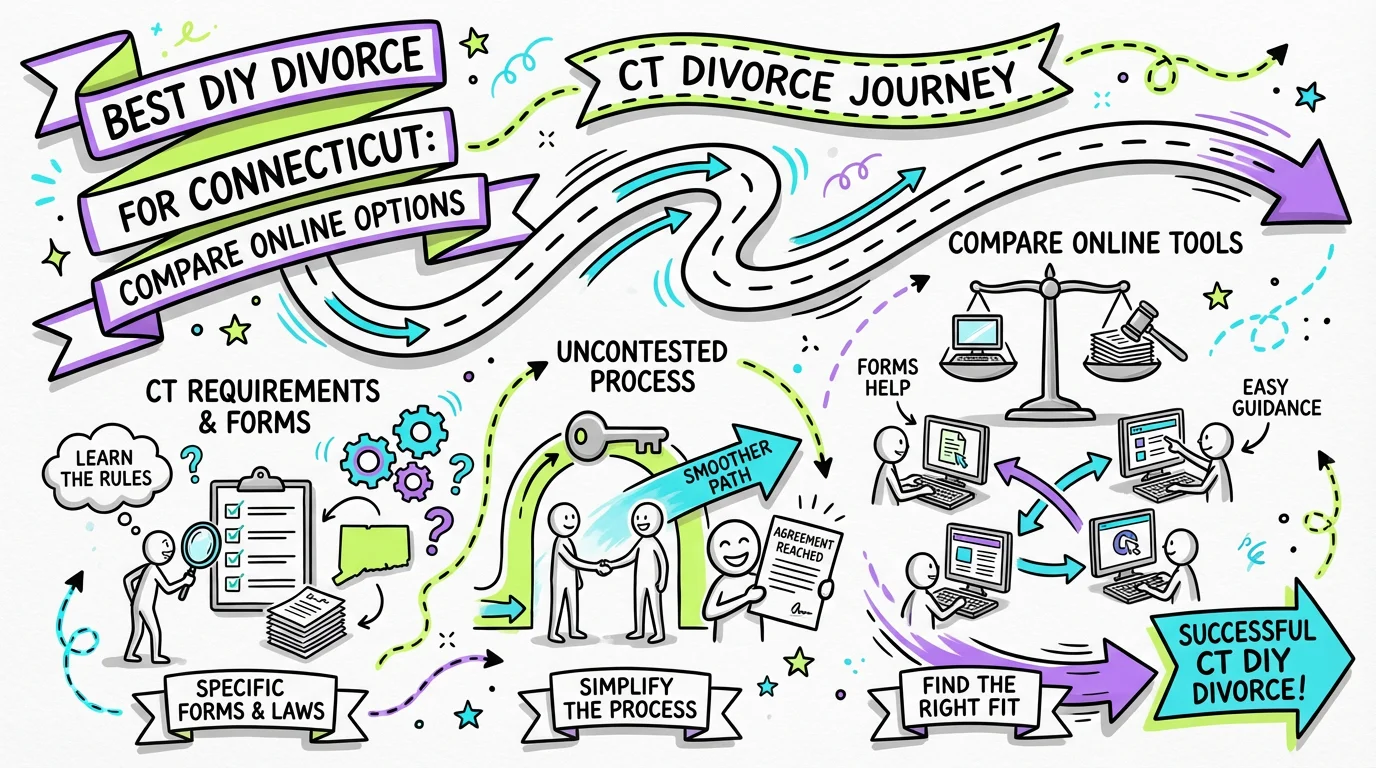
The best DIY divorce websites for Connecticut are those that enable you to file a joint petition under C.G.S. § 46b-44a and automatically generate the required state-specific forms. While many national divorce websites exist, not all handle Connecticut's specific procedures correctly—particularly the nonadversarial dissolution process that can streamline your divorce significantly. The most effective online tools for CT divorce will help you prepare all required documents including the Divorce Complaint (JD-FM-159), Financial Affidavit (JD-FM-006), and settlement agreement while ensuring compliance with Practice Book Rules.
Understanding Connecticut's DIY Divorce Options
Connecticut offers two main pathways for couples seeking a do-it-yourself divorce, and the website or tool you choose should accommodate both. The traditional contested divorce route involves one spouse filing a complaint and serving the other, but this requires more complex procedures and is rarely ideal for DIY couples. The better option for most budget-conscious couples is Connecticut's nonadversarial dissolution process, which allows both spouses to file a joint petition together.
The nonadversarial dissolution is specifically designed for couples who agree on all major issues. Under Connecticut law, you can use this streamlined process if you've lived in the state for at least 12 months, have agreed on grounds for divorce, and have reached a complete settlement on property division, alimony, and (if applicable) child custody and support. This process is typically faster, less expensive, and doesn't require a court appearance if the judge approves your paperwork.
Any DIY divorce website worth using for Connecticut should clearly explain which pathway fits your situation. Tools like Untangle's guided divorce process can help you quickly determine whether you qualify for Connecticut's simplified nonadversarial dissolution, potentially saving you significant time and court fees compared to the traditional contested route.
What to Look for in a Connecticut DIY Divorce Website
State-Specific Form Generation
The most critical feature of any DIY divorce website is its ability to produce Connecticut-specific court forms. Generic divorce forms won't work—Connecticut courts require specific Judicial Branch forms with exact formatting. At minimum, your chosen platform should generate the Summons (JD-FM-003), Divorce Complaint (JD-FM-159), Financial Affidavit, Notice of Automatic Court Orders (JD-FM-158), and a comprehensive settlement agreement.
Financial affidavits deserve special attention. Connecticut offers two versions: a short form for couples where neither party earns more than $75,000 annually and total assets are under $75,000, and a long form for everyone else. A quality DIY website should automatically determine which form you need based on your financial information and populate it correctly. Getting this wrong can delay your case or require you to redo paperwork.
Beyond individual forms, the best platforms ensure all documents work together consistently. Your settlement agreement terms should align with your financial affidavit figures, and your complaint should reference the correct statutory grounds. This interconnected accuracy is where many basic form-filling websites fall short. Tools like Untangle, with its automatic document generation capabilities, are designed to ensure all your Connecticut divorce forms are accurately prepared and cross-referenced, preventing costly errors and delays.
Guidance Through Connecticut Procedures
Forms are only part of the equation—understanding Connecticut's procedural requirements is equally important. Practice Book Rule § 25-30 requires sworn financial statements to be filed at specific times, and Rule § 25-5B establishes automatic court orders that take effect immediately upon filing a joint petition. A DIY website should explain these requirements clearly and help you comply with them.
Connecticut's automatic orders are particularly important to understand. Once you file, neither spouse can sell or transfer property, change insurance beneficiaries, or incur unreasonable debts without the other's consent or court permission. If you have children, additional restrictions apply regarding removing them from the state or changing their living arrangements. Violating these orders—even unknowingly—can result in contempt of court.
The timeline is another area where guidance matters. Under C.G.S. § 46b-44c, nonadversarial dissolution cases receive a disposition date at least 30 days after filing. If no revocation notice is filed and the court finds your settlement agreement fair and equitable, your divorce can be finalized on or within five days of that date. Understanding this timeline helps you plan and ensures you don't miss important deadlines.
Comparing DIY Divorce Website Features
| Feature | Basic Form Sites | Premium DIY Services | Untangle |
|---|---|---|---|
| CT-specific forms | Sometimes | Yes | Yes |
| Settlement agreement drafting | Template only | Customized | AI-powered, customized |
| Financial affidavit guidance | Minimal | Moderate | Comprehensive |
| Child support calculations | Rarely | Sometimes | Built-in calculator |
| Legal requirement explanations | Generic | State-specific | CT-specific guidance |
| Progress tracking | No | Basic | Full dashboard |
| Cost | $50-$150 | $300-$500 | Varies by needs |
| Court filing assistance | No | Varies | Yes |
Budget Considerations for DIY Divorce
The cost savings of DIY divorce can be substantial, but it's important to understand the full picture. Connecticut court filing fees currently run several hundred dollars regardless of which method you use. Beyond that, DIY websites charge anywhere from $50 for basic form access to $500+ for comprehensive services. The question isn't just which is cheapest—it's which provides enough support to get your divorce done correctly the first time.
Errors in divorce paperwork can be expensive. If the court rejects your forms, you may need to refile and potentially pay additional fees. If your settlement agreement is unclear or incomplete, you might need to return to court later to clarify terms—a process that can cost thousands in legal fees. Spending a bit more upfront on a quality DIY tool often saves money in the long run.
For couples aiming for professional-quality documents without attorney fees, Untangle's financial affidavit generation and other planning tools guide you through each decision, ensuring your paperwork meets Connecticut requirements and helping you anticipate issues before they become expensive problems.
Try our free CT child support calculator
Calculate your estimated child support using Connecticut's official guidelines formula.
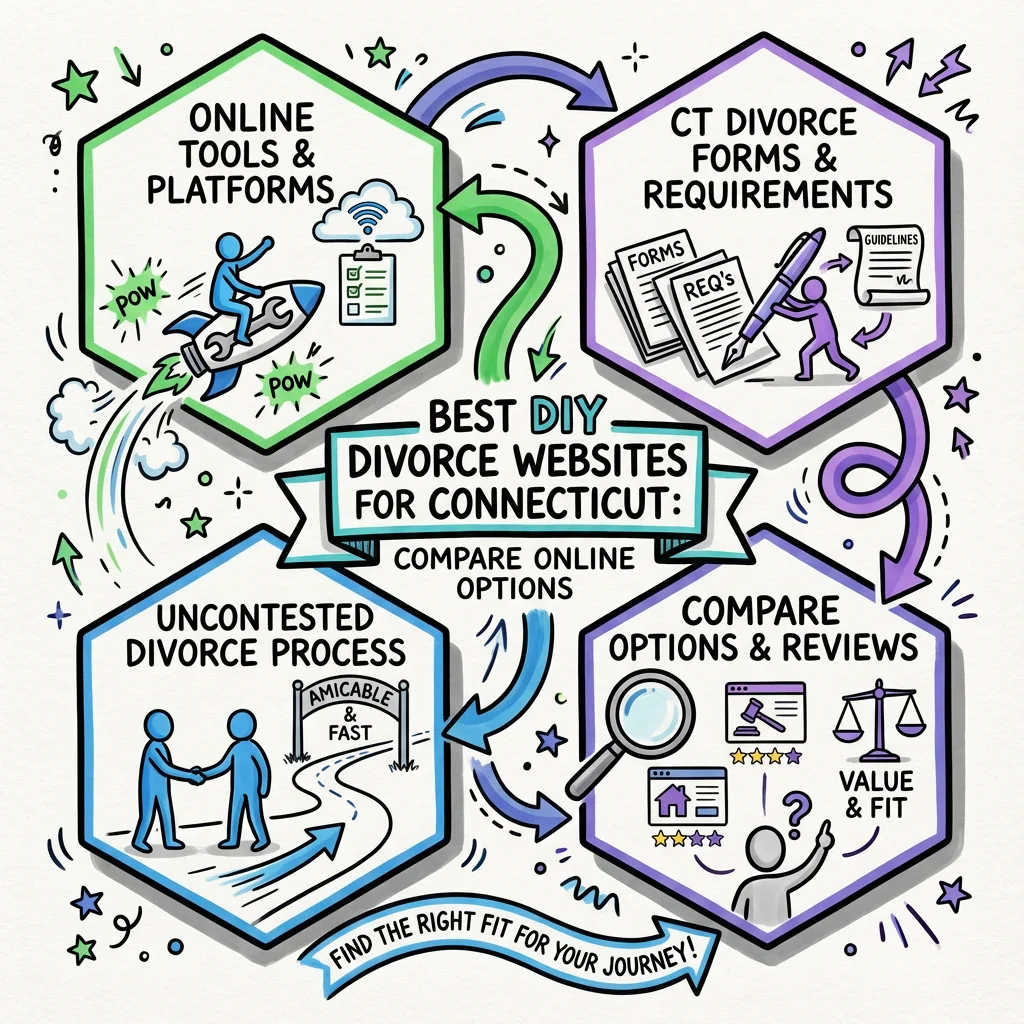
Essential Forms for Connecticut DIY Divorce
Core Filing Documents
Every Connecticut divorce requires certain foundational documents. The Summons (JD-FM-003) formally initiates the case, while the Divorce Complaint (JD-FM-159) outlines the basic facts of your marriage and grounds for dissolution. For joint petitions, these work together to establish the court's jurisdiction over your case.
The Notice of Automatic Court Orders (JD-FM-158) must accompany your filing and be served on or signed by both parties. This document informs both spouses of the legal restrictions that apply during the divorce process. Taking time to read and understand this notice is essential—the automatic orders have real legal consequences.
Practice Book Rule § 25-2 specifies what your complaint must include: the date and place of your marriage, jurisdictional facts (residency requirements), whether you have minor children, and information about any children born to either party during the marriage. If children are involved, you must also identify any existing custody or support orders.
Financial Disclosure Requirements
Connecticut requires complete financial transparency in divorce. Both parties must file sworn financial affidavits showing current income, expenses, assets, and liabilities. Under Practice Book Rule § 25-30, these must be filed at least five business days before any hearing on alimony, support, or counsel fees, and updated within 30 days of the final hearing.
The Financial Affidavit Short Form (JD-FM-006-short) works for couples with more modest finances—specifically where neither party's net income exceeds $75,000 annually and total assets are under $75,000. Everyone else must use the more detailed long form. Choosing the correct form matters; using the short form when you don't qualify can raise questions about full disclosure.
If you have children, you'll also need to complete the Worksheet for Child Support and Arrearage Guidelines (CCSG-001). Connecticut uses specific formulas to calculate child support, and any deviation from these guidelines must be justified to the court. Untangle's child support calculator can help you understand what the guidelines suggest for your situation before you finalize your agreement.
Settlement Agreement Essentials
The settlement agreement is the heart of any uncontested divorce. This document spells out exactly how you'll divide property, handle debts, arrange custody and parenting time, calculate child support, and address alimony. Under C.G.S. § 46b-66, the court reviews this agreement to ensure it's fair and equitable to both parties and serves the best interests of any children.
Your settlement agreement must be comprehensive and specific. Vague terms like "we'll split everything equally" invite future disputes. Instead, identify each asset and debt by name, state its approximate value, and specify who receives it. For parenting arrangements, include a detailed schedule covering regular time, holidays, vacations, and decision-making authority.
The court takes its review responsibility seriously. Under C.G.S. § 46b-44d, if the judge cannot determine whether your settlement is fair and equitable from the documents alone, your case will be scheduled for a hearing where both parties must appear. Thorough, well-drafted agreements are more likely to be approved without requiring additional court appearances.
Step-by-Step: Filing Your Connecticut DIY Divorce
-
Confirm your eligibility - At least one spouse must have lived in Connecticut for 12 months before filing. For nonadversarial dissolution, you must also agree on all issues including grounds, property division, and any child-related matters.
-
Gather financial information - Collect documentation of all income, bank accounts, retirement accounts, real estate, vehicles, debts, and monthly expenses. Both parties need this information for accurate financial affidavits.
-
Complete your settlement agreement - Work through every issue: property division, debt allocation, alimony (if any), and all child-related arrangements. Put everything in writing with specific terms.
-
Prepare all required forms - Complete the Summons, Divorce Complaint, Financial Affidavits, Notice of Automatic Orders, and any child-related forms. Ensure consistency across all documents.
-
Review and sign documents - Both parties should review everything carefully. Many forms require notarization, so plan accordingly.
-
File with the court - Submit your documents to the Superior Court in the judicial district where either spouse resides. Pay the required filing fee.
-
Wait for the disposition date - For nonadversarial dissolutions, this is at least 30 days from filing. Continue complying with automatic orders during this period.
-
Attend hearing if required - If the court has questions or can't approve your agreement from the paperwork alone, you'll be notified of a hearing date.
-
Receive your final decree - If everything is in order, the court enters your dissolution decree on or shortly after your disposition date.
When DIY Divorce Isn't Right for Your Situation
DIY divorce works wonderfully for many Connecticut couples, but it's not appropriate for every situation. If you and your spouse cannot agree on major issues—custody arrangements, property division, or whether alimony should be paid—you likely need professional help. Contested divorces involve court hearings, evidence presentation, and legal arguments that require expertise.
Complex financial situations also warrant professional guidance. If your marriage includes business ownership, stock options, pensions, real estate investments, or significant assets, the tax and valuation issues involved can be substantial. An error in dividing a retirement account, for example, can cost tens of thousands of dollars in unnecessary taxes. Similarly, if you suspect your spouse is hiding assets or income, you'll need legal help to conduct proper discovery.
Domestic violence or power imbalances between spouses make DIY divorce inadvisable and potentially dangerous. If you don't feel safe negotiating directly with your spouse or fear coercion, seek help from an attorney or domestic violence advocate. Connecticut's courts have resources for protective orders and safety planning that a DIY website cannot provide.
Even if your situation seems straightforward, consider using Untangle's AI consultation to evaluate your specific circumstances. Sometimes issues that seem simple—like dividing a house or handling retirement accounts—have complications that aren't obvious until you dig deeper. Understanding your full situation helps you make an informed choice about whether DIY divorce is right for you.
Frequently Asked Questions
How much does it cost to file for divorce online in Connecticut?
Connecticut court filing fees for divorce typically range from $360 to $400, plus any fees charged by the online divorce service you choose, which can range from $150 to $500 depending on the platform and level of support.
Will Connecticut courts accept divorce papers prepared by online DIY websites?
Yes, Connecticut courts will accept divorce documents prepared by online services as long as they use the correct state-specific forms (like JD-FM-159 and JD-FM-006) and comply with Practice Book Rules.
How long does an online DIY divorce take in Connecticut?
A Connecticut nonadversarial dissolution filed online typically takes 35 to 90 days from filing to finalization, assuming all paperwork is complete and both spouses agree on all terms.
What are the residency requirements to file for DIY divorce in CT?
At least one spouse must have lived in Connecticut for a minimum of 12 months before filing for divorce in the state.
Can I use an online divorce service if we have children in Connecticut?
Yes, you can use online divorce services in Connecticut even with children, but you'll need to include additional documents addressing custody, parenting plans, and child support calculations that comply with CT guidelines.
Legal Citations
- • C.G.S. § 46b-44a - Filing of joint petition for nonadversarial dissolution of marriage View Source
- • C.G.S. § 46b-44c - Disposition of nonadversarial dissolution of marriage View Source
- • C.G.S. § 46b-44d - Review of settlement agreement in nonadversarial dissolution View Source
- • C.G.S. § 46b-66 - Review of final agreement; incorporation into decree View Source
- • Practice Book Rule § 25-2 - Complaints for Dissolution of Marriage View Source
- • Practice Book Rule § 25-5B - Automatic Orders upon Filing of Joint Petition View Source
- • Practice Book Rule § 25-30 - Statements To Be Filed View Source