Best Divorce Resources for Stay-at-Home Parents in Connecticut
Essential Connecticut divorce resources for stay-at-home parents including financial protections, alimony rights, legal aid options, and tools to help you navigate your divorce confidently.
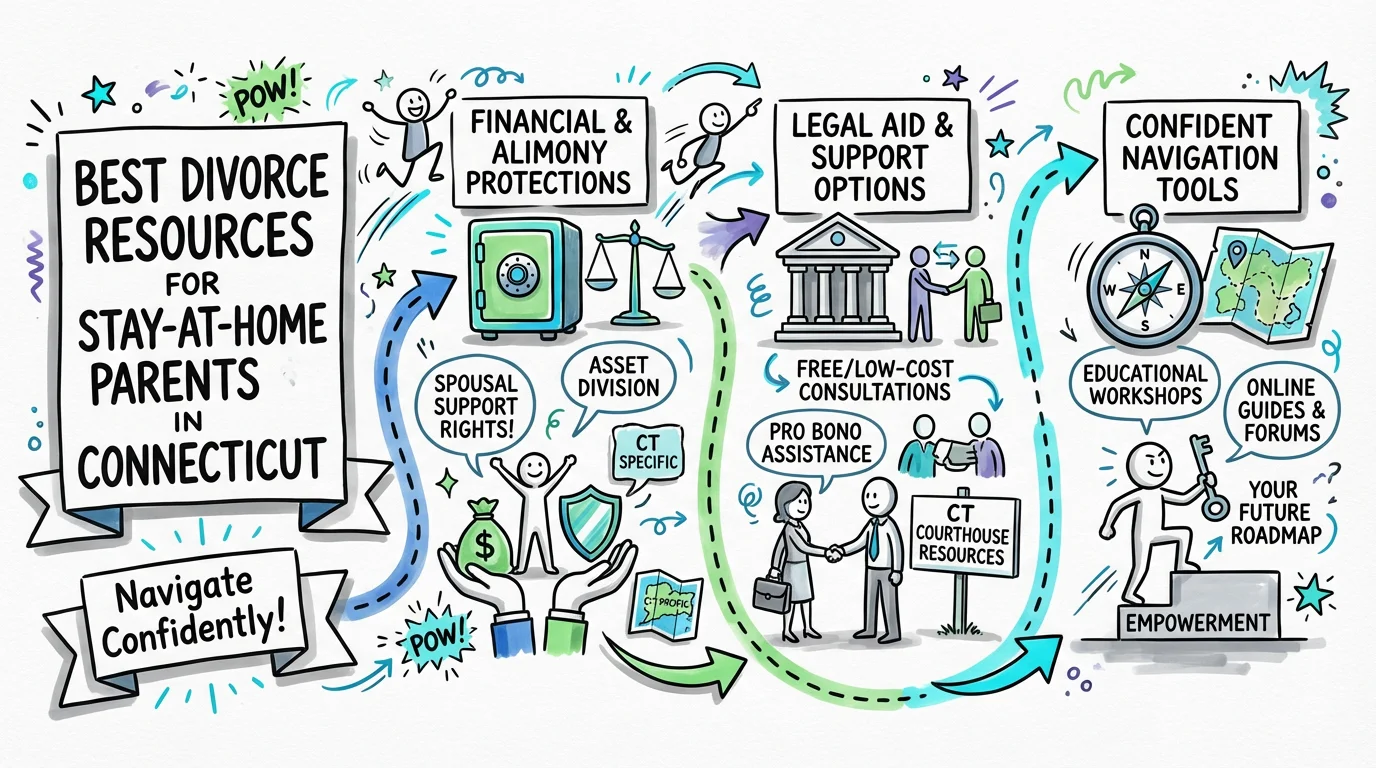
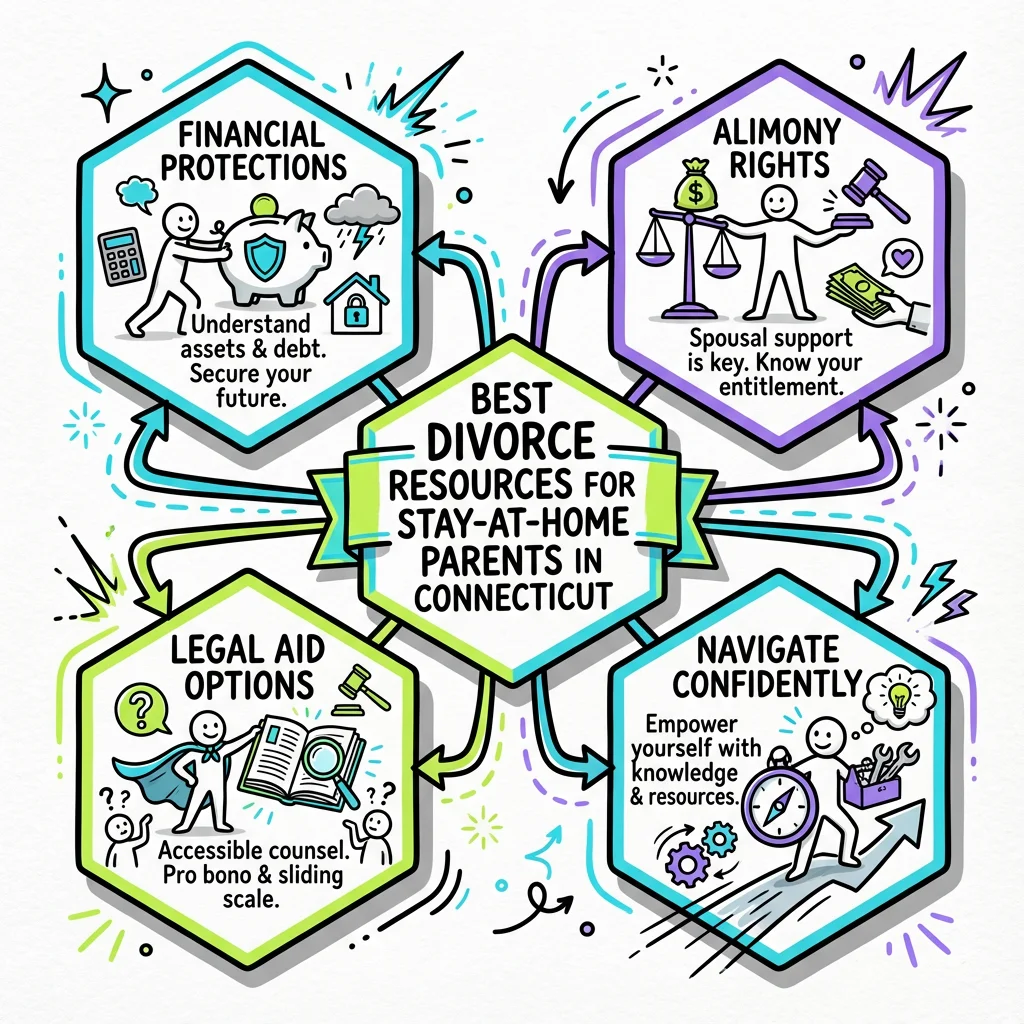
The best divorce resources for stay-at-home parents in Connecticut include legal aid organizations like Statewide Legal Services and Connecticut Legal Services, court-sponsored programs through CT Judicial Branch's self-help center, financial planning tools, such as Untangle's financial affidavit generation feature, and family services counselors available through the court system. Connecticut law specifically recognizes the economic contributions of stay-at-home parents and provides multiple protections—including alimony, equitable property division, and the ability to request that your spouse pay your attorney's fees—designed to help financially dependent spouses achieve stability during and after divorce.
Understanding Your Legal Protections as a Stay-at-Home Parent
Connecticut's divorce laws offer significant protections for stay-at-home parents who have sacrificed career advancement to care for children and manage the household. Under C.G.S. § 46b-82, courts must consider "the contribution of each of the parties in the acquisition, preservation or appreciation in value of their respective estates" when awarding alimony. This explicitly includes contributions as a homemaker—meaning your years of managing the home, raising children, and supporting your spouse's career are legally recognized as valuable contributions to the marriage.
The state's equitable distribution framework under C.G.S. § 46b-81 allows courts to assign "all or any part of the estate of the other spouse" when dividing marital property. This doesn't mean a 50/50 split is guaranteed, but rather that the court will divide assets fairly based on multiple factors including the length of the marriage, your age and health, your employability, and again, your contributions as a homemaker. For long-term stay-at-home parents, this often results in a larger share of marital assets to help bridge the financial gap.
Perhaps most importantly, C.G.S. § 46b-62 gives courts the authority to order your spouse to pay your attorney's fees "in accordance with their respective financial abilities." This provision exists specifically because Connecticut recognizes that a financially dependent spouse shouldn't be disadvantaged in divorce proceedings simply because they don't have independent access to funds. If your spouse controls the family finances, you have legal recourse to level the playing field.
Essential Court Resources and Self-Help Services
Connecticut's Judicial Branch offers extensive free resources specifically designed to help self-represented parties navigate divorce. The court's self-help section provides access to all required forms, including the Divorce Complaint (Form JD-FM-159) and the Financial Affidavit, which is one of the most critical documents in your divorce. This sworn statement details your income, expenses, assets, and liabilities—and for stay-at-home parents, it's your opportunity to demonstrate your financial needs and the standard of living established during your marriage. Accurately completing this can be challenging, but tools like Untangle's income source tracking and expense tracking with AI can simplify the process, ensuring all your financial details are precisely captured for your Financial Affidavit.
The court's Pathways program, established under Practice Book Rule § 25-50A, provides another layer of support. Within 30-60 days of filing, you'll meet with a family relations counselor who will help identify areas of agreement, assess the likelihood of settlement, and recommend appropriate resources. The counselor will assign your case to Track A (minimal court involvement), Track B (moderate complexity), or Track C (complex cases requiring more judicial oversight). This meeting is an excellent opportunity to ask questions and understand what to expect throughout your divorce process.
Family Services at each courthouse also offers mediation services, which can be particularly valuable for stay-at-home parents concerned about legal costs. Mediation allows you and your spouse to work toward agreements on custody, support, and property division with a neutral third party—often at significantly lower cost than litigation. However, be cautious about mediation if there's a significant power imbalance in your relationship; you may benefit from having an attorney advocate for your interests.
Financial Resources and Support During Your Divorce
Understanding your financial picture is crucial when you've been financially dependent on your spouse. Practice Book Rule § 25-32 requires mandatory financial disclosure, meaning your spouse must provide tax returns from the last three years, W-2s and 1099s, pay stubs, and statements for all financial accounts going back 24 months. This transparency requirement protects stay-at-home parents who may not have had full visibility into family finances during the marriage.
Tools like Untangle's complete asset inventory can help you organize this financial information and understand what you may be entitled to receive. By inputting your assets, debts, and circumstances, you can get a clearer picture of potential outcomes and make more informed decisions during negotiations. This is especially valuable when you're feeling overwhelmed by the financial complexity of divorce.
You may also need immediate financial support while your divorce is pending. Under Practice Book Rule § 25-24, you can file a motion pendente lite (during litigation) requesting temporary alimony, child support, or "maintenance of the family." These orders can provide critical financial stability while you work toward a final resolution. The Notice of Automatic Court Orders (Form JD-FM-158) also protects both parties by preventing either spouse from dissipating assets, canceling insurance, or making major financial changes during the divorce process.
Legal Aid and Low-Cost Legal Services
If you cannot afford a private attorney, Connecticut offers several legal aid options. Statewide Legal Services of Connecticut (1-800-453-3320) provides free legal assistance to income-eligible residents, including help with divorce cases involving domestic violence, custody disputes, or other urgent matters. Connecticut Legal Services operates regional offices throughout the state and can help with divorce-related issues including protective orders, custody, and child support.
Many private attorneys also offer unbundled legal services, where you hire them for specific tasks—like reviewing your settlement agreement or representing you at a single hearing—rather than full representation. This can make legal help more affordable when you're on a limited budget. The Connecticut Bar Association's Lawyer Referral Service can connect you with attorneys who offer reduced-fee consultations.
Law school clinics at Quinnipiac University School of Law and the University of Connecticut School of Law also provide free legal services to qualifying individuals, supervised by licensed attorneys. While there may be wait lists, these clinics can be excellent resources for stay-at-home parents who need legal guidance but can't afford traditional representation.

Try our free CT alimony calculator
Get an instant estimate based on Connecticut's statutory factors. No signup required.
Understanding Alimony in Connecticut
Connecticut courts consider multiple factors when awarding alimony under C.G.S. § 46b-82, and many of these factors work in favor of stay-at-home parents. The court evaluates the length of your marriage, the causes for divorce, your age and health, your occupation and employability, the amount and sources of income for both parties, your vocational skills and employability, and the time and expense necessary to acquire sufficient education or training to find appropriate employment.
The landmark case Oudheusden v. Oudheusden demonstrates how Connecticut courts protect financially dependent spouses. In that case, involving a spouse who earned $550,000 annually from closely held businesses, the trial court awarded $18,000 per month in alimony that was not modifiable in duration or amount. While your circumstances will differ, this case illustrates that Connecticut courts take seriously their obligation to ensure that a stay-at-home spouse can maintain a reasonable standard of living post-divorce.
| Alimony Factor | How It Applies to Stay-at-Home Parents |
|---|---|
| Length of marriage | Longer marriages typically result in longer or permanent alimony |
| Employability | Years out of workforce may extend alimony duration |
| Age and health | Older spouses may receive more support |
| Contribution as homemaker | Explicitly recognized under CT law |
| Standard of living | Court aims to maintain marital standard where possible |
| Need for education/training | Court may order support during retraining period |
Using Untangle's alimony calculator can help you estimate potential alimony based on your specific circumstances, giving you realistic expectations as you enter negotiations or prepare for court.
Child Custody and Support Considerations
As a stay-at-home parent, you've likely been the primary caregiver for your children, which courts consider when making custody determinations. Under C.G.S. § 46b-56, the court must act in the "best interests of the child" and may assign parental responsibility jointly to both parents or primarily to one parent. Your established role as the primary caregiver is a significant factor in custody decisions.
Child support in Connecticut is calculated using standardized guidelines, and the Child Support and Arrearage Guidelines Worksheet (Form CCSG-001) helps determine appropriate amounts. Under C.G.S. § 46b-84, both parents must maintain their child according to their respective abilities. If you've been out of the workforce, your income may be imputed at minimum wage or based on your earning capacity, while your spouse's actual income will be used to calculate their obligation.
Practice Book Rule § 25-5 establishes automatic orders that protect both you and your children during the divorce process. Neither parent may permanently remove children from Connecticut without written consent or a court order, and if a parent vacates the family residence, they must provide a mailing address within 48 hours. These protections help maintain stability for your children during a difficult transition.
Steps to Take Now as a Stay-at-Home Parent
-
Gather financial documents - Collect copies of tax returns, bank statements, investment accounts, retirement accounts, and any other financial records you can access. Practice Book Rule § 25-32 will eventually require disclosure, but having your own copies ensures you're prepared.
-
Create a detailed budget - Document your current expenses and anticipated post-divorce needs. This information is essential for your Financial Affidavit and for requesting appropriate alimony and child support.
-
Understand your marital assets - Make a list of all property acquired during the marriage, including real estate, vehicles, retirement accounts, and valuable personal property. Tools like Untangle's complete asset inventory can help you organize this information systematically.
-
Research your employment options - Even if you're not ready to return to work, understanding your earning potential helps you plan realistically. Consider whether you need additional education or training and factor this into your support requests.
-
Consult with an attorney - Even if you plan to represent yourself, one consultation with a family law attorney can help you understand your rights and avoid costly mistakes. Many attorneys offer free or reduced-fee initial consultations.
-
Consider counseling - Divorce is emotionally challenging, especially when you're facing financial uncertainty. Many stay-at-home parents benefit from individual therapy or support groups during this transition.
When to Seek Professional Legal Help
While Connecticut provides resources for self-represented parties, certain situations warrant professional legal assistance. If your spouse owns a business, has complex investments, or you suspect hidden assets, an attorney—possibly working with a forensic accountant—can ensure you receive your fair share. Cases like Grabe v. Hokin demonstrate the complexity that can arise when valuing and dividing business interests or non-traditional assets.
You should also strongly consider legal representation if there's a history of domestic violence, if your spouse has already hired an attorney, if you're facing a contested custody dispute, or if your spouse is being uncooperative with financial disclosure. The power imbalance that often exists in marriages where one spouse controlled the finances can continue into divorce proceedings—having an advocate in your corner helps protect your interests.
Remember that Connecticut law under C.G.S. § 46b-62 allows courts to order your spouse to pay your reasonable attorney's fees based on your respective financial abilities. Don't assume you can't afford legal representation without first consulting with an attorney about this option. Your spouse's higher income may mean they're responsible for ensuring you have adequate representation.
Frequently Asked Questions
How much alimony can a stay-at-home mom get in a Connecticut divorce?
Connecticut courts determine alimony for stay-at-home parents based on factors like marriage length, earning capacity, and contributions as a homemaker under C.G.S. § 46b-82, with no fixed formula but awards designed to help the financially dependent spouse achieve self-sufficiency.
Can I get free legal help for divorce as a stay-at-home parent in CT?
Yes, Connecticut offers free legal assistance through Statewide Legal Services, Connecticut Legal Services, and the CT Judicial Branch's self-help center for qualifying low-income stay-at-home parents facing divorce.
What is rehabilitative alimony for stay-at-home spouses in Connecticut?
Rehabilitative alimony in Connecticut is temporary financial support designed to help stay-at-home spouses gain education, training, or work experience needed to become self-supporting after divorce.
Are there career re-entry programs for divorcing stay-at-home parents in Connecticut?
Connecticut offers workforce development programs through the Department of Labor's CTHires system and community colleges that help divorcing stay-at-home parents update skills and re-enter the job market.
Can my spouse be ordered to pay my attorney fees in a CT divorce if I'm a stay-at-home parent?
Yes, Connecticut courts can order the higher-earning spouse to pay attorney fees for a financially dependent stay-at-home parent to ensure both parties have equal access to legal representation during divorce proceedings.
Legal Citations
- • Practice Book Rule § 25-50A - Case Management under Pathways View Source
- • Practice Book Rule § 25-32 - Mandatory Disclosure and Production View Source
- • Practice Book Rule § 25-24 - Motions View Source
- • Practice Book Rule § 25-5 - Automatic Orders upon Service of Complaint View Source
- • Oudheusden v. Oudheusden, 338 Conn. 761 View Source
- • Grabe v. Hokin, 341 Conn. 360 View Source
- • Financial Affidavit Long Form (JD-FM-006) View Source
- • Divorce Complaint Form (JD-FM-159) View Source
- • Notice of Automatic Court Orders (JD-FM-158) View Source
- • Child Support Guidelines Worksheet (CCSG-001) View Source