Best Divorce Financial Planning Tools in Connecticut: A Complete Guide
Discover the best divorce financial planning tools for Connecticut. Learn about required forms, asset tracking, and strategies to protect your financial future.
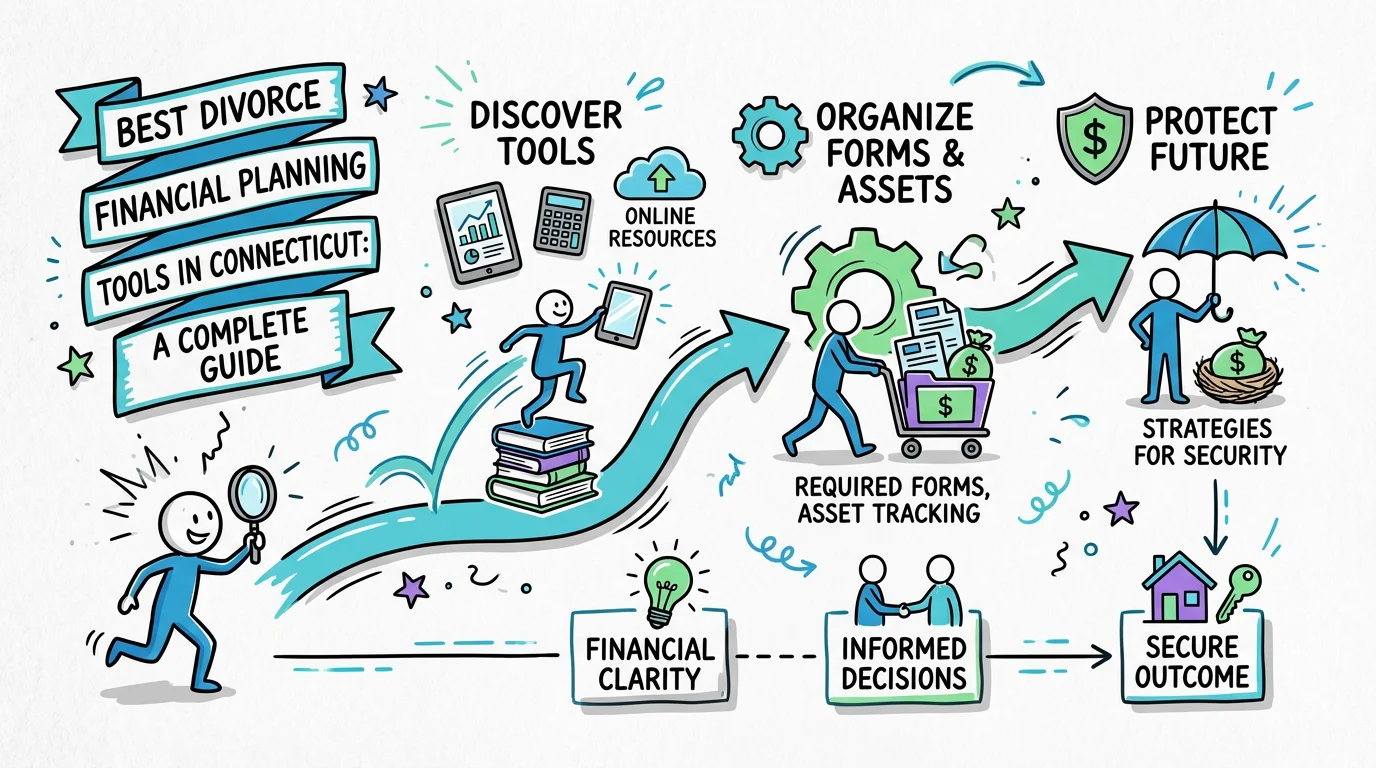
The best divorce financial planning tools for Connecticut include sworn financial affidavits (required by the court), asset and liability tracking spreadsheets, income documentation organizers, and digital platforms like Untangle that help you compile, organize, and understand your complete financial picture. These tools are essential because Connecticut courts use equitable distribution under C.G.S. § 46b-81, meaning judges have broad discretion to divide marital property—and accurate financial documentation directly impacts how assets, alimony, and support are calculated.
Why Financial Planning Tools Matter in Connecticut Divorce
Connecticut law requires both parties to disclose their complete financial circumstances before any divorce can be finalized. Under Practice Book Rule § 25-30, you must file sworn financial statements showing current income, expenses, assets, and liabilities at least five business days before any hearing involving alimony, support, or counsel fees. This isn't optional—it's mandatory, and inaccurate or incomplete disclosures can result in court sanctions or unfavorable rulings.
The stakes are particularly high because Connecticut is an "all-property" state. Unlike some states that only divide assets acquired during marriage, Connecticut courts under C.G.S. § 46b-81 can assign "all or any part of the estate of the other spouse" regardless of when it was acquired or whose name is on the title. This means retirement accounts you had before marriage, inheritances, and even property held in revocable trusts may be subject to division. In Marzaro v. Marzaro, the Connecticut Appellate Court affirmed that a marital residence held in a revocable trust with both parties as cotrustees was properly subject to equitable distribution.
Having the right financial planning tools helps you understand what you own, what you owe, and what your post-divorce financial life might look like. This preparation not only helps you make informed decisions during negotiations but also ensures you can present accurate information to the court—a requirement that protects both your interests and your credibility.
Required Court Financial Forms
Financial Affidavit Forms
Connecticut requires divorcing spouses to complete a Financial Affidavit, and the specific form depends on your financial situation. The Financial Affidavit Short Form (JD-FM-006-Short) is used when neither party's net income exceeds $75,000 per year and total assets are less than $75,000. If your finances exceed these thresholds, you'll need the Long Form Financial Affidavit, which requires more detailed disclosures.
These affidavits are sworn statements—meaning you sign them under oath. Providing false information constitutes perjury and can severely damage your case. The forms require you to list all sources of income, monthly expenses, assets (including bank accounts, investments, real estate, and vehicles), and liabilities (mortgages, credit cards, student loans, etc.). Courts rely heavily on these documents when making decisions about alimony under C.G.S. § 46b-82 and child support under C.G.S. § 46b-84.
Tools like Untangle's Financial affidavit generation can help you gather and categorize all the information needed to complete these forms accurately. Rather than scrambling to find account statements and pay stubs at the last minute, you can build your financial picture systematically, reducing stress and ensuring nothing is overlooked.
Mandatory Document Production
Beyond the affidavit forms, Practice Book Rule § 25-32 requires automatic disclosure of extensive financial documentation within 60 days of a request. This includes:
- Federal and state tax returns for the last three years, including K-1s for any closely held business entities
- W-2, 1099, and K-1 forms for the last three years plus current year if available
- Current year pay stubs plus the last pay stub from the prior year
- Statements for all financial institution accounts for the past 24 months
This mandatory disclosure requirement means you need tools that can help you locate, organize, and track these documents. Missing or incomplete disclosures can delay your case and raise red flags with the court about what you might be hiding—even if the omission was innocent.
Essential Financial Planning Tools for CT Divorce
Asset and Liability Tracking
One of the most critical aspects of divorce financial planning is creating a comprehensive inventory of everything you own and owe. This goes beyond simply knowing your bank account balance. You need to track:
| Asset Category | What to Document | Why It Matters |
|---|---|---|
| Bank Accounts | All checking, savings, money market accounts | Subject to division; 24-month statements required |
| Retirement Accounts | 401(k), IRA, pension, deferred compensation | May need QDRO for division; subject to equitable distribution |
| Real Estate | Primary home, vacation property, investment property | Largest asset for most couples; may need appraisal |
| Investments | Brokerage accounts, stocks, bonds, mutual funds | Values fluctuate; timing of valuation matters |
| Business Interests | Ownership stakes, partnership interests, LLC membership | May require professional valuation |
| Personal Property | Vehicles, jewelry, art, collectibles | Often overlooked but can add up significantly |
| Debts | Mortgages, credit cards, student loans, car loans | Division of debt is as important as division of assets |
Digital tools that help you maintain this inventory with supporting documentation save countless hours and reduce the risk of forgetting assets or liabilities. Untangle's Complete asset inventory allows you to input and categorize all marital property, attach relevant documents, and maintain a clear record that you can reference during negotiations or court proceedings.
Income Analysis Tools
Accurate income analysis is crucial in Connecticut divorce cases because income directly affects both alimony and child support calculations. Under C.G.S. § 46b-82, courts consider each party's income, earning capacity, and financial needs when awarding alimony. The case Sonthonnax v. Xing illustrates how critical accurate income findings are—the Appellate Court reversed financial orders because the trial court's finding regarding the plaintiff's gross weekly income was "without evidentiary support and thus clearly erroneous."
For employed individuals, income documentation is relatively straightforward: pay stubs, W-2s, and tax returns tell most of the story. But if either spouse is self-employed, owns a business, or has variable income from commissions, bonuses, or investments, the analysis becomes more complex. You may need tools that help you:
- Calculate average income over multiple years
- Identify non-recurring vs. recurring income sources
- Track business expenses that reduce reported income
- Document perks or benefits that represent additional compensation
Understanding your own income thoroughly—and being prepared to analyze your spouse's income critically—puts you in a stronger position during negotiations and court proceedings. Tools like Untangle's Income source tracking can help you document all income streams, providing clarity for negotiations and court proceedings.
Budget Projection Tools
Perhaps the most anxiety-inducing aspect of divorce is wondering whether you can afford to live independently. Budget projection tools help you answer this question before you finalize your divorce agreement, not after.
These tools should help you project:
- Your monthly income from all sources (employment, alimony, child support, investments)
- Your essential monthly expenses (housing, utilities, food, transportation, insurance)
- Your discretionary expenses and where you can cut back if needed
- Your long-term financial needs (retirement savings, children's education, healthcare)
Running different scenarios—what if you keep the house vs. sell it? What if alimony lasts five years vs. ten?—helps you evaluate settlement offers intelligently. Untangle's Alimony calculator can assist in understanding the financial impact of different support scenarios.
Protecting Your Financial Interests During Divorce
Understanding Automatic Orders
The moment a divorce complaint is served in Connecticut, automatic orders under Practice Book Rule § 25-5 take effect for both parties. These orders are designed to maintain the financial status quo while the divorce is pending and include prohibitions against:
- Selling, transferring, or disposing of marital assets without consent or court approval
- Incurring unreasonable debts that would burden the marital estate
- Changing beneficiaries on insurance policies or retirement accounts
- Canceling or modifying insurance coverage
Violating these automatic orders can result in serious consequences, including contempt of court findings and unfavorable rulings on property division. Financial planning tools that help you track account activity can document any violations by your spouse and help ensure you don't inadvertently violate the orders yourself.
Prejudgment Remedies
If you're concerned that your spouse might dissipate assets despite the automatic orders, Connecticut law provides additional protections. Under C.G.S. § 46b-80, you can seek prejudgment remedies to secure your financial interests, including filing a lis pendens on real property to prevent unauthorized sales.
These remedies require demonstrating to the court that your financial interests are at risk. Having well-organized financial documentation—showing asset values, recent transactions, and concerning patterns of behavior—strengthens your case for obtaining these protections.
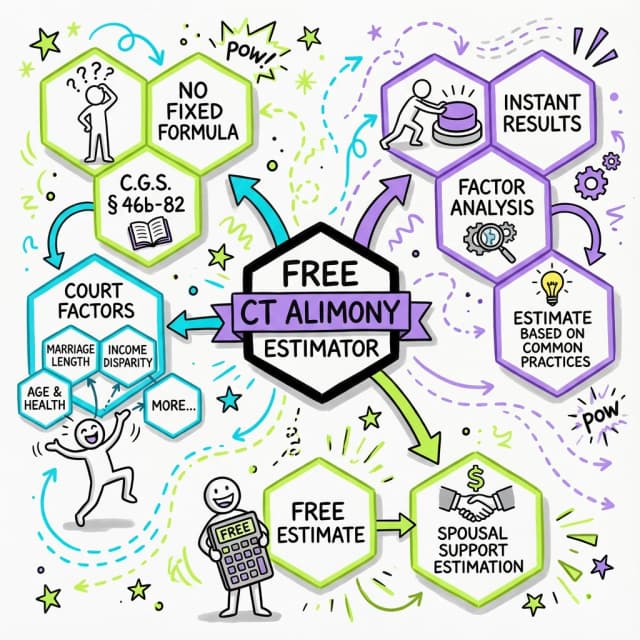
Try our free CT alimony calculator
Get an instant estimate based on Connecticut's statutory factors. No signup required.

Working with Financial Professionals
When You Need Expert Help
While digital tools can help you organize and understand your finances, complex situations often require professional assistance. Under Practice Book Rule § 25-33, courts can appoint expert witnesses to help resolve financial disputes. Common situations requiring expert involvement include:
| Situation | Expert Needed | Purpose |
|---|---|---|
| Business ownership | Business valuator | Determine fair market value of business interests |
| Complex investments | Financial analyst | Value options, restricted stock, or derivatives |
| Hidden assets suspected | Forensic accountant | Trace assets and uncover concealed property |
| Pension valuation | Actuary | Calculate present value of future pension benefits |
| Tax implications | CPA or tax attorney | Analyze tax consequences of different settlement structures |
| Real estate disputes | Appraiser | Determine fair market value of property |
The cost of these experts is usually shared between the parties or allocated by the court. While hiring experts adds to divorce costs, the expense is often worthwhile when significant assets are at stake.
Certified Divorce Financial Analysts
A Certified Divorce Financial Analyst (CDFA) specializes in helping people understand the financial implications of divorce. Unlike general financial advisors, CDFAs are trained specifically in divorce-related issues like tax implications of asset division, evaluating pension and retirement account divisions, and projecting long-term financial outcomes of different settlement scenarios.
If your finances are complex or you're struggling to understand the long-term implications of proposed settlements, consulting with a CDFA can provide clarity and confidence. They can review settlement proposals and help you understand whether an offer is truly fair when you account for taxes, inflation, and future growth.
Steps to Organize Your Divorce Finances
-
Gather all financial documents - Start collecting bank statements, tax returns, pay stubs, investment account statements, loan documents, and insurance policies. Practice Book Rule § 25-32 requires 24 months of statements for financial accounts, so cast a wide net.
-
Create a comprehensive asset inventory - List every asset you and your spouse own, whether jointly or individually. Remember that Connecticut is an all-property state, so even assets acquired before marriage may be relevant.
-
Document all debts and liabilities - Credit cards, mortgages, student loans, car loans, and any other obligations need to be tracked. Note whose name is on each debt and the current balance.
-
Calculate your actual income - Look beyond your base salary to include bonuses, commissions, investment income, rental income, and any other sources. Be prepared to document your spouse's income as well.
-
Build a realistic post-divorce budget - Project what your expenses will be when you're living independently. Include both essential expenses and the lifestyle costs that matter to you.
-
Identify assets requiring valuation - Real estate, businesses, retirement accounts, and valuable personal property may need professional appraisal to determine accurate values.
-
Organize documents for your Financial Affidavit - Ensure everything is ready when it's time to complete your sworn financial statements.
Timeline for Financial Preparation
Understanding when financial tasks must be completed helps reduce anxiety and ensures you meet court deadlines:
| Milestone | Timing | Financial Tasks |
|---|---|---|
| Before filing | As early as possible | Begin gathering documents, create asset inventory |
| After service | Within 60 days of request | Mandatory document exchange under Rule § 25-32 |
| Resolution plan date | 30-60 days from return date | Meet with family relations counselor, identify settlement likelihood |
| Before hearings | At least 5 business days | File sworn financial statements per Rule § 25-30 |
| Before judgment | Within 30 days | Update financial statements with current information |
Starting your financial organization early gives you time to locate missing documents, get professional valuations if needed, and understand your financial picture thoroughly before making any binding decisions.
When to Seek Additional Help
While financial planning tools and self-education can take you far, certain situations call for professional guidance beyond what any tool can provide. Consider consulting with a divorce attorney, financial advisor, or both if:
- Your spouse owns a business or has complex compensation (stock options, deferred compensation, phantom equity)
- You suspect your spouse is hiding assets or income
- Significant retirement accounts or pensions need to be divided
- You've been out of the workforce and are concerned about your earning capacity
- The marital estate includes real estate in multiple states or countries
- There are tax complications like carryforward losses, AMT issues, or business entity considerations
The cost of professional advice is usually a worthwhile investment when significant assets are at stake. A mistake in understanding what you're entitled to—or agreeing to terms that seem fair but have hidden disadvantages—can cost you far more than professional fees.
Remember that financial preparation isn't just about protecting yourself in an adversarial process. When both parties understand their true financial picture, negotiations become more productive, settlements become more sustainable, and both spouses can move forward with confidence in their post-divorce financial stability.
Frequently Asked Questions
What financial documents do I need to file for divorce in Connecticut?
Connecticut requires you to file a sworn financial affidavit (Form JD-FM-6) at least five business days before any hearing, which must include your current income, expenses, assets, and liabilities under Practice Book Rule § 25-30.
Can my spouse get assets I owned before marriage in a CT divorce?
Yes, Connecticut is an "all-property" state under C.G.S. § 46b-81, meaning courts can divide any asset regardless of when it was acquired or whose name is on the title, including premarital property, inheritances, and retirement accounts.
How do I track marital assets during a Connecticut divorce?
Use asset and liability tracking spreadsheets or digital platforms like Untangle to organize bank accounts, retirement funds, real estate, and debts, ensuring you have accurate documentation for your required financial disclosures.
What happens if I don't fully disclose finances in my CT divorce?
Failing to provide complete and accurate financial disclosures can result in court sanctions, unfavorable rulings, or even having the divorce judgment set aside if hidden assets are later discovered.
How much does divorce financial planning cost in Connecticut?
Costs vary widely depending on whether you use free spreadsheet tools, affordable digital platforms like Untangle, or hire a Certified Divorce Financial Analyst (CDFA), with professional services typically ranging from $150-$400 per hour.
Legal Citations
- • Practice Book Rule § 25-30 - Statements To Be Filed View Source
- • Practice Book Rule § 25-32 - Mandatory Disclosure and Production View Source
- • Practice Book Rule § 25-5 - Automatic Orders upon Service of Complaint View Source
- • Practice Book Rule § 25-33 - Judicial Appointment of Expert Witnesses View Source
- • Marzaro v. Marzaro, 231 Conn. App. 85 View Source
- • Sonthonnax v. Xing, 232 Conn. App. 610 View Source
- • Financial Affidavit Short Form (JD-FM-006-Short) View Source