Best Apps to Track Divorce Expenses in Connecticut | Expense Management Guide
Discover the best apps to track divorce expenses in Connecticut. Learn how to organize financial records, meet court requirements, and protect your financial future.
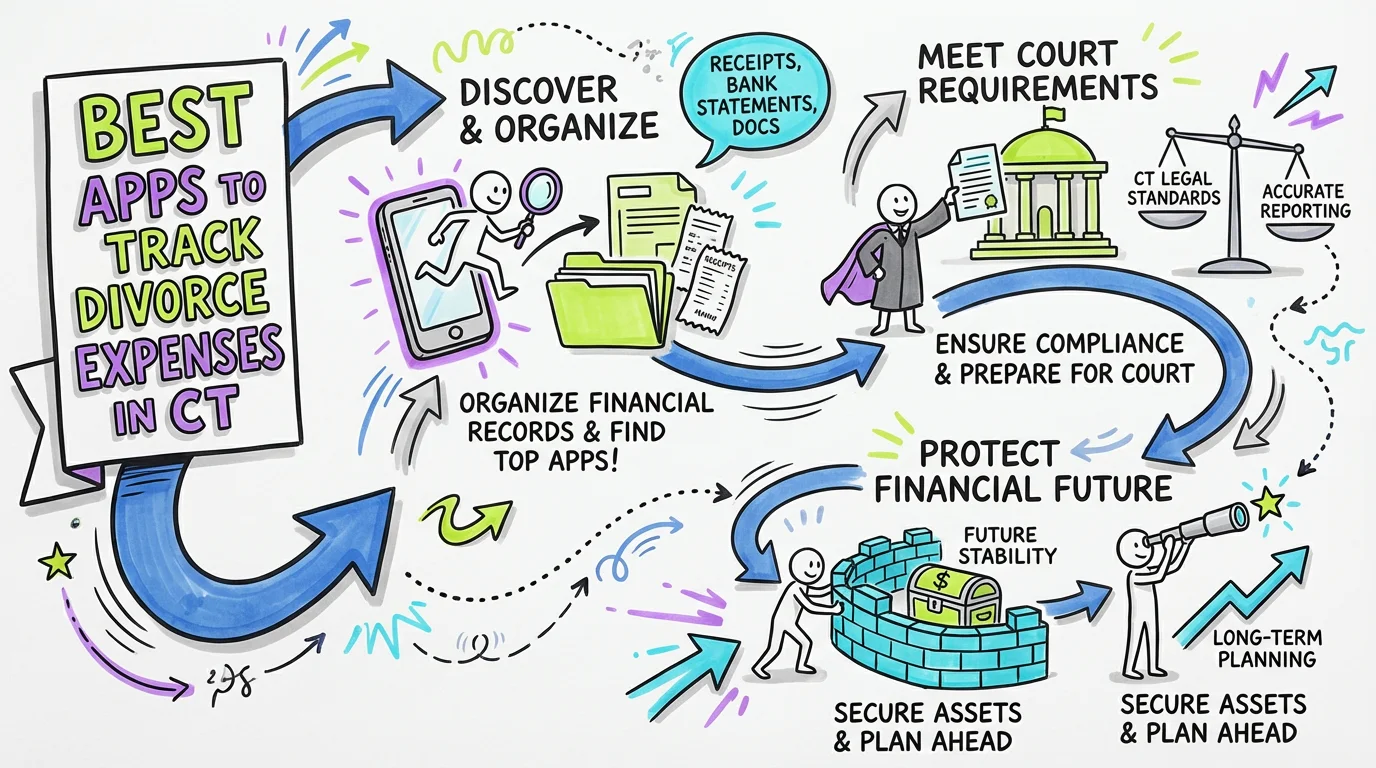
The best apps to track divorce expenses include dedicated divorce management platforms like Untangle, personal finance apps like Mint or YNAB, and spreadsheet tools like Google Sheets or Excel. For Connecticut divorces specifically, you'll need an app that can categorize expenses by type (attorney fees, court costs, household expenses), generate reports that align with the state's Financial Affidavit requirements, and securely store documentation for the mandatory 60-day disclosure period required under Connecticut Practice Book Rule § 25-32.
Why Tracking Divorce Expenses Matters in Connecticut
Connecticut courts require comprehensive financial disclosure during divorce proceedings, making accurate expense tracking not just helpful—but legally necessary. Under C.G.S. § 46b-81, courts consider each spouse's financial circumstances when dividing property, meaning the expenses you document directly influence how assets are allocated. Similarly, C.G.S. § 46b-82 requires courts to evaluate the financial needs and ability to pay of both parties when determining alimony awards.
The stakes are real: incomplete or disorganized expense records can undermine your position in negotiations and court proceedings. In cases like Scott v. Scott, Connecticut courts have addressed disputes arising from parties failing to properly track and reimburse expenses as required by separation agreements. Poor record-keeping can lead to contempt motions, additional legal fees, and unfavorable rulings.
Beyond court requirements, tracking expenses helps you understand your true financial picture during one of life's most financially turbulent periods. Knowing exactly where your money goes each month provides the clarity you need to make informed decisions about settlement offers, budget for your post-divorce life, and reduce the anxiety that comes from financial uncertainty. To gain this crucial clarity and ensure your records are impeccable for Connecticut's strict disclosure requirements, tools like Untangle's Expense tracking with AI feature can automate the process, helping you categorize spending and maintain organized records effortlessly.
Connecticut's Financial Disclosure Requirements
Connecticut Practice Book Rule § 25-30 mandates that each party file a sworn financial statement showing current income, expenses, assets, and liabilities at least five business days before any hearing on alimony or support. If neither party's net income exceeds $75,000 per year and total assets are less than $75,000, you can use the Short Form Financial Affidavit (Form JD-FM-006). These forms require detailed categorization of monthly expenses—making organized tracking essential.
The mandatory disclosure rules under Practice Book Rule § 25-32 require automatic exchange of extensive financial documentation within 60 days of request. This includes 24 months of statements for all financial institution accounts, three years of tax returns, current pay stubs, and documentation of all assets and liabilities. An effective expense tracking system helps you compile this documentation efficiently, reducing both stress and legal costs. Instead of manual entry, leverage solutions like Untangle's Smart bank statement analysis to efficiently read transactions, categorize them, and calculate monthly averages, greatly simplifying the creation of your Financial Affidavit and compiling documentation.
Failing to provide accurate financial information can have serious consequences. Connecticut's automatic orders under Practice Book Rule § 25-5 prohibit either party from dissipating marital assets or making unusual expenditures during the divorce. Having clear expense records protects you from false accusations of financial misconduct and ensures you can demonstrate compliance with these orders.
Essential Features for Divorce Expense Tracking Apps
When choosing an app to track divorce expenses, prioritize features that specifically support divorce proceedings. Look for apps that allow you to categorize expenses into divorce-specific categories:
- Attorney and legal fees
- Court filing costs
- Mediator fees
- Temporary housing
- Children's expenses
- Ongoing marital household costs
This categorization makes it simple to generate reports that align with Connecticut's Financial Affidavit requirements.
Receipt capture and document storage capabilities are equally important. The best apps let you photograph receipts and attach them to expense entries, creating an organized digital trail. Since Connecticut requires documentation of financial accounts going back 24 months, look for apps that can import bank and credit card statements or integrate directly with your financial institutions.
Security features deserve special attention during divorce. Choose apps with strong encryption, password protection, and—if cloud-based—clear privacy policies. Some divorcing spouses share financial accounts or devices with their partner, making secure, independent access critical. Untangle's secure platform was designed specifically for divorce, ensuring your financial information remains private throughout the process.
Comparing Expense Tracking Options
| Feature | Dedicated Divorce Apps | General Finance Apps | Spreadsheets |
|---|---|---|---|
| Divorce-specific categories | ✓ | Limited | Manual setup |
| Receipt capture | ✓ | ✓ | Manual |
| Bank integration | Varies | ✓ | Manual |
| Court-ready reports | ✓ | Limited | Manual |
| Document storage | ✓ | Limited | Separate system |
| Learning curve | Low | Medium | Low-Medium |
| Cost | Varies | Free-$15/month | Free |
| Privacy/Security | High | Medium | Varies |
Dedicated divorce platforms like Untangle, offer the most comprehensive solution for Connecticut divorces. These apps understand the specific requirements of divorce proceedings and generate reports that align with court requirements. They often include additional features like settlement proposal analysis, asset division calculators, and deadline tracking—all in one secure location.
General finance apps like Mint, YNAB (You Need A Budget), or Personal Capital work well for ongoing expense tracking but require manual customization for divorce purposes. They excel at bank integration and visualizing spending patterns but may not generate reports formatted for court filings. If you already use one of these apps, you can adapt it by creating divorce-specific spending categories.
Spreadsheets offer maximum flexibility at no cost but require the most manual effort. Google Sheets templates designed for divorce expense tracking are freely available online, and the collaborative features can be useful if you're working with an attorney or financial advisor. However, spreadsheets don't capture receipts, integrate with banks, or provide the automated categorization that saves time during an already overwhelming process.
Step-by-Step: Setting Up Your Expense Tracking System
- Choose your primary tracking method - Select an app or system based on your technical comfort level, budget, and the complexity of your finances. For most Connecticut divorces, a dedicated divorce platform offers the best balance of features and ease of use.
- Create divorce-specific expense categories - Set up categories that match Connecticut's Financial Affidavit, including: housing (mortgage/rent, utilities, insurance), food, clothing, medical/dental, transportation, children's expenses, attorney fees, court costs, and miscellaneous expenses.
- Connect or import historical data - Gather your last 24 months of bank and credit card statements as required by Practice Book Rule § 25-32. Either import these into your tracking system or organize them in a parallel document storage system.
- Establish a daily tracking habit - Set a reminder to log expenses daily. Most people find it easier to spend two minutes each evening recording the day's expenses than to reconstruct a month's worth of spending later.
- Save all receipts digitally - Use your app's receipt capture feature or a dedicated scanner app to photograph receipts immediately. Store them with the corresponding expense entry so you can prove any questioned expenditure.
- Generate regular reports - Run weekly or monthly expense reports to stay aware of your spending patterns and identify any unusual expenses that might raise questions during disclosure.
- Back up everything - Maintain copies of your expense data and receipts in multiple locations. Cloud storage, local backups, and printed copies of critical documents protect you from data loss.
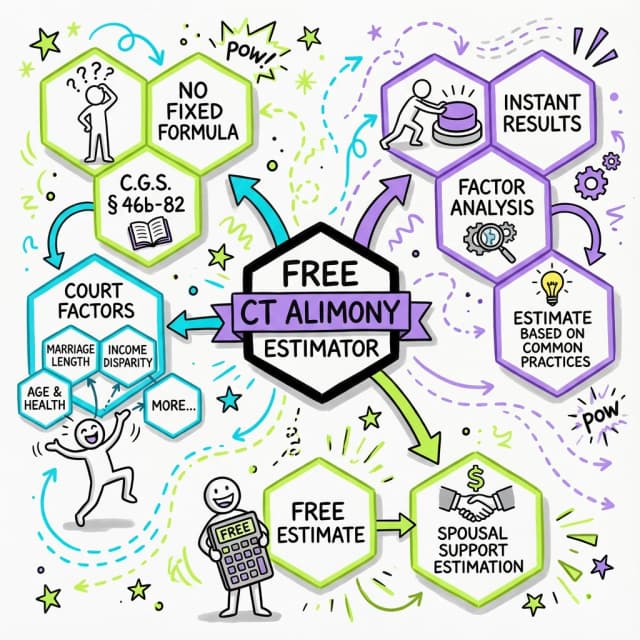
Try our free CT alimony calculator
Get an instant estimate based on Connecticut's statutory factors. No signup required.
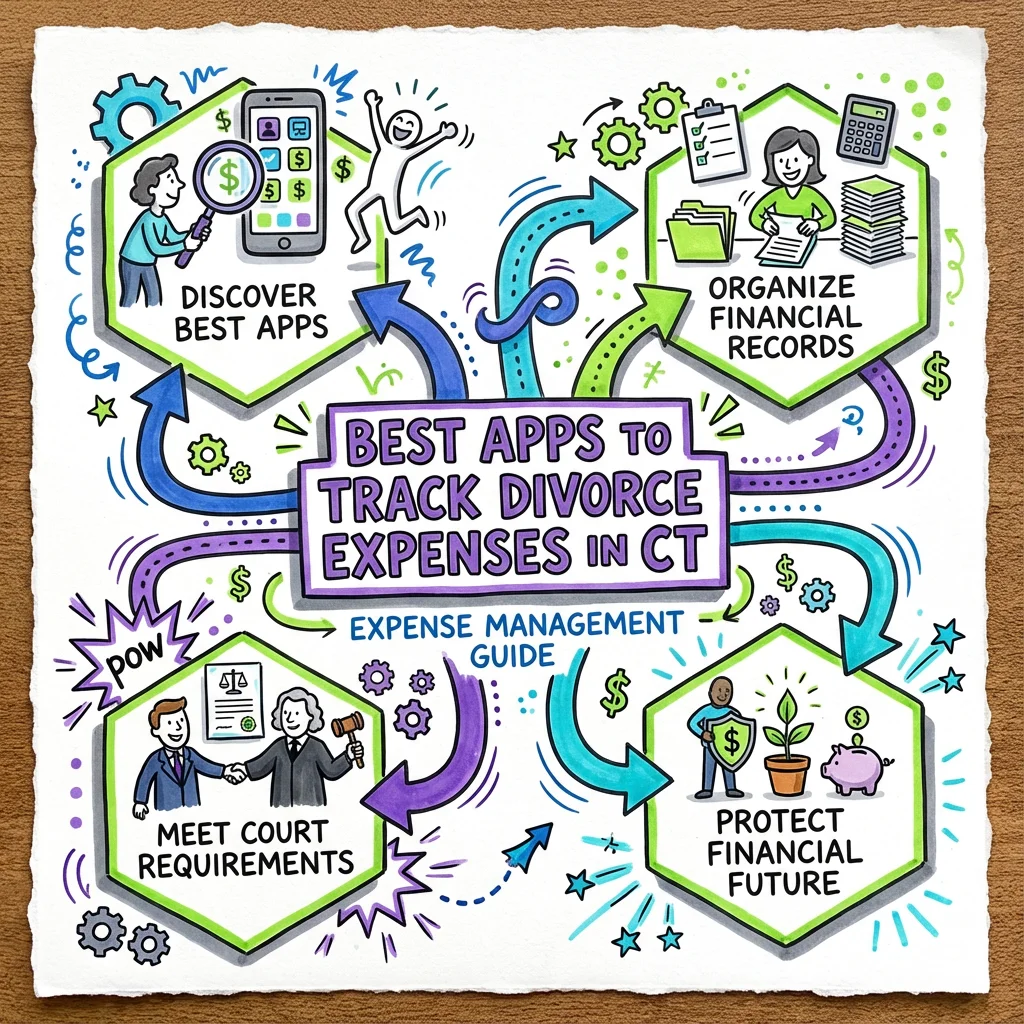
Tracking Shared Expenses and Reimbursements
During separation, many Connecticut couples continue sharing certain expenses—mortgage payments, children's activities, insurance premiums—while living apart. Tracking who paid what and documenting agreements for reimbursement becomes crucial. The case of Scott v. Scott illustrates how disputes over expense reimbursements can end up back in court even after divorce, making contemporaneous records invaluable.
Create a dedicated category for shared expenses and note the agreed-upon split for each type of expense. If you pay the full mortgage expecting 50% reimbursement, record both the payment and the expected reimbursement. Many dedicated divorce apps include features for tracking shared expenses and calculating running balances between spouses.
For expenses related to children, Connecticut law under C.G.S. § 46b-84 requires both parents to maintain minor children according to their respective abilities. Document all child-related expenses carefully, including medical costs not covered by insurance, educational expenses, extracurricular activities, and childcare. These records directly inform child support calculations and any future modification requests.
Protecting Your Financial Records
Connecticut's Practice Book Rule § 25-5 automatic orders prohibit spouses from transferring, concealing, or disposing of marital assets once a divorce action begins. Your expense tracking records serve as evidence of compliance with these orders—and can protect you if your spouse alleges financial misconduct.
Keep your tracking app on a device and account your spouse cannot access. If you previously shared passwords or devices, change your credentials and consider using a new email address for your divorce-related accounts. Some spouses have discovered tracking apps on shared family phone plans or computers, potentially compromising privacy.
Store printed copies of monthly expense reports and key receipts in a secure location outside your home—a safe deposit box, your attorney's office, or a trusted family member's home. Digital records can be altered or deleted; having physical backups provides an additional layer of protection. If your case involves allegations of hidden assets or financial misconduct, as seen in cases like Ostapowicz v. Wisniewski, thorough documentation becomes your best defense.
Planning for Your Post-Divorce Budget
Expense tracking during divorce serves a dual purpose: supporting your legal case and preparing for financial independence. By the time your divorce finalizes, you'll have months of detailed spending data that forms the foundation for your post-divorce budget.
Use your tracked expenses to project realistic monthly costs for housing, transportation, insurance, and daily living. Connecticut courts consider these needs when awarding alimony under C.G.S. § 46b-82, which examines factors including each party's age, health, occupation, and opportunity for future acquisition of assets. Having documented evidence of your actual expenses strengthens requests for spousal support.
Many people discover during divorce that their expenses significantly exceed what they initially estimated. This reality check—while sometimes uncomfortable—is invaluable for settlement negotiations. Knowing your true cost of living helps you evaluate whether a proposed settlement meets your actual needs and allows you to plan realistically for your financial future.
When to Get Professional Help
While expense tracking apps handle day-to-day record-keeping, complex financial situations often require professional guidance. If your divorce involves business ownership, significant assets, or disputed expenses, consider working with a Certified Divorce Financial Analyst (CDFA) who can help you interpret your expense data and project long-term financial needs.
If you're overwhelmed by the tracking requirements or facing a spouse who may be hiding assets, an experienced Connecticut family law attorney can guide you through the mandatory disclosure process and help ensure you're capturing the right information. Tools like Untangle's personalized task dashboard can help you stay organized and prepared for these professional consultations, making every hour with your attorney more productive and cost-effective.
Remember that tracking expenses is just one part of navigating divorce finances in Connecticut. The court will ultimately consider all factors under C.G.S. § 46b-81 and § 46b-82 when making property division and alimony decisions. Your expense records provide crucial evidence, but they work best as part of a comprehensive approach to protecting your financial future.
Frequently Asked Questions
What expenses should I track during a Connecticut divorce?
You should track attorney fees, court costs, household expenses, and any shared marital expenses, ensuring categories align with Connecticut's Financial Affidavit requirements for mandatory disclosure.
How do I organize divorce receipts and financial documents in CT?
Use a dedicated divorce management app like Untangle or a cloud-based system that securely stores receipts and documents, which is essential for meeting Connecticut's mandatory 60-day disclosure period under Practice Book Rule § 25-32.
Can I use a spreadsheet instead of an app to track divorce costs?
Yes, Google Sheets or Excel work well for tracking divorce expenses, though dedicated apps offer advantages like automatic categorization and report generation that align with Connecticut court requirements.
How do I split shared expenses with my spouse during separation in Connecticut?
Use expense-splitting apps or detailed spreadsheets to document who pays what, as Connecticut courts under C.G.S. § 46b-81 consider each spouse's financial circumstances when dividing property and may address reimbursement disputes.
Why is expense tracking legally required in a Connecticut divorce?
Connecticut requires comprehensive financial disclosure under C.G.S. § 46b-81 and § 46b-82, and courts use your documented expenses to determine property division and alimony awards.
Legal Citations
- • C.G.S. § 46b-81 - Assignment of property and transfer of title
- • C.G.S. § 46b-82 - Alimony
- • C.G.S. § 46b-84 - Parents' obligation for maintenance of minor child
- • Connecticut Practice Book Rule § 25-30 - Statements To Be Filed View Source
- • Connecticut Practice Book Rule § 25-32 - Mandatory Disclosure and Production View Source
- • Connecticut Practice Book Rule § 25-5 - Automatic Orders upon Service of Complaint or Application View Source
- • Scott v. Scott, 215 Conn. App. 24 View Source
- • Ostapowicz v. Wisniewski, 210 Conn. App. 401 View Source
- • Financial Affidavit Short Form (JD-FM-006) View Source