3 Step Divorce vs Untangle: Complete Comparison for Connecticut Couples
Compare 3 Step Divorce and Untangle for your Connecticut divorce. Learn which online divorce service better fits amicable couples seeking a smooth, affordable process.
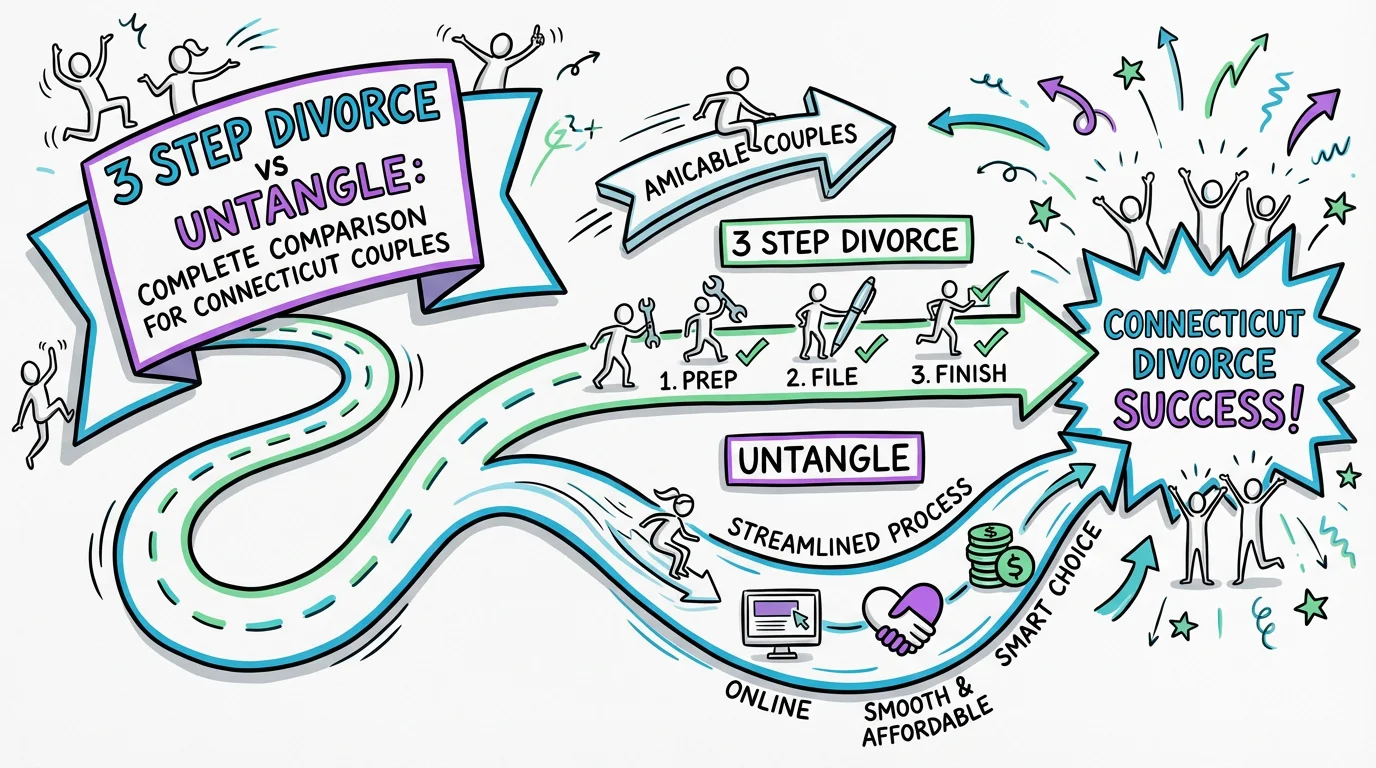
When comparing 3 Step Divorce and Untangle for your Connecticut divorce, the key difference lies in their approach: 3 Step Divorce provides basic document preparation through a standardized questionnaire system, while Untangle offers a comprehensive guided platform specifically designed for Connecticut's legal requirements, including collaborative tools for both spouses to negotiate and finalize agreements together. For couples who agree on most issues and want a smooth, collaborative process, Untangle's Connecticut-specific guidance and real-time collaboration features typically provide more value throughout the entire divorce journey.
Understanding Online Divorce Services in Connecticut
Connecticut recognizes two primary paths for couples seeking divorce: the traditional contested process and the nonadversarial dissolution process available to couples who agree on all terms. Under C.G.S. § 46b-44a, couples can file a joint petition for nonadversarial dissolution when they mutually agree to end their marriage and have reached a settlement on all issues including property division, support, and if applicable, child custody arrangements.
Online divorce services like 3 Step Divorce and Untangle help couples navigate these requirements without hiring expensive attorneys for every step. However, these services differ significantly in their depth of support, state-specific guidance, and collaborative features. Understanding these differences is crucial because even "simple" divorces require precise documentation—Connecticut courts will review your settlement agreement to ensure it's fair and equitable under C.G.S. § 46b-66, and errors can result in delays, additional court appearances, or rejected filings.
The quality of your preparation directly impacts your experience. A well-prepared filing moves smoothly through Connecticut's nonadversarial process, potentially reaching completion within 35 days of filing. A poorly prepared one may be transferred to the regular family docket, requiring court appearances and potentially months of additional proceedings.
3 Step Divorce: What You Get
3 Step Divorce is a national document preparation service that generates divorce paperwork based on your answers to an online questionnaire. The service covers all 50 states and provides standardized forms you can file with your local court. Their basic model focuses on document creation rather than ongoing guidance or collaborative negotiation tools.
The typical 3 Step Divorce process involves completing their questionnaire alone, receiving generated documents, and then figuring out the filing process independently. While this works for some couples, it leaves gaps—particularly when it comes to understanding Connecticut-specific requirements like financial affidavit formats, automatic court orders under Practice Book Rule § 25-5B, or the sworn statement requirements of Practice Book Rule § 25-30.
For Connecticut specifically, you'll still need to understand which forms to file, ensure your financial disclosures meet judicial requirements, and navigate the court system. The service provides the paperwork but limited guidance on the strategic and procedural elements that can make or break a smooth filing.
Untangle: A Connecticut-Focused Approach
Untangle takes a fundamentally different approach by building tools specifically for Connecticut divorce law and the collaborative nature of amicable separations. Rather than simply generating documents, the platform guides both spouses through the process together, helping you reach agreements on complex issues like asset division and support calculations. Tools like AI-assisted mediation can help both parties work through proposals, counter-proposals, and final agreements in a transparent environment. This is particularly valuable for couples who agree in principle but need help working through the details—questions like how to divide retirement accounts, what happens to the family home, or how to structure parenting schedules.
Untangle's Connecticut-specific focus means the platform understands requirements like the Financial Affidavit Short Form for couples with combined assets under $75,000, the automatic orders that take effect upon filing, and the documentation Connecticut courts expect to see. This state-specific knowledge helps prevent the common pitfalls that delay cases or require additional court appearances.
Feature-by-Feature Comparison
| Feature | 3 Step Divorce | Untangle |
|---|---|---|
| Connecticut-Specific Guidance | Generic national platform | Built specifically for CT law |
| Both Spouses Can Use Platform | Questionnaire is single-user | Full collaboration for both parties |
| Asset Division Tools | Basic questionnaire | Interactive division calculator |
| Child Support Calculations | Limited | CT guidelines-based calculator |
| Settlement Agreement Help | Template-based | Guided negotiation with proposals |
| Financial Affidavit Preparation | Generic forms | CT-specific JD-FM-006 format |
| Court Filing Guidance | Basic instructions | Step-by-step CT court process |
| Ongoing Support | Email support | Dedicated guidance throughout |
| Agreement Tracking | Not available | Real-time status for both parties |
The collaboration aspect deserves special attention for amicable couples. When both spouses can see and respond to proposals in real-time, misunderstandings decrease and agreements happen faster. This environment helps couples work through minor disagreements without escalating conflict. In a standard questionnaire model, one spouse typically does all the work, which can create suspicion or resentment if the other spouse feels excluded from the process until the end.
Furthermore, the specificity of the tools matters greatly for legal compliance. Generic national platforms often provide "one-size-fits-all" financial forms that may require manual adjustment to meet Connecticut's strict formatting standards. In contrast, using tools designed for the JD-FM-006 and CCSG-001 definitions ensures your disclosures are accurate and compliant from the start, reducing the risk of rejection by the court clerk and ensuring your final decree is enforceable.
What Connecticut Courts Require
Understanding what Connecticut courts actually need helps you evaluate which service better prepares you. For a nonadversarial dissolution under C.G.S. § 46b-44a, you must submit:
- Joint Petition - A notarized petition with both spouses attesting under oath that you meet eligibility requirements
- Settlement Agreement - A comprehensive agreement covering all property, debt, support, and custody matters
- Financial Affidavits - Sworn financial statements from each party showing income, expenses, assets, and liabilities as required by Practice Book Rule § 25-30
- Parenting Plan (if children) - Detailed custody and visitation arrangements
- Child Support Guidelines Worksheet - Calculations using the CCSG-001 worksheet if children are involved
The court reviews your settlement agreement to determine if it's "fair and equitable" under C.G.S. § 46b-44d. If the court cannot make this determination from your paperwork, your case gets moved to the regular docket and you'll be required to appear in person. This is where thorough preparation matters—Untangle's automatic document generation feature helps ensure your settlement agreement addresses all the elements Connecticut judges expect to see, accurately compiling all necessary forms for court submission.
Try our free CT child support calculator
Calculate your estimated child support using Connecticut's official guidelines formula.
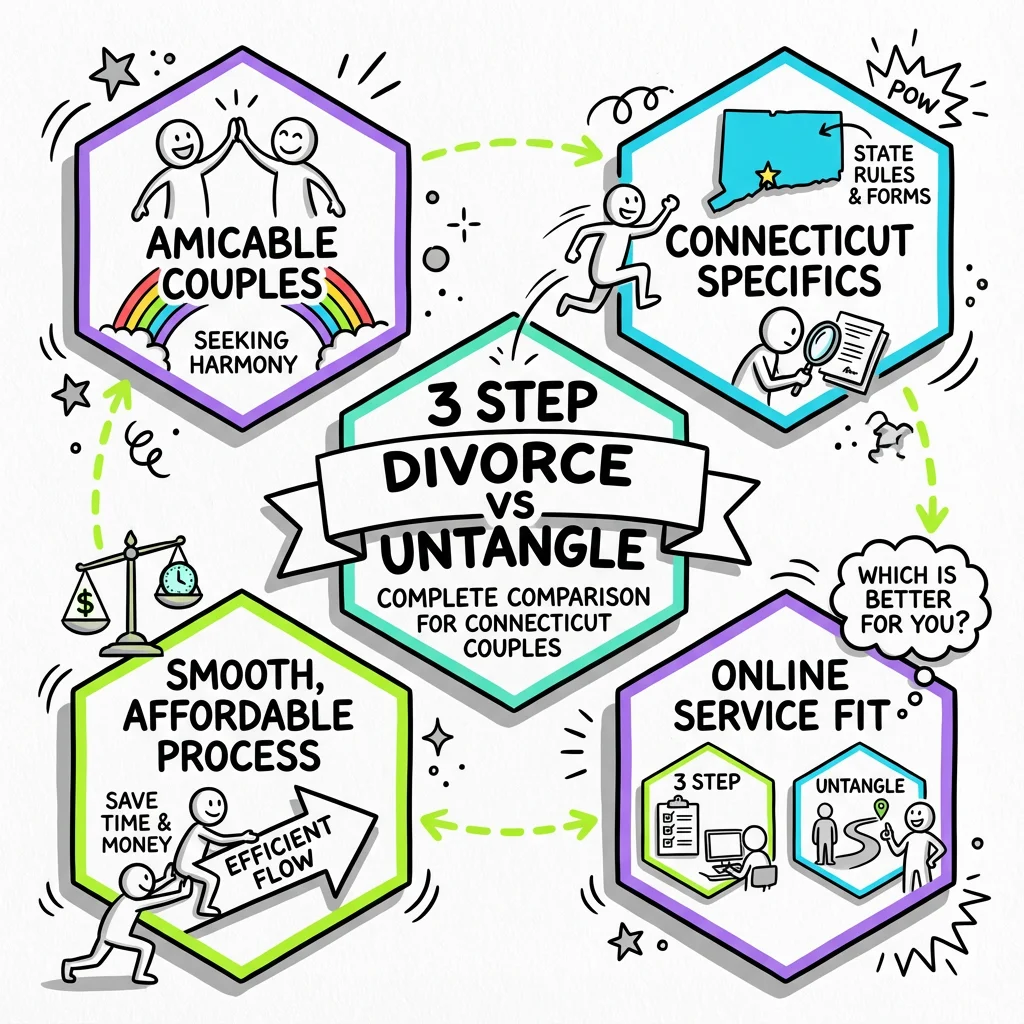
The Filing Process: What to Expect
Connecticut's nonadversarial process follows a specific timeline once you file. Under C.G.S. § 46b-44c, your case receives a disposition date at least 30 days after filing. If everything is in order—no revocation filed, settlement agreement deemed fair—the court can enter your divorce decree on or within five days of that disposition date.
The automatic orders under Practice Book Rule § 25-5B take effect immediately upon filing your joint petition. These orders prevent either spouse from transferring assets, changing insurance beneficiaries, or incurring unusual debts during the process. Understanding these restrictions is important because violations can result in contempt charges.
Untangle walks you through each stage, providing notifications about deadlines and next steps. The platform's personalized task dashboard shows both spouses exactly where you are in the process and what's coming next—reducing anxiety and preventing missed deadlines. Once your documents are finalized, the final step is filing with the court. Our electronic court filing feature guides you through setting up your e-filing account and submitting your documents, making this critical step straightforward and error-free.
Cost Considerations
When evaluating costs, consider the total expense of completing your divorce, not just the service fee. A cheaper document preparation service that results in rejected filings, required court appearances, or attorney consultations to fix errors may cost more in the long run. The value of your time and the emotional cost of a delayed process should also be factored into your decision.
| Cost Factor | 3 Step Divorce | Untangle |
|---|---|---|
| Base Service Fee | $84-$299 depending on package | Transparent flat pricing |
| Spouse Participation | Additional fees may apply | Both spouses included |
| Revisions/Updates | May require additional payment | Unlimited revisions |
| Connecticut Filing Fees | Paid separately to court (~$350) | Paid separately to court (~$350) |
| Attorney Review | Not included | Optional add-on available |
| Hidden Fees | Upsells common | Pricing transparency |
Many national services also operate on a tiered pricing model where essential features—like specialized support or prolonged access to documents—require upgrades. This can lead to unexpected costs midway through the process. A transparent flat-fee model eliminates this uncertainty, allowing you to budget effectively for the entire dissolution process without fear of hidden charges for necessary revisions or spousal access.
The Connecticut court filing fee is approximately $350 and applies regardless of which preparation service you use. This fee is paid directly to the court when you file your joint petition, usually via credit card if e-filing or check if filing in person.
When Each Service Makes Sense
3 Step Divorce may work if:
- Your divorce involves no property, no debt, and no children
- Both spouses have already agreed on every detail and just need paperwork
- You're comfortable navigating court procedures independently
- Budget is your absolute primary concern
Untangle is typically better if:
- You need help reaching agreement on any issues, even minor ones
- You have assets to divide (home, retirement accounts, investments)
- Children are involved and you need parenting plans and support calculations
- You want guidance specific to Connecticut's requirements
- Both spouses want visibility into the process and status
For most amicable couples in Connecticut, the value proposition favors a more comprehensive service. The cost difference between basic document preparation and guided support is minimal compared to the potential cost of errors—both in time and money.
Making Your Decision
Your choice between divorce services ultimately depends on your specific situation and comfort level. Couples with truly simple circumstances—short marriages, no children, minimal assets—may find basic document preparation sufficient. But most couples benefit from the additional guidance, collaboration tools, and state-specific expertise that a platform like Untangle provides.
Consider starting with Untangle's free AI consultation to understand exactly what your Connecticut divorce requires. You'll get clarity on the forms you need, the timeline to expect, and the issues you'll need to address in your settlement agreement. This information helps you make an informed decision about which level of support you need.
Remember that an amicable divorce is about more than just agreeing to separate—it's about creating a complete, legally sound agreement that protects both parties and, if you have children, serves their best interests. The right tools and guidance make that process smoother, faster, and less stressful for everyone involved.
Frequently Asked Questions
What is the cheapest online divorce service for uncontested divorce in Connecticut?
While basic document preparation services like 3 Step Divorce may have lower upfront costs, the cheapest overall option depends on avoiding costly errors and refiling fees, making comprehensive services like Untangle often more cost-effective for CT couples.
How do online divorce services work for Connecticut uncontested divorces?
Online divorce services help Connecticut couples complete required paperwork for nonadversarial dissolution under C.G.S. § 46b-44a by guiding them through questionnaires, generating court-ready documents, and in some cases providing collaboration tools to reach agreement on all terms.
Is 3 Step Divorce legitimate for filing in Connecticut?
3 Step Divorce is a legitimate document preparation service, but it provides standardized forms rather than Connecticut-specific guidance, so couples should verify all documents meet CT court requirements before filing.
What makes Untangle different from other online divorce services?
Untangle differs by offering Connecticut-specific legal guidance, real-time collaboration tools for both spouses to negotiate agreements together, and comprehensive support throughout the entire divorce process rather than just basic document preparation.
Can I use an online divorce service if my spouse and I agree on everything in CT?
Yes, Connecticut's nonadversarial dissolution process under C.G.S. § 46b-44a is specifically designed for couples who agree on all terms, making online divorce services an excellent option for preparing your joint petition and settlement agreement.
Legal Citations
- • Practice Book Rule § 25-5B - Automatic Orders upon Filing of Joint Petition View Source
- • Practice Book Rule § 25-30 - Statements To Be Filed View Source
- • JD-FM-006 - Financial Affidavit Short Form View Source
- • CCSG-001 - Worksheet for Child Support and Arrearage Guidelines View Source